

Scottish Fold
The Scottish Fold is a breed that originated from a single spontaneous mutation — a barn cat named Susie, found in Tayside, Scotland in 1961, had ears that folded forward and downward, giving her an owl-like appearance.
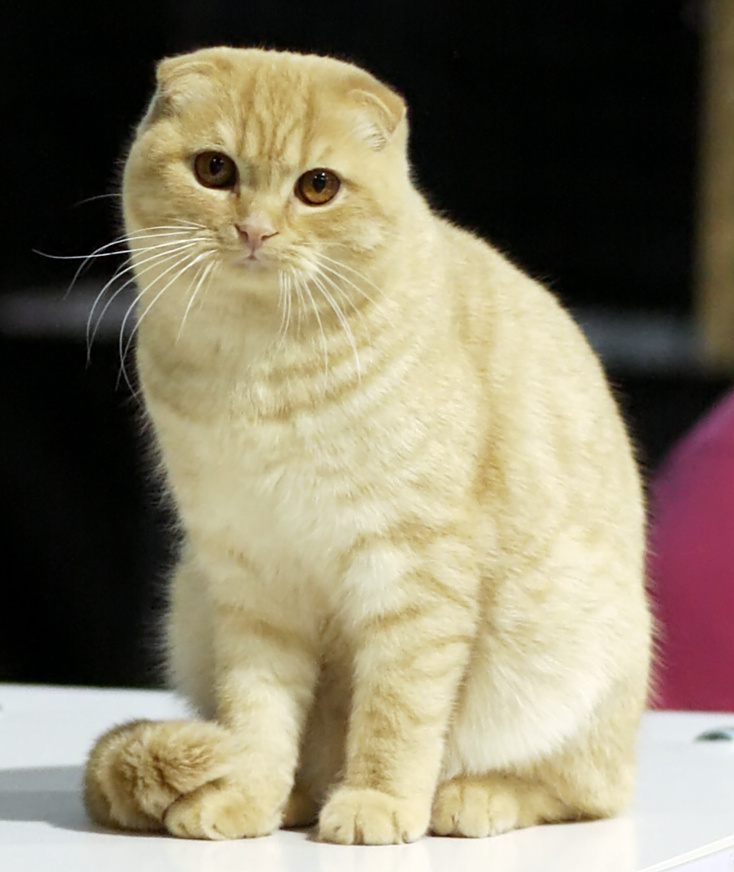
Photo: Wikimedia Commons
Origin
United Kingdom
Lifespan
11–15 years
Weight
2.7–6 kg (6–13 lbs)
Height
20–25 cm (8–10 in)
Exercise
10 to 20 min/day
Diet
Obligate carnivore — high-quality wet and dry food. High-moisture diet (wet food) may help with joint health. Monitor weight carefully.
Taxonomic Hierarchy
Kingdom
Animalia
Phylum
Chordata
Class
Mammalia
Order
Carnivora
Family
Felidae
Genus
Felis
The Story
The Scottish Fold is a breed that originated from a single spontaneous mutation — a barn cat named Susie, found in Tayside, Scotland in 1961, had ears that folded forward and downward, giving her an owl-like appearance. All Scottish Fold cats alive today descend from Susie. The Fold mutation affects cartilage throughout the body — while the folded ears are the most visible effect, the same gene causes progressive and painful osteochondrodysplasia (abnormal cartilage and bone development) in the joints of the tail and legs, particularly in homozygous (fold-to-fold bred) individuals. The breed is banned from registration in Germany and several other European countries and is under significant ethical scrutiny globally due to its inherent health concerns.
Also Known As
Quick Facts
Discover which pets match your lifestyle
Physical Profile
Source: wikimedia
The Scottish Fold's defining feature is its folded ears — the cartilage folds forward and downward, pressing the ear flat against the head and giving the cat its characteristic owl-like appearance. Not all kittens in a litter develop folded ears — those with straight ears are called Scottish Straights and share the same genetic background but without the fold. The body is medium to large, rounded, and well-muscled. Eyes are large and round.
Grooming
Moderate
Shedding
Moderate
Coat Length
short
Coat Type
plush
Brushing
1-2x-Weekly
Bathing
Rarely
Coat Colors
Recognized By
Source: wikimedia
Temperament & Personality
Scottish Folds are calm, gentle, and adaptable. They are affectionate without being demanding. They have a characteristic sitting position — sitting upright on their haunches with their legs extended — called the "Buddha position." They are quiet and get on well with children and other pets.
Personality Scores
Adaptability
4/5Attention Need
3/5Friendliness
5/5Playfulness
3/5Protectiveness
1/5Living Profile
Ideal Space
Apartment
Daily Exercise
10 to 20 min/day
Ideal Weather
10°C to 25°C
Indoor/Outdoor
Indoor-Only
Cognitive Benchmarks
Adaptability
40%
Attention
30%
Playfulness
30%
Communication Style
Vocal Profile
quiet
Stress Signals
hiding, joint stiffness increase, reduced jumping, appetite loss, withdrawal
Care & Wellness
Professional Care Protocol
- •CRITICAL HEALTH CONSIDERATION: Scottish Folds should NEVER be bred fold-to-fold (Fd × Fd) — homozygous kittens develop severe osteochondrodysplasia causing significant lifelong joint pain. Ethical breeders only breed fold-to-straight (Fd × fd). All Scottish Folds should have regular veterinary assessment of joint and tail mobility. High-quality joint support diet or supplementation may be beneficial. Gentle handling of the tail is important — tail stiffness is an early sign of joint problems.
Nutrition Notes
OSTEOCHONDRODYSPLASIA affects ALL folded-ear Scottish Folds — joint-supportive diet (glucosamine, chondroitin, omega-3) from kittenhood. NEVER breed fold-to-fold (produces severe, painful skeletal deformities). Joint supplements mandatory.
Vaccination Schedule
Vaccination Schedule
Senior Care
Osteochondrodysplasia — ALL folded-ear Folds have this to some degree. Progressive, painful joint disease. FOLD × FOLD breeding produces crippling deformities. Must only breed Fold × Straight. Banned from breeding in several countries. PKD. HCM. Polycystic kidney disease. The fold gene IS the disease gene. 11-15 years.
Wellbeing Activities
Nutrition & Sustenance
Daily Calories (Adult)
350 kcal
Daily Calories (Young)
250 kcal
Recommended Foods
Foods to Avoid
Health Overview
Osteochondrodysplasia (OCD) — the fold mutation affects cartilage and bone development throughout the body, not just the ears. All homozygous folds develop significant joint disease; even heterozygous folds may develop joint problems. Signs include reluctance to jump, stiff tail, abnormal gait. Regular veterinary monitoring of joint health throughout life is essential. HCM also occurs in the breed.
Common Conditions
Price Estimates
Pricing Guide
Average estimates as of 2025
ETHICAL WARNING: The fold gene causes joint disease in ALL folded-ear cats. Several countries ban breeding. Joint care costs are lifelong. Straight-eared kittens from same litter are healthy and cheaper.
Purchase Price
$1,000 to $3,000
Adoption Fee
$75 to $400
Data from 2025
Fun Facts
Taylor Swift's Scottish Fold cats — Meredith Grey and Olivia Benson — are among the most photographed cats in the world and have significantly increased the breed's global popularity.
The Scottish Fold is banned from registration by FIFe (Fédération Internationale Féline) and several national kennel clubs due to the inherent health concerns of the fold mutation. The GCCF (UK) has also ceased recognising the breed.
All Scottish Fold cats worldwide descend from a single barn cat named Susie, discovered in Tayside, Scotland in 1961 — making this one of the most narrow-origin breeds in existence.
The characteristic "Buddha sit" — Scottish Folds sitting upright with their legs extended and paws flat on the ground — is distinctive and charming but may also be an early indicator of discomfort from joint issues.


