

American Curl
The American Curl is a breed with a natural genetic mutation causing the ears to curl backward rather than forward — discovered in a stray black longhaired kitten named Shulamith in Lakewood, California in 1981.
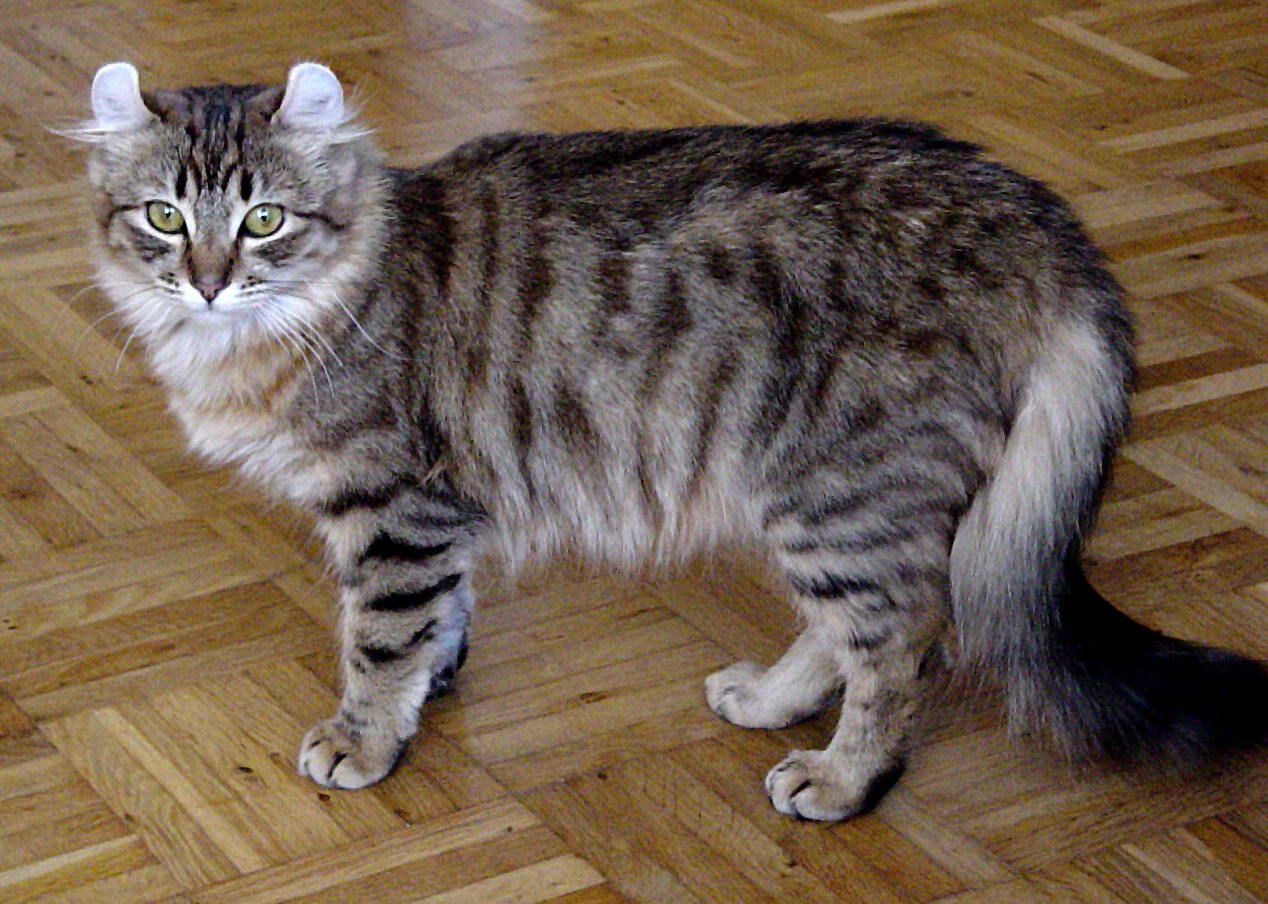
Photo: Wikimedia Commons
Origin
United States
Lifespan
12–16 years
Weight
3–5 kg (6.5–11 lbs)
Height
23–30 cm (9–12 in)
Exercise
10 to 20 min/day
Diet
Obligate carnivore — high-quality wet and dry food.
Taxonomic Hierarchy
Kingdom
Animalia
Phylum
Chordata
Class
Mammalia
Order
Carnivora
Family
Felidae
Genus
Felis
The Story
The American Curl is a breed with a natural genetic mutation causing the ears to curl backward rather than forward — discovered in a stray black longhaired kitten named Shulamith in Lakewood, California in 1981. All American Curls trace to Shulamith. The backward-curling ears are caused by a dominant gene — one copy produces a curled ear. The degree of curl varies from slightly curled (first degree) to moderately curled (second degree) to dramatically curled backward (third degree — the show ideal). The ear cartilage is firm in adults but should not be touched or manipulated — the cartilage sets in the first 4 months of life.
Also Known As
Quick Facts
Discover which pets match your lifestyle
Physical Profile
Source: wikimedia
The American Curl has a medium-sized, well-muscled, moderately foreign body type. The defining feature is the ears — they curl backward from the face in an arc between 90° and 180° from the base. The inside of the ear is fully furred. Both shorthaired and longhaired varieties are recognised. The silky coat has minimal undercoat in the longhaired variety.
Grooming
Low
Shedding
Low
Coat Length
short
Coat Type
silky
Brushing
1-2x-Weekly
Bathing
Rarely
Coat Colors
Recognized By
Source: wikimedia
Temperament & Personality
American Curls are gentle, sociable, and adaptable — they retain kitten energy and curiosity throughout their lives, earning the nickname "Peter Pan." They are affectionate without being demanding. They get along well with children and other pets. They enjoy touching faces gently with their paws.
Personality Scores
Adaptability
5/5Attention Need
3/5Friendliness
5/5Playfulness
4/5Protectiveness
1/5Living Profile
Ideal Space
Apartment
Daily Exercise
10 to 20 min/day
Ideal Weather
10°C to 28°C
Indoor/Outdoor
Indoor-Preferred
Cognitive Benchmarks
Adaptability
50%
Attention
30%
Playfulness
40%
Communication Style
Vocal Profile
quiet
Stress Signals
hiding, appetite changes, over-grooming, withdrawal
Care & Wellness
Professional Care Protocol
- •Minimal grooming — weekly brushing. The curled ears should NEVER be manipulated or straightened — the cartilage is fragile in young cats. Regular gentle ear cleaning is important as the curl can trap debris. The ears should be checked weekly.
Nutrition Notes
Very healthy breed. NO ear canal problems from curl (unlike Scottish Fold). Cartilage is firm, not painful. Moderate calorie needs.
Vaccination Schedule
Vaccination Schedule
Senior Care
Very few health issues. Ear cartilage — handle GENTLY (firm but fragile). NO pain or disease associated with curl (unlike Scottish Fold). All American Curls descend from one stray cat (Shulamith, Lakewood CA, 1981). Kittens born straight-eared — curl develops 3-5 days. 12-16 years.
Wellbeing Activities
Nutrition & Sustenance
Daily Calories (Adult)
350 kcal
Daily Calories (Young)
250 kcal
Recommended Foods
Foods to Avoid
Health Overview
The ear curl gene does not cause the health problems seen with the Scottish Fold gene — the cartilage is only affected in the ear, not throughout the body. Generally a healthy breed. HCM occurs as in all breeds. Ear infections may be more frequent due to reduced air circulation in the curled ear.
Common Conditions
Price Estimates
Pricing Guide
Average estimates as of 2025
NO health issues from curl (unlike Scottish Fold). All from one stray cat (1981). India: suits climate.
Purchase Price
$800 to $2,000
Adoption Fee
$75 to $350
Data from 2025
Fun Facts
The American Curl's ear curl gene has been extensively studied — it affects only the ear cartilage, not the cartilage elsewhere in the body, making it fundamentally different from the Scottish Fold gene which affects all cartilage.
American Curl kittens are born with straight ears — the ears begin to curl within 3–5 days of birth and reach their final degree of curl by approximately 4 months of age.
The American Curl holds the distinction of being the first breed admitted to CFA championship status showing both shorthaired and longhaired varieties as a single breed — most registries require separate registration for coat length variants.


