

Abyssinian
The Abyssinian is one of the oldest cat breeds in the world and one of the most distinctive — a slender, elegant, wild-looking cat with a unique ticked coat where each individual hair has alternating light and dark bands.
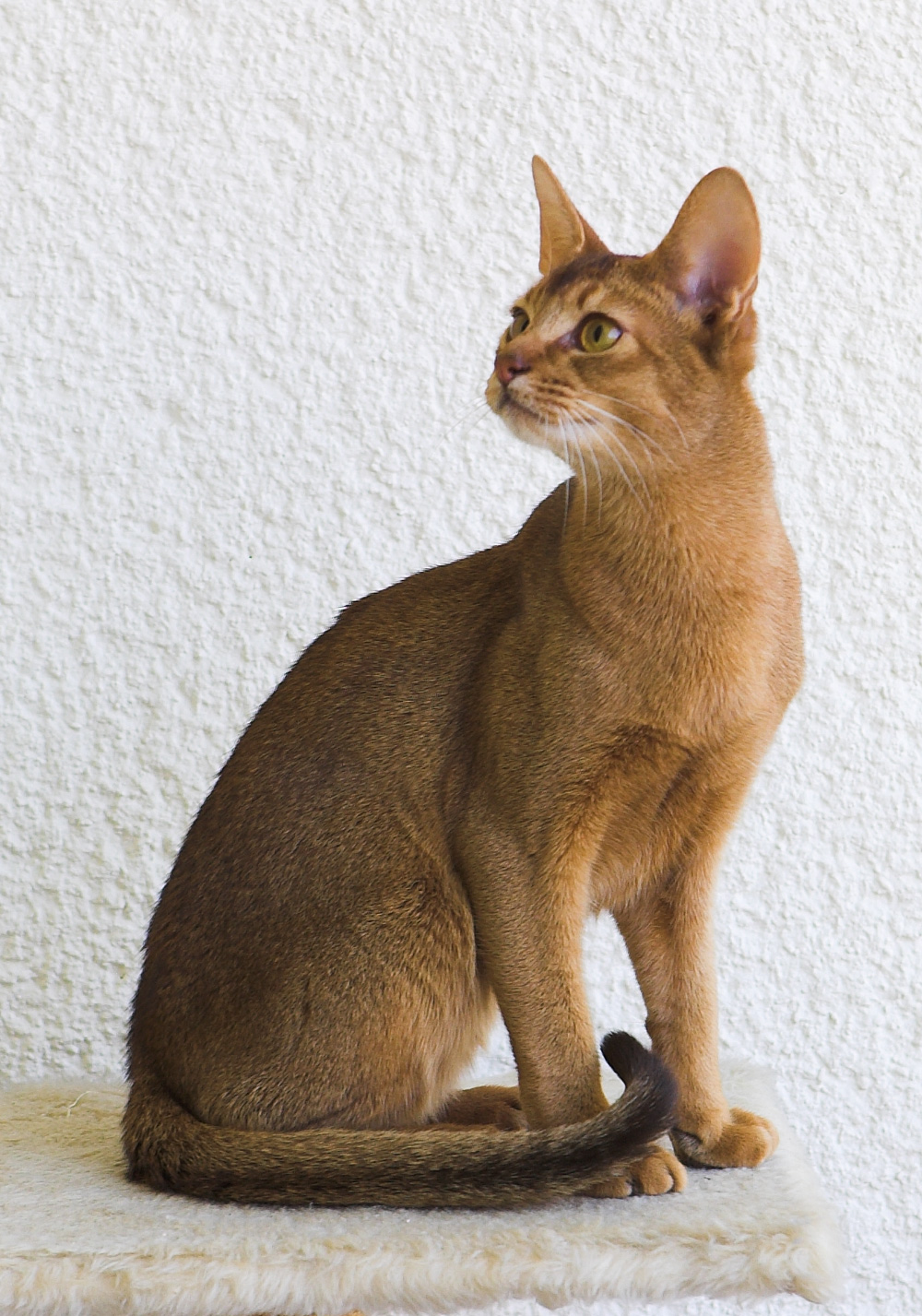
Photo: Wikimedia Commons
Origin
Ethiopia
Lifespan
14–17 years
Weight
3–5 kg (6.5–11 lbs)
Height
20–25 cm (8–10 in)
Exercise
20 to 30 min/day
Diet
Obligate carnivore — high-protein diet appropriate for their active lifestyle. Wet food recommended. Monitor weight as their high activity keeps them lean.
Taxonomic Hierarchy
Kingdom
Animalia
Phylum
Chordata
Class
Mammalia
Order
Carnivora
Family
Felidae
Genus
Felis
The Story
The Abyssinian is one of the oldest cat breeds in the world and one of the most distinctive — a slender, elegant, wild-looking cat with a unique ticked coat where each individual hair has alternating light and dark bands. Often called "the clown of the cat world" for its perpetual kitten energy and insatiable curiosity, the Abyssinian is an extremely active, intelligent, and demanding breed. The name refers to Abyssinia (now Ethiopia) but genetic analysis suggests the breed may have originated in the Indian Ocean coastal regions — possibly India or Sri Lanka — before reaching Britain via military cats returning from overseas postings.
Also Known As
Quick Facts
Discover which pets match your lifestyle
Physical Profile
Source: wikimedia
The Abyssinian is a medium-sized, athletic cat of foreign body type — long, slender legs, a moderately wedge-shaped head, large almond-shaped eyes (gold, green, or hazel), and large, pointed ears. The coat is short, dense, and has the unique ticked (agouti) pattern — each hair shows alternating bands of colour. The coat is not spotted or striped in the conventional sense; the ticking gives it a wild, rabbit-like or cougar-like appearance.
Grooming
Low
Shedding
Low
Coat Length
short
Coat Type
smooth
Brushing
1x-Weekly
Bathing
Rarely
Coat Colors
Recognized By
Source: wikimedia
Temperament & Personality
Abyssinians are perpetually in motion — they explore every surface, investigate every movement, and never sit still for long. They are highly intelligent and can be trained to fetch, walk on a leash, and perform tricks. They are people-oriented but not typically lap cats — they prefer to be near their owners rather than on them. They are excellent problem-solvers and require constant mental stimulation. Bored Abyssinians become destructive.
Personality Scores
Adaptability
4/5Attention Need
4/5Friendliness
4/5Playfulness
5/5Protectiveness
1/5Living Profile
Ideal Space
House-Small-Garden
Daily Exercise
20 to 30 min/day
Ideal Weather
15°C to 30°C
Indoor/Outdoor
Indoor-Outdoor
Cognitive Benchmarks
Adaptability
40%
Attention
40%
Playfulness
50%
Communication Style
Vocal Profile
quiet
Stress Signals
over-grooming (psychogenic alopecia), destructive behaviour, excessive climbing, spraying, withdrawal
Care & Wellness
Professional Care Protocol
- •Low grooming requirements — weekly brushing is sufficient. High enrichment needs — cat trees, puzzle feeders, interactive toys, and regular playtime are essential. They do well with another active cat companion. Access to high perches is important — they love to observe from height.
Nutrition Notes
PRA (rdAc) — DNA test available. PkDef (pyruvate kinase deficiency) — DNA test. Renal amyloidosis. High-protein diet suits athletic build. Dental disease (gingivitis) common — dental food helps.
Vaccination Schedule
Vaccination Schedule
Senior Care
PRA-rdAc — DNA test. PkDef — DNA test. Renal amyloidosis (Abyssinian/Somali specific). Gingivitis/stomatitis. Hyperesthesia syndrome. Possible Indian Ocean/subcontinent origin (genetic studies suggest coastal Indian/SE Asian origin, not Ethiopia). Ticked coat is agouti gene expression. 9-15 years.
Wellbeing Activities
Nutrition & Sustenance
Daily Calories (Adult)
350 kcal
Daily Calories (Young)
250 kcal
Recommended Foods
Foods to Avoid
Health Overview
Progressive retinal atrophy (PRA-rdAc) — an Abyssinian-specific form of PRA with DNA test available. Renal amyloidosis — a kidney condition elevated in Abyssinians. Pyruvate kinase deficiency (PK Def) — haemolytic anaemia with DNA test. Dental disease. Hyperthyroidism in older individuals.
Common Conditions
Price Estimates
Pricing Guide
Average estimates as of 2025
PRA and PkDef testing essential. India: possible origin region (genetic evidence). Climate suits well.
Purchase Price
$800 to $2,000
Adoption Fee
$75 to $350
Data from 2025
Fun Facts
Genetic research published in 2008 suggests that the Abyssinian breed did not originate in Ethiopia as its name implies, but in the coastal regions of the Indian Ocean — possibly the Indian subcontinent or Sri Lanka — making it potentially one of the few cat breeds with actual connections to the Indian region.
The Abyssinian's ticked coat pattern (called the agouti pattern) is the same mechanism that produces the wild-type colouration of many wild cats and rabbits — each hair banding produces a camouflage effect in nature.
Abyssinians are one of the few cat breeds that reliably enjoy water — they will play with water from taps, splash in water bowls, and in some cases voluntarily enter shallow water.


