

Pixiebob
The Pixiebob is a naturally occurring breed from the Pacific Northwest of the USA, bred to resemble the North American Bobcat in appearance — a large, heavy-boned, short-tailed or bobtailed cat with a spotted brown tabby coat, polydactyl feet (extra toes permitted and common in the breed), and a distinctly wild look.
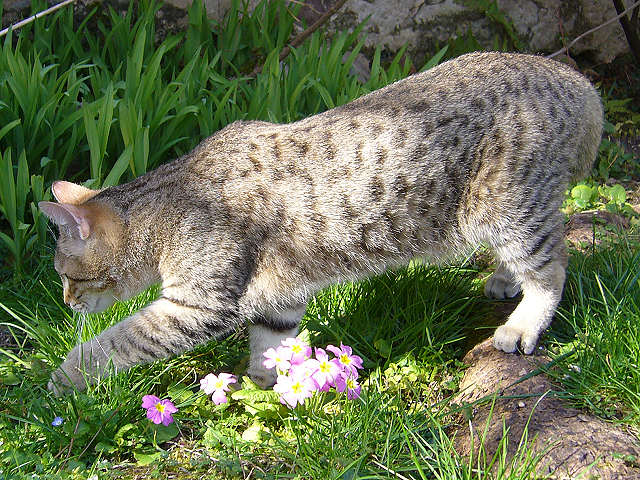
Photo: Wikimedia Commons
Origin
United States
Lifespan
13–16 years
Weight
4–8 kg (9–17 lbs)
Height
30–41 cm (12–16 in)
Diet
Obligate carnivore — high-quality wet and dry food appropriate for a large breed.
Taxonomic Hierarchy
Kingdom
Animalia
Phylum
Chordata
Class
Mammalia
Order
Carnivora
Family
Felidae
Genus
Felis
The Story
The Pixiebob is a naturally occurring breed from the Pacific Northwest of the USA, bred to resemble the North American Bobcat in appearance — a large, heavy-boned, short-tailed or bobtailed cat with a spotted brown tabby coat, polydactyl feet (extra toes permitted and common in the breed), and a distinctly wild look. The breed's founder, Carol Ann Brewer, claimed the founding cats were the result of natural matings between domestic cats and Bobcats, though DNA testing has not confirmed Bobcat genetics. The Pixiebob is dog-like in personality — many are leash-trained and enjoy family activities.
Also Known As
Quick Facts
Discover which pets match your lifestyle
Physical Profile
Source: wikimedia
The Pixiebob is large and heavy-boned — males frequently exceed 6 kg. The coat is medium-length or short, with a spotted or rosetted pattern on a warm tawny brown background, heavy ticking. The face is distinctly wild-looking with heavy brow ridges and a broad nose. The tail is bobtailed (short and naturally kinked) though some individuals have near-normal tails. Polydactyly (extra toes) is permitted and valued in the breed.
Grooming
Low
Shedding
Moderate
Coat Colors
Recognized By
Source: wikimedia
Temperament & Personality
Pixiebobs are calm, loyal, and exceptionally dog-like. They can be leash-trained, enjoy car rides, and follow their owners everywhere. They are sociable with children and other pets. They are bold and confident without being aggressive. Their voice is a soft chirp rather than a loud meow.
Living Profile
Care & Wellness
Professional Care Protocol
- •Low grooming requirements — weekly brushing. The short bobtail should be gently checked for any signs of discomfort. Polydactyl paws require nail checking more frequently as extra toes can cause nail overgrowth. Provide climbing opportunities and interactive play.
Vaccination Schedule
Vaccination Schedule
Health Overview
Generally a healthy breed. Bobtail gene: the gene responsible for the short tail in Pixiebobs is different from the Manx gene and does not carry the same lethality risk. HCM may occur as in all breeds. Polydactyl paw maintenance important.
Common Conditions
Fun Facts
The Pixiebob is the only breed recognised by TICA that permits polydactyly (extra toes) as a breed characteristic — some individuals have up to 7 toes per paw.
Despite persistent claims, DNA testing of Pixiebob cats has found no Bobcat genetic contribution — they are entirely domestic cats that have been selectively bred to resemble Bobcats in appearance.
The founding cat of the breed — named Pixie — was a female domestic cat with a distinctive wild appearance discovered in Washington State in 1985 by Carol Ann Brewer, who named the breed after her.


