

Himalayan
The Himalayan is a Persian in colourpoint colouring — produced by crossing Persian and Siamese cats to combine the Persian's long coat, flat face, and calm temperament with the Siamese's distinctive colourpoint pattern and blue eyes.
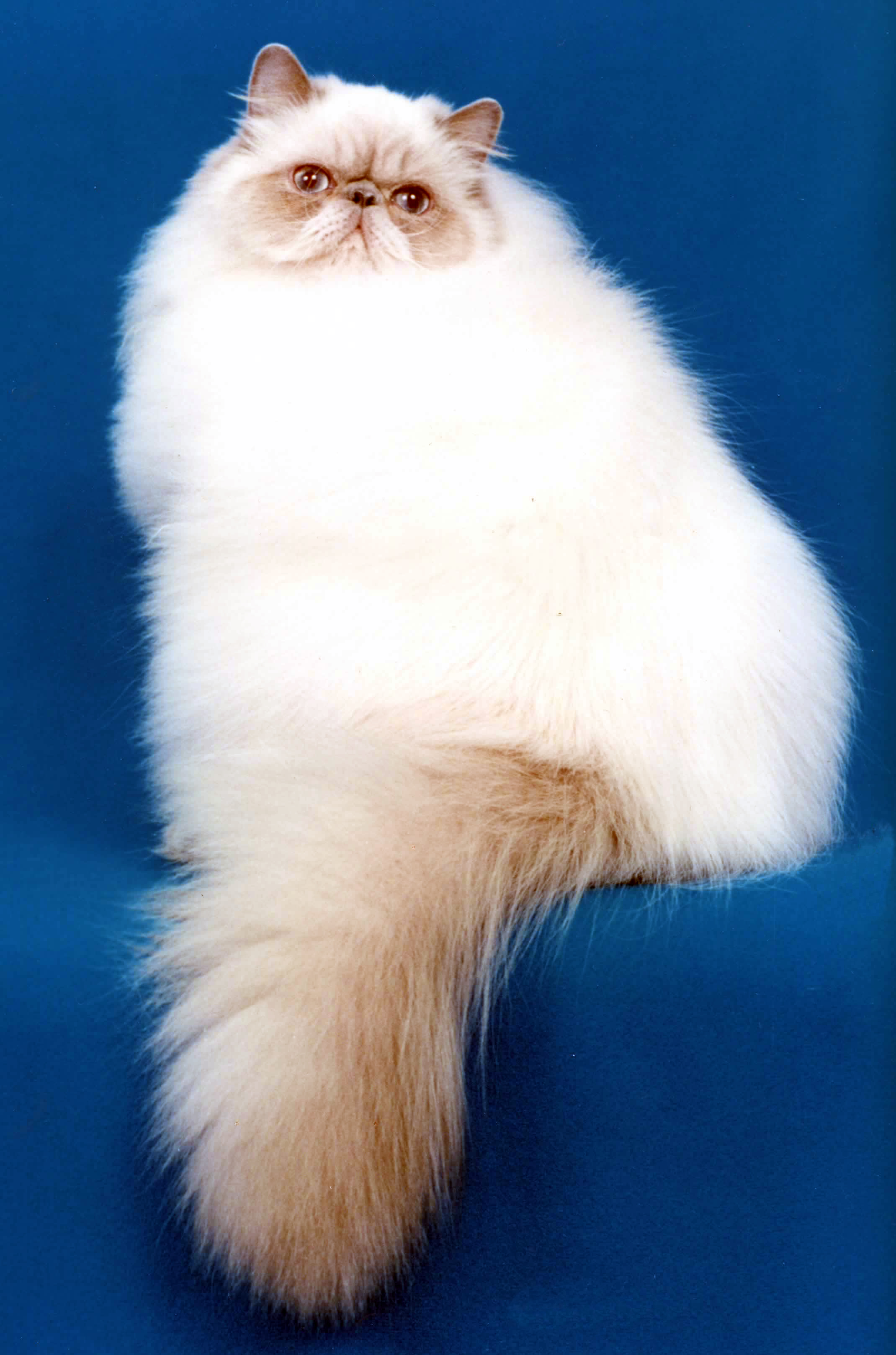
Photo: Wikimedia Commons
Origin
United States
Lifespan
9–15 years
Weight
3–5.5 kg (7–12 lbs)
Height
25–30 cm (10–12 in)
Exercise
10 to 15 min/day
Diet
Obligate carnivore — high-quality wet food preferred; shallow wide bowls for the flat face.
Taxonomic Hierarchy
Kingdom
Animalia
Phylum
Chordata
Class
Mammalia
Order
Carnivora
Family
Felidae
Genus
Felis
The Story
The Himalayan is a Persian in colourpoint colouring — produced by crossing Persian and Siamese cats to combine the Persian's long coat, flat face, and calm temperament with the Siamese's distinctive colourpoint pattern and blue eyes. The CFA considers the Himalayan a colour variety of the Persian; TICA recognises it as a separate breed. The result combines the most demanding grooming requirements of the Persian with the Siamese's colourpoint pattern — a visually stunning but extremely high-maintenance cat. All the health concerns of the Persian apply directly to the Himalayan, including PKD, BOAS, and chronic tear staining.
Also Known As
Quick Facts
Discover which pets match your lifestyle
Physical Profile
Source: wikimedia
Identical to the Persian in body, head, and coat — the only difference is the colourpoint pattern. The flat face, large round eyes, stocky body, and extremely long, dense coat are all Persian characteristics. The eyes are always vivid blue (from the Siamese colourpoint gene). Dark points on the face (mask), ears, legs, and tail contrast with the pale body.
Grooming
Very High
Shedding
High
Coat Length
long
Coat Type
silky
Brushing
Daily
Bathing
Every-4-6-Weeks
Coat Colors
Recognized By
Source: wikimedia
Temperament & Personality
The calm, gentle, quiet personality of the Persian combined with a slight increase in curiosity from the Siamese heritage. They are docile, affectionate, and content with indoor life. Quieter than Siamese but slightly more interactive than typical Persians.
Personality Scores
Adaptability
3/5Attention Need
3/5Friendliness
4/5Playfulness
2/5Protectiveness
1/5Living Profile
Ideal Space
Apartment
Daily Exercise
10 to 15 min/day
Ideal Weather
15°C to 25°C
Indoor/Outdoor
Indoor-Only
Cognitive Benchmarks
Adaptability
30%
Attention
30%
Playfulness
20%
Communication Style
Vocal Profile
quiet
Stress Signals
hiding, appetite loss, matted coat, litter box avoidance
Care & Wellness
Professional Care Protocol
- •Same as Persian — daily brushing without exception, daily face wiping, regular cleaning of facial folds, dental care, shallow wide food bowls. The blue eyes of all Himalayans are prone to the same tear staining as Persians.
Nutrition Notes
Persian × Siamese. Same PKD as Persian. Brachycephalic. Obesity-prone. Colourpoint pattern.
Vaccination Schedule
Vaccination Schedule
Senior Care
PKD. HCM. Brachycephalic issues. Same as Persian with colourpoint. 9-15 years.
Wellbeing Activities
Nutrition & Sustenance
Daily Calories (Adult)
380 kcal
Daily Calories (Young)
280 kcal
Recommended Foods
Foods to Avoid
Health Overview
All Persian health concerns apply — PKD (DNA test available), BOAS from flat face, HCM, PRA (DNA test available), chronic tear staining, dental malocclusion. The shortened lifespan compared to many breeds (9–15 years) reflects the health burden of brachycephalic conformation.
Common Conditions
Price Estimates
Pricing Guide
Average estimates as of 2025
Persian × Siamese. Same PKD. India: very popular.
Purchase Price
$500 to $2,000
Adoption Fee
$50 to $300
Data from 2025
Fun Facts
The Himalayan's name comes from its colour pattern resemblance to Himalayan animals (rabbits, guinea pigs, and cats) whose colour is restricted to the cooler extremities — the same temperature-sensitive pigmentation gene that gives the Siamese its pointing.
The CFA and TICA disagree on the Himalayan's breed status — CFA considers it a colour variety of the Persian, while TICA registers it as a separate breed. This means the same cat may be shown as "Persian Colorpoint" or "Himalayan" depending on the registry.
The first deliberately bred Himalayan — the result of crossing Persian and Siamese — was produced at Harvard Medical School in 1935 by Dr. Clyde Keeler and Virginia Cobb for a genetics research project.


