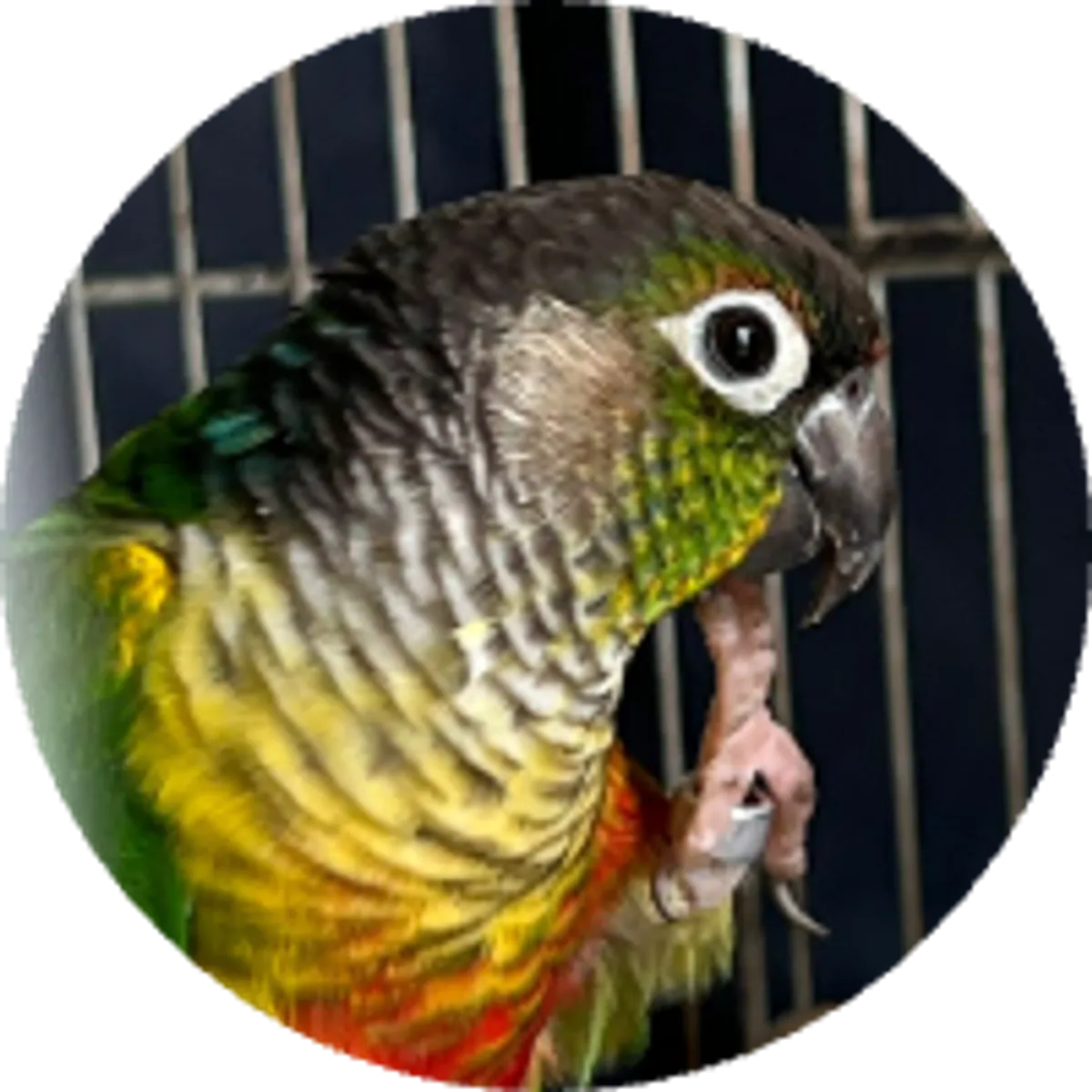

Green-Cheeked Conure
Widely considered the ideal starter parrot — combining conure playfulness and affection with a significantly more manageable noise level than most conure species.

Photo: Wikimedia Commons
Origin
Bolivia
Lifespan
15–25 years
Weight
60–80 g
Height
26 cm
Diet
Herbivore — small parrot pellets, fresh vegetables, fruit, small seeds. Avoid avocado, chocolate, onion.
Taxonomic Hierarchy
Kingdom
Animalia
Phylum
Chordata
Class
Aves
Order
Psittaciformes
Family
Psittacidae
Genus
Pyrrhura
The Story
Widely considered the ideal starter parrot — combining conure playfulness and affection with a significantly more manageable noise level than most conure species. Often described as "a big parrot personality in a small, quiet body." One of the fastest-growing pet parrot species globally. The pineapple mutation (yellow-orange body) has greatly increased their popularity.
Also Known As
Quick Facts
Discover which pets match your lifestyle
Physical Profile
Source: wikimedia
Wild type: green body, grey-brown scaled head, green cheeks, blue flight feathers, dark maroon belly patch and tail. Popular mutations include yellow-sided, pineapple (warm yellow-orange), cinnamon (olive tones), and turquoise.
Grooming
Low
Shedding
Low
Coat Colors
Recognized By
Source: wikimedia
Temperament & Personality
Affectionate, playful, and mischievous. Loves to burrow under clothing for warmth. Noise level considerably lower than Sun Conures — manageable in apartments. Learns tricks readily.
Living Profile
Care & Wellness
Professional Care Protocol
- •Minimum cage 60 × 45 × 75 cm. 2–3 hours daily interaction. Many toys and foraging opportunities. Manageable noise makes them suitable for apartment living.
Vaccination Schedule
Vaccination Schedule
Health Overview
Feather plucking. Conure bleeding syndrome. PDD. Generally a healthy, robust species.
Common Conditions
Fun Facts
Green-Cheeked Conures have been recorded imitating the clicking sound of their owner's keyboard — an unusual example of contextual sound learning.
The pineapple mutation is a combination of two separate mutations (yellow-sided and cinnamon) producing birds with yellow-orange plumage and red eyes.