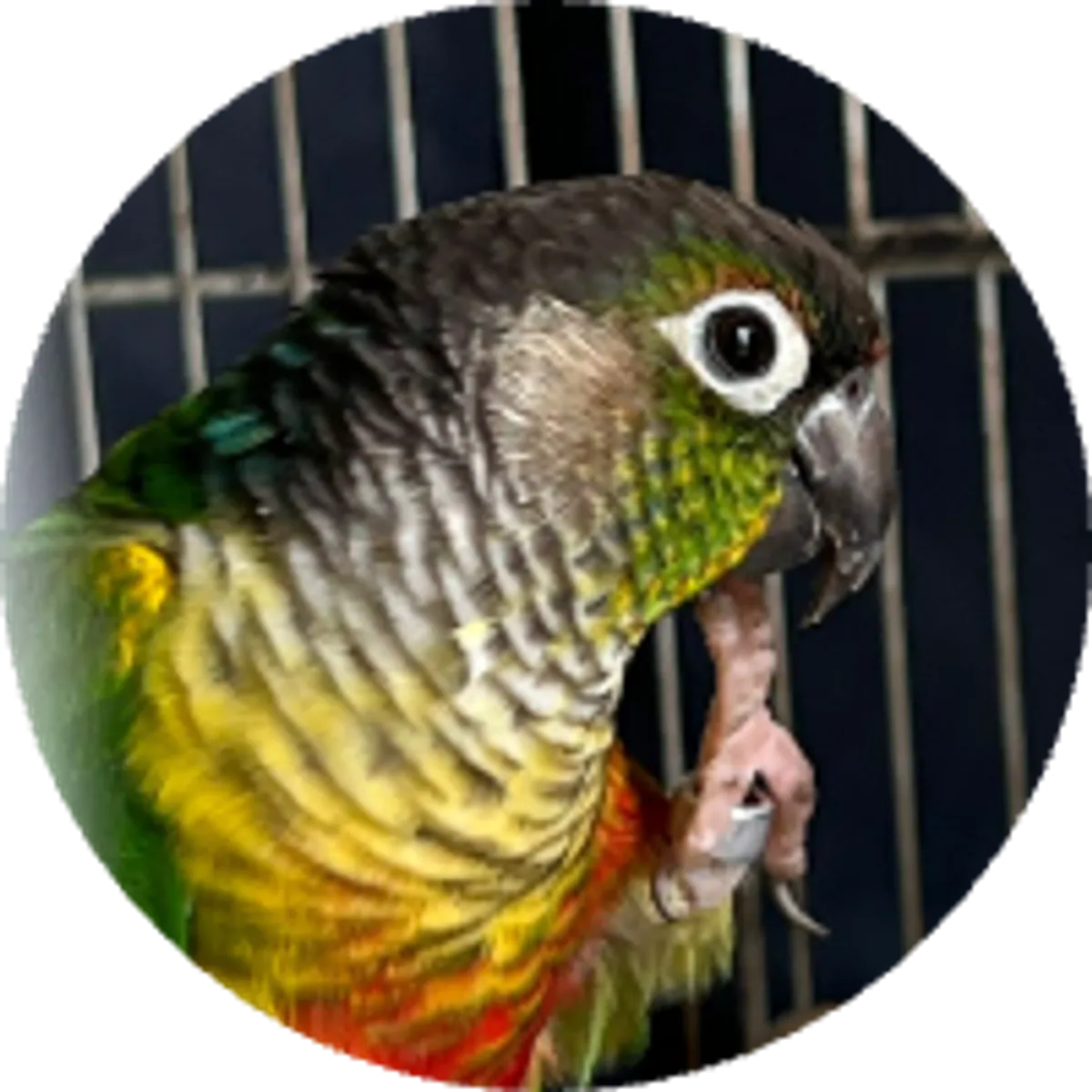

African Grey Parrot
The African Grey Parrot is the most cognitively capable of all parrot species.

Photo: Wikimedia Commons
Origin
Democratic Republic of Congo
Lifespan
40–60 years
Weight
400–600 g
Height
33–40 cm
Diet
Herbivore/Omnivore — high-quality pellets (60–70%), fresh vegetables, fruits, nuts. HIGH calcium requirement. Avoid avocado, chocolate, onion, caffeine, alcohol.
Taxonomic Hierarchy
Kingdom
Animalia
Phylum
Chordata
Class
Aves
Order
Psittaciformes
Family
Psittacidae
Genus
Psittacus
The Story
The African Grey Parrot is the most cognitively capable of all parrot species. Alex, an African Grey studied by Dr. Irene Pepperberg for 30 years, demonstrated a vocabulary of over 100 words, understanding of colour, shape and material, counting to six, and concepts of "same" and "different." Wild African Greys are endangered. They commonly live 50+ years in captivity — a lifetime commitment comparable in duration to adopting a child.
Also Known As
Quick Facts
Discover which pets match your lifestyle
Physical Profile
Source: wikimedia
A medium-large parrot of understated elegance — uniformly grey body with delicate white scalloping on each feather, a striking bright red tail, and a large hooked black beak. Pale yellow eyes. The Timneh subspecies is slightly smaller and darker with a dark red tail.
Grooming
Low
Shedding
Moderate
Coat Colors
Recognized By
Source: wikimedia
Temperament & Personality
Extraordinarily intelligent and emotionally complex. They bond deeply — sometimes exclusively — with one person and can become jealous of others. Their emotional sensitivity means they are profoundly affected by changes in routine. They require 4+ hours of mental stimulation and social interaction daily. Under-stimulated African Greys will feather-pluck or self-mutilate.
Living Profile
Care & Wellness
Professional Care Protocol
- •Very large cage — minimum 90 × 90 × 120 cm. 4+ hours of out-of-cage interaction and mental stimulation daily. Calcium supplementation critical — deficiency causes hypocalcaemia syndrome (seizures). Variety of foraging toys and puzzle feeders. Consistent daily routine. Twice-yearly avian vet examinations. Estate planning including the bird is important — it will likely outlive its owner.
Vaccination Schedule
Vaccination Schedule
Health Overview
Hypocalcaemia syndrome (seizures from calcium/vitamin D deficiency — unique to African Greys). Psittacine Beak and Feather Disease (PBFD). Feather plucking from psychological causes (very common). Aspergillosis in stressed birds.
Common Conditions
Fun Facts
Alex the African Grey (1976–2007) is the most famous animal in cognitive science. His last words to Dr. Pepperberg were: "You be good. I love you. I'll see you tomorrow."
Wild African Greys play a critical ecological role as seed dispersers for large forest trees in the Congo Basin.
African Greys can recognise themselves in mirrors, understand cause and effect, and demonstrate episodic memory — cognitive abilities once thought limited to great apes.