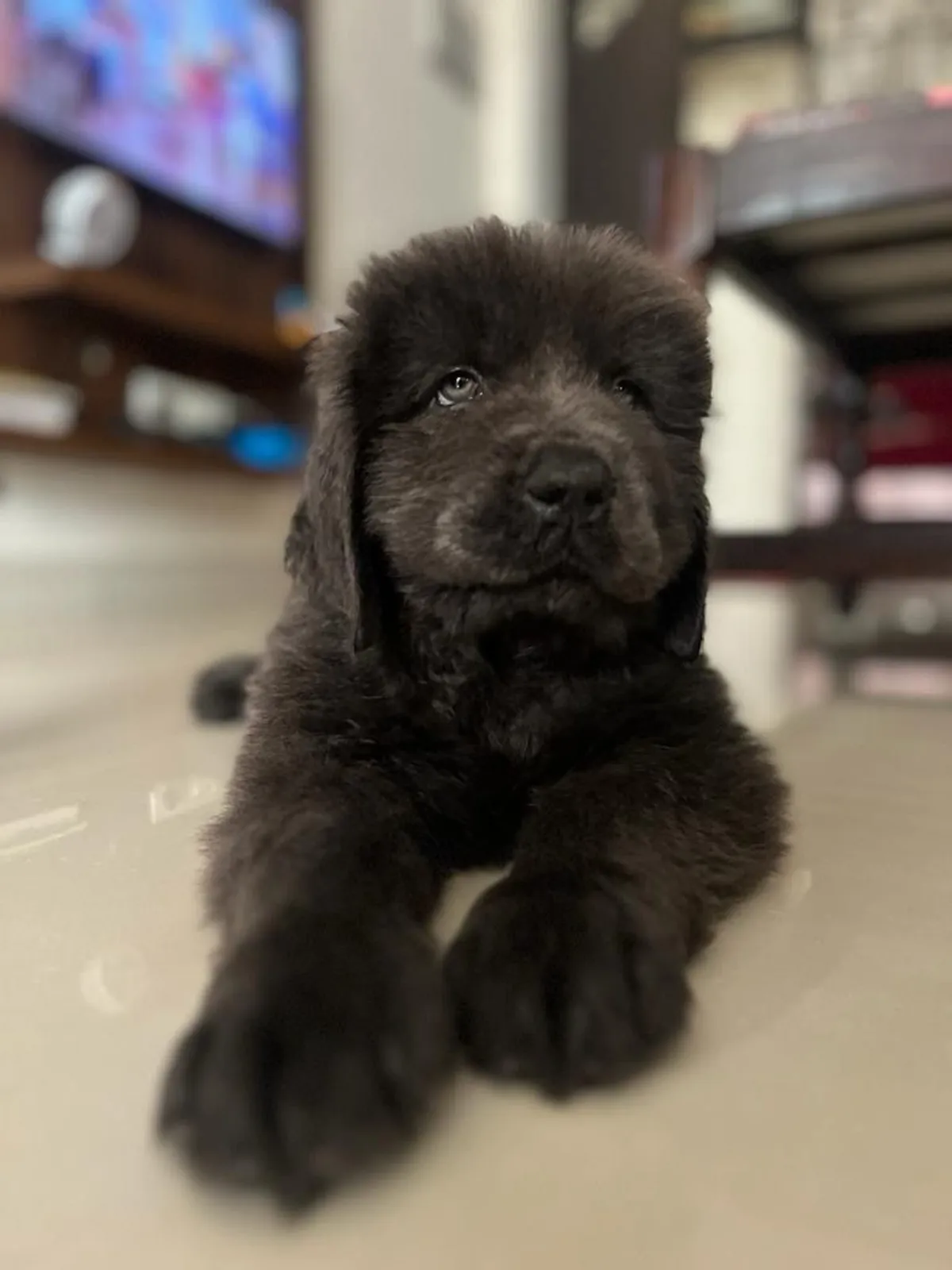

Newfoundland
The Newfoundland is one of the gentlest large breeds in existence — a massive, water-loving working dog from the coast of Newfoundland, Canada, where it served as a fisherman's helper: hauling nets, pulling carts, and most famously rescuing drowning sailors from the icy North Atlantic.
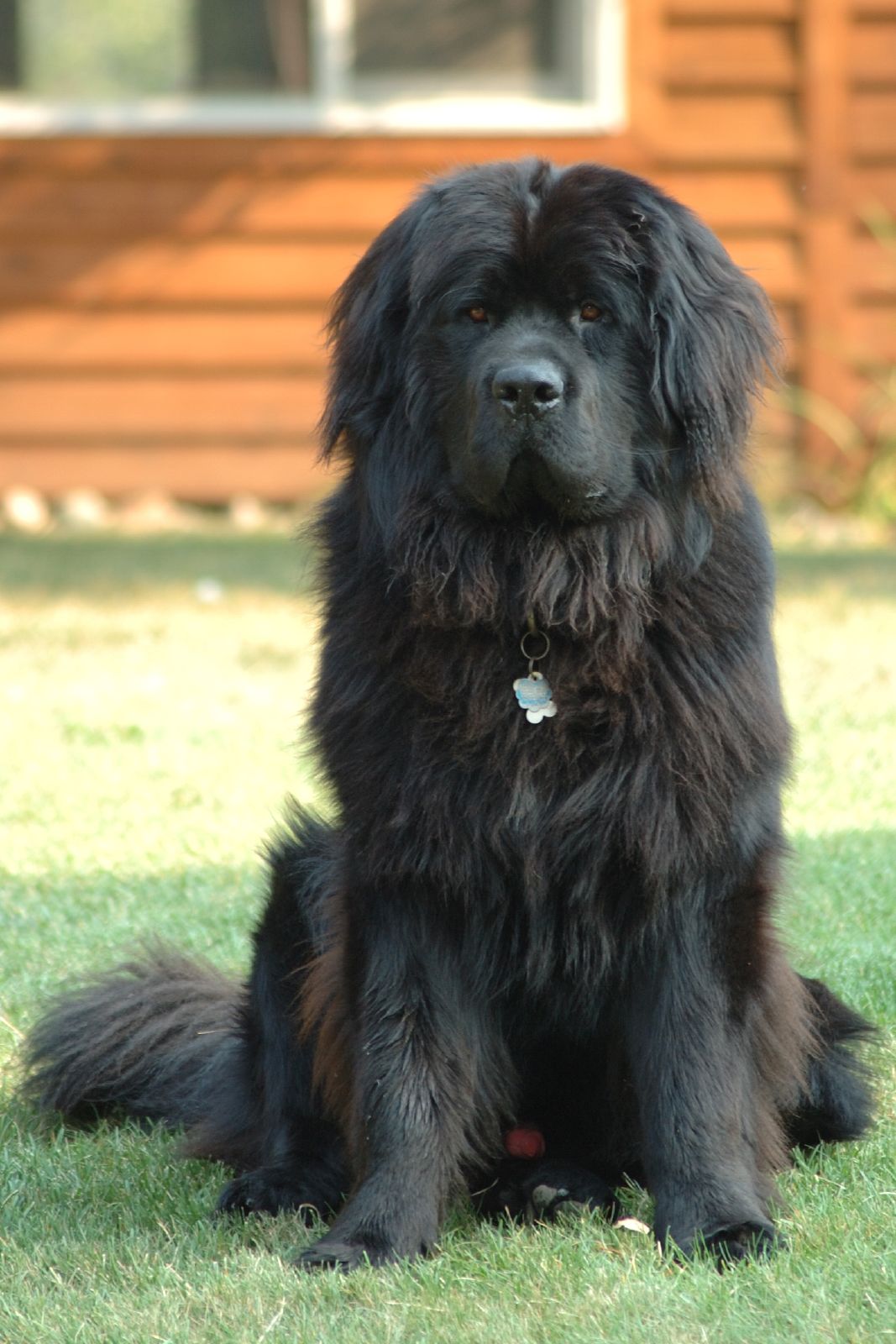
Photo: Wikimedia Commons
Origin
Canada
Lifespan
8–10 years
Weight
45–68 kg (100–150 lbs)
Height
63–74 cm (26–28 in)
Exercise
30 to 60 min/day
Diet
Omnivore — giant breed specific formula; multiple small meals essential; controlled calcium-phosphorus during growth
Taxonomic Hierarchy
Kingdom
Animalia
Phylum
Chordata
Class
Mammalia
Order
Carnivora
Family
Canidae
Genus
Canis
The Story
The Newfoundland is one of the gentlest large breeds in existence — a massive, water-loving working dog from the coast of Newfoundland, Canada, where it served as a fisherman's helper: hauling nets, pulling carts, and most famously rescuing drowning sailors from the icy North Atlantic. The breed's physical adaptations for water rescue are extraordinary — a water-resistant double coat, webbed feet, powerful swimming muscles, and a natural ability to execute a unique "swimming breaststroke" when rescuing victims. The Newfoundland is used for water rescue work by the Italian and French coast guards to this day.
Also Known As
Quick Facts
Discover which pets match your lifestyle
Physical Profile
Source: wikimedia
The Newfoundland is a massive, powerfully built dog with a distinctive thick, water-resistant double coat. The outer coat is coarse and straight; the undercoat is soft, dense, and oily — providing insulation in cold water. Colours are black (most common), brown, grey, and the striking Landseer pattern (white and black). The head is massive and broad with small, dark, deeply set eyes and a gentle expression. The webbed feet and muscular body are built for sustained swimming.
Grooming
High
Shedding
Very High
Brushing
3-4x-Weekly
Bathing
Every-6-8-Weeks
Coat Colors
Recognized By
Source: wikimedia
Temperament & Personality
Newfoundlands are sweet, patient, and genuinely gentle — one of the most reliably good-natured of all large breeds. They are devoted to their family and exceptionally patient with children — earning the nickname "Nanny Dog" (used more accurately than with Staffordshire Bull Terriers, with whom the term is also associated). They drool significantly, shed prodigiously, and can knock over small children inadvertently due to sheer mass — but their intent is always benevolent.
Personality Scores
Adaptability
2/5Attention Need
4/5Friendliness
5/5Playfulness
4/5Protectiveness
3/5Living Profile
Ideal Space
House-Large-Garden
Daily Exercise
30 to 60 min/day
Ideal Weather
-15°C to 22°C
Cognitive Benchmarks
Adaptability
20%
Attention
40%
Playfulness
40%
Communication Style
Stress Signals
drooling increase, heavy panting, leaning on owner, hiding, appetite loss
Care & Wellness
Professional Care Protocol
- •Moderate daily exercise of 30–45 minutes — they are not high-energy dogs. Swimming is an ideal exercise for Newfoundlands. Giant breed specific nutrition during growth. Multiple small meals to reduce bloat risk. The thick double coat requires thorough brushing 3–4 times weekly and sheds extremely heavily twice yearly. Drool management is a practical necessity.
Nutrition Notes
Giant breed formula essential. Bloat risk — feed 2-3 meals, gastropexy recommended. Cystinuria (bladder stones) breed-predisposed — adequate water and possibly adjusted protein. Taurine supplementation may be protective against DCM.
Vaccination Schedule
Vaccination Schedule
Senior Care
SAS (subaortic stenosis) — cardiac screening essential, often fatal. Hip and elbow dysplasia. Cystinuria (males primarily). Cruciate ligament tears. Bloat. The ultimate water rescue dog — webbed feet, water-resistant coat, natural lifesaving instinct. Short lifespan 8-10 years.
Wellbeing Activities
Nutrition & Sustenance
Daily Calories (Adult)
2200 kcal
Daily Calories (Young)
1800 kcal
Recommended Foods
Foods to Avoid
Health Overview
Sub-aortic stenosis (SAS, a heart condition) is uniquely elevated in Newfoundlands — annual cardiac examinations are strongly recommended. Hip and elbow dysplasia are significant. Bloat/GDV is a serious risk. Cystinuria (a urinary condition) occurs. Osteosarcoma elevates with age.
Common Conditions
Price Estimates
Pricing Guide
Average estimates as of 2025
NOT suited for Indian climate — thick water-resistant double coat designed for icy Canadian waters. AC mandatory. Black most classic; Landseer (black-and-white) is treated as separate breed by FCI. Food costs ₹10,000-15,000/month. Drool is significant.
Purchase Price
$1,500 to $3,500
Adoption Fee
$100 to $500
Data from 2025
Fun Facts
The Newfoundland is used in water rescue operations by the Italian and French coast guards — specially trained Newfoundlands parachute from helicopters into the sea to rescue drowning persons, bringing life rings and towlines to survivors.
Lord Byron's Newfoundland, Boatswain, received one of the most famous epitaphs in English literature — Byron had an elaborate monument built at Newstead Abbey inscribed with a poem lamenting the dog's greater virtue than humans.
Lewis and Clark brought a Newfoundland named Seaman on their 1804–1806 expedition across North America — Seaman is mentioned over 30 times in the expedition journals as a valuable member of the Corps of Discovery.