

New Guinea Singing Dog
The New Guinea Singing Dog is one of the most primitive living domestic dog populations — essentially a bridge between domestic dogs and wild canids.
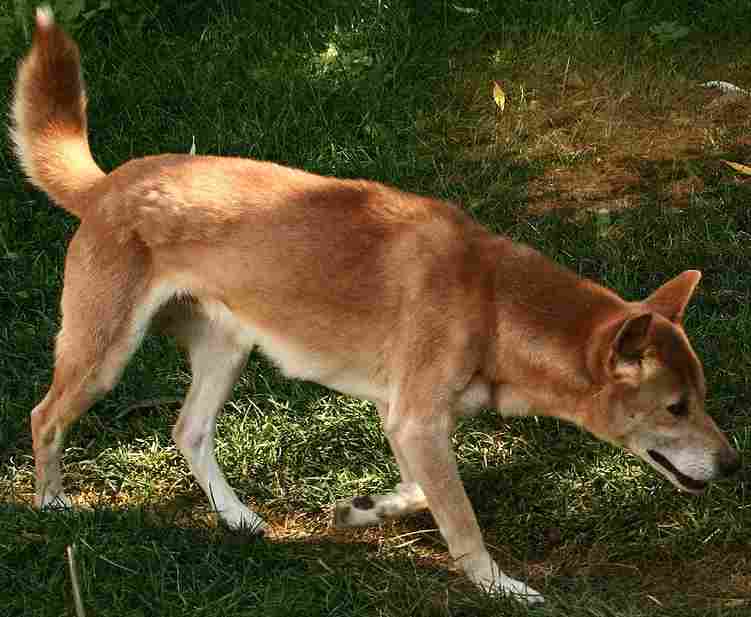
Photo: Wikimedia Commons
Origin
Papua New Guinea
Lifespan
15–20 years
Weight
9–14 kg (20–31 lbs)
Height
36–46 cm (14–18 in)
Exercise
30 to 60 min/day
Diet
Obligate carnivore tendency — raw or high-protein diet strongly recommended reflecting wild origins. No kibble with high grain content.
Taxonomic Hierarchy
Kingdom
Animalia
Phylum
Chordata
Class
Mammalia
Order
Carnivora
Family
Canidae
Genus
Canis
The Story
The New Guinea Singing Dog is one of the most primitive living domestic dog populations — essentially a bridge between domestic dogs and wild canids. The "singing" name comes from its extraordinary vocalisation — a haunting, harmonic howl unlike any other domestic dog that rises and falls in pitch and can be performed as a chorus by multiple individuals. A wild population (the New Guinea Highland Wild Dog) was rediscovered in the remote Highlands of Papua New Guinea in 2016 after being considered extinct in the wild. The captive/domestic population descends from just eight individuals imported in the 1950s–70s. Extremely rare.
Also Known As
Quick Facts
Discover which pets match your lifestyle
Physical Profile
Source: wikimedia
A small-medium, fox-like, very athletic dog with a dense, plush double coat, large erect ears, and almond-shaped eyes. White "points" on the feet, tail tip, and chin are characteristic. The body is extremely flexible — the NGSD can rotate its head nearly 180 degrees. Short, dense coat.
Grooming
Low
Shedding
Moderate
Brushing
1x-Weekly
Bathing
Every-8-12-Weeks
Coat Colors
Recognized By
Source: wikimedia
Temperament & Personality
Athletic, independent, and primitive — the NGSD is not a conventional companion dog. It will escape any conventional enclosure. It bonds with one person over time but is independent and cannot be reliably trained by conventional methods. Extraordinary flexibility and escape artistry.
Personality Scores
Adaptability
2/5Attention Need
1/5Friendliness
2/5Playfulness
3/5Protectiveness
3/5Living Profile
Ideal Space
House-Large-Garden
Daily Exercise
30 to 60 min/day
Ideal Weather
15°C to 30°C
Cognitive Benchmarks
Adaptability
20%
Attention
10%
Playfulness
30%
Communication Style
Stress Signals
extreme escape attempts, vocalisation changes, hiding, aggression, avoidance of humans
Care & Wellness
Professional Care Protocol
- •Specialist knowledge required — not for inexperienced owners. Escape-proof specialised enclosure required (can climb, dig, and squeeze through gaps). Raw diet recommended. The NGSD is a captive wild animal more than a domestic pet and requires an owner who understands wild canid behaviour.
Nutrition Notes
Essentially wild/feral dog. Extremely few domesticated individuals (~300 captive worldwide). Diet similar to dingoes. Very few known health issues.
Vaccination Schedule
Vaccination Schedule
Senior Care
Virtually no known breed-specific health issues — wild genetic stock. Extreme flexibility (can spread legs 90 degrees like a cat). Harmonic howl unique in canidae. Rediscovered in wild in 2016. NOT suitable as a pet — essentially a wild animal. ~300 in captivity. 15-18 years.
Wellbeing Activities
Nutrition & Sustenance
Daily Calories (Adult)
800 kcal
Daily Calories (Young)
500 kcal
Recommended Foods
Foods to Avoid
Health Overview
Exceptionally healthy due to wild origins — very few hereditary conditions. The captive population of ~300 individuals has significant inbreeding concerns from the tiny founding population. Hip dysplasia and eye conditions may occur. Generally one of the longest-lived dog types.
Common Conditions
Price Estimates
Pricing Guide
Average estimates as of 2025
NOT a pet breed. Conservation population only. Illegal to own in most jurisdictions. India: unavailable and not recommended.
Purchase Price
$3,000 to $8,000
Adoption Fee
$200 to $800
Data from 2025
Fun Facts
The New Guinea Singing Dog's howl is extraordinary — a haunting, harmonic vocalization that rises and falls in pitch, and when multiple individuals howl together they harmonize in a way no other domestic dog can. Wildlife researchers have compared it to birdsong for its musical quality.
In 2016, camera trap images from the remote Star Mountains of Papua New Guinea captured live images of the New Guinea Highland Wild Dog — the wild ancestor of the NGSD — which had been considered possibly extinct for decades. The rediscovery confirmed the wild population's survival.
The entire captive population of New Guinea Singing Dogs descends from fewer than 10 individuals imported in the 1950s–70s — making it one of the most genetically bottlenecked domestic dog populations in the world.


