
Scarlet Macaw
One of the most visually striking birds on Earth — three primary colours in bold, clean patches on a bird of impressive size.
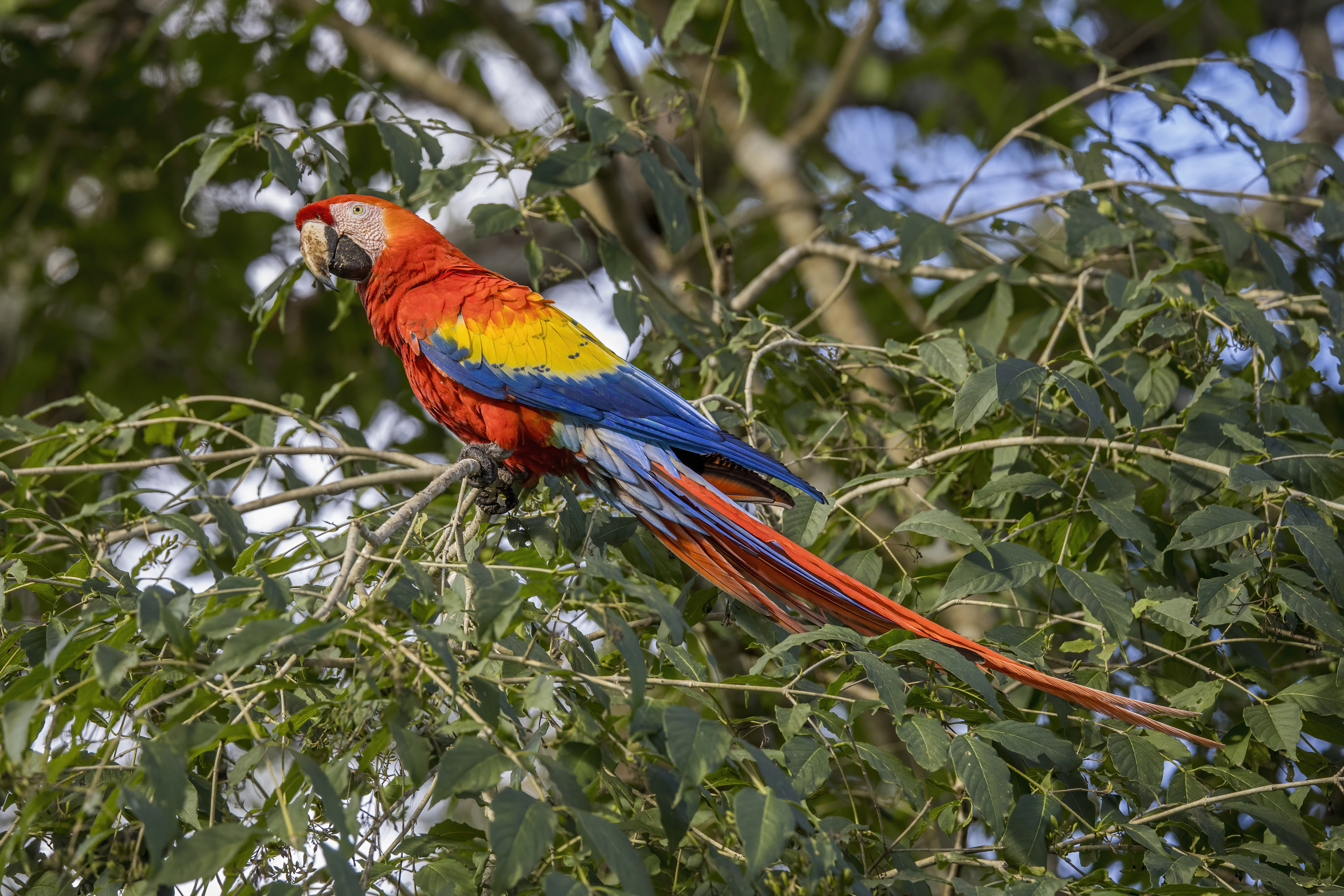
Photo: Wikimedia Commons
Origin
Mexico
Lifespan
40–75 years
Weight
900–1,100 g
Height
81–96 cm
Diet
Herbivore/Omnivore — pellets, fresh fruits, vegetables, nuts in moderation. Avoid avocado, chocolate, onion, macadamia.
Taxonomic Hierarchy
Kingdom
Animalia
Phylum
Chordata
Class
Aves
Order
Psittaciformes
Family
Psittacidae
Genus
Ara
The Story
One of the most visually striking birds on Earth — three primary colours in bold, clean patches on a bird of impressive size. The national bird of Honduras and a symbol of Mesoamerican cultures for over 3,000 years (Scarlet Macaw bones appear extensively in Maya and Aztec sites). Listed on CITES Appendix I due to habitat loss. Considered more temperamentally challenging than Blue-and-Gold Macaws.
Also Known As
Quick Facts
Discover which pets match your lifestyle
Physical Profile
Source: wikimedia
Brilliant scarlet body, yellow and green wing coverts creating a banded effect, bright royal blue flight feathers and lower back. Large bare white facial patch. Two-toned beak — pale upper, black lower. Extremely long red tail makes it one of the longest parrots by total length.
Grooming
Low
Shedding
Moderate
Coat Colors
Recognized By
Source: wikimedia
Temperament & Personality
Bold, demanding, and less consistently even-tempered than Blue-and-Golds. Can be aggressive if mishandled. Spectacularly beautiful and, when well-socialised, deeply affectionate with their primary person. CITES Appendix I status requires legal paperwork for purchase and sale.
Living Profile
Care & Wellness
Professional Care Protocol
- •Same requirements as Blue-and-Gold Macaw. Considered a bird for experienced macaw owners rather than first-time large parrot keepers.
Vaccination Schedule
Vaccination Schedule
Health Overview
Same as Blue-and-Gold Macaw. PBFD testing before purchase recommended. Feather plucking common. Aspergillosis. PDD.
Common Conditions
Fun Facts
Scarlet Macaws were domesticated by Mesoamerican civilisations over 2,000 years ago — large-scale breeding facilities have been found at Chaco Canyon (New Mexico) and Teotihuacan.
The Scarlet Macaw is the national bird of Honduras, appearing on the country's coat of arms.
Wild Scarlet Macaws mate for life — bonded pairs roost, forage, and preen together year-round.