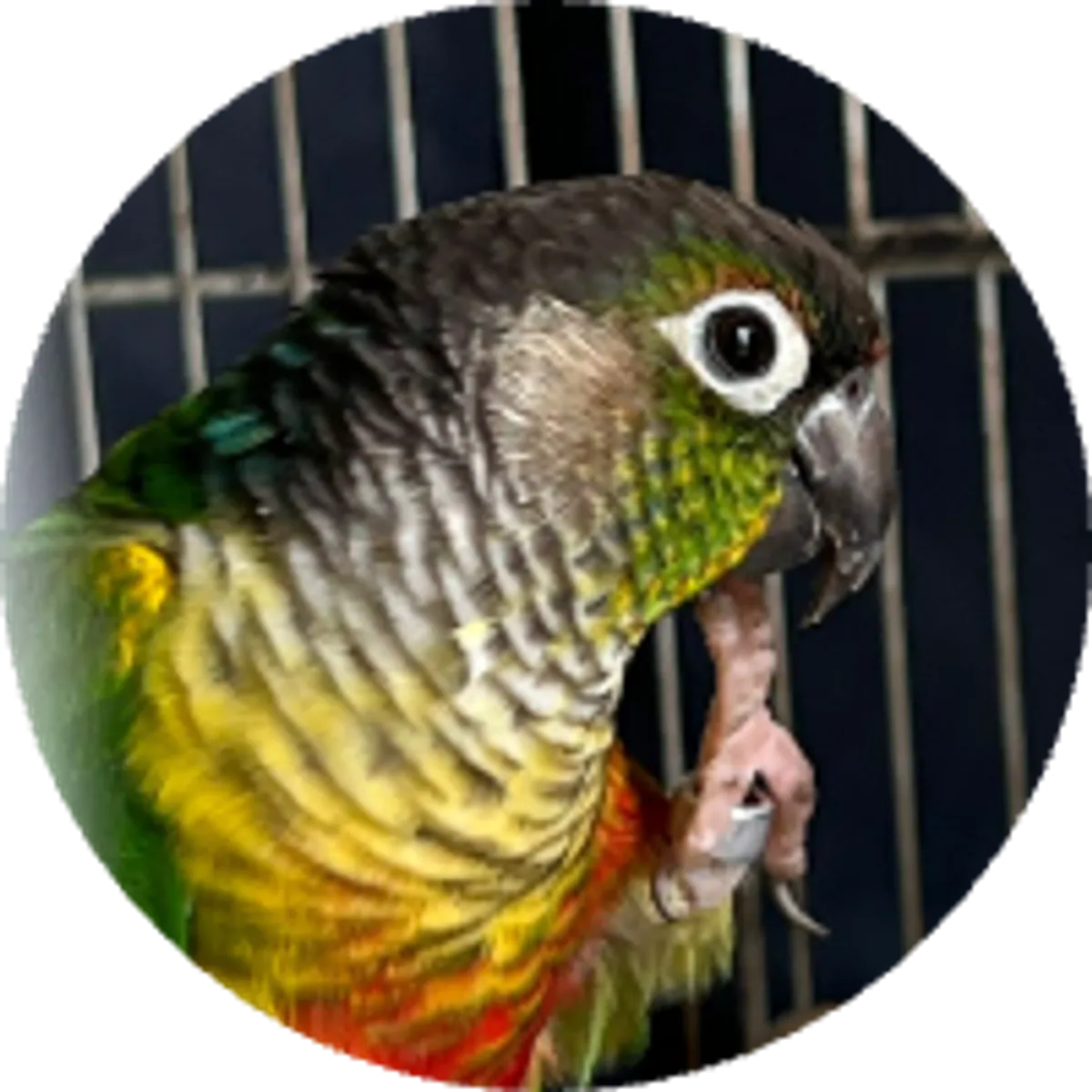

Quaker Parakeet
The only parrot that builds stick nests rather than using tree cavities.

Photo: Wikimedia Commons
Origin
Argentina
Lifespan
20–30 years
Weight
90–120 g
Height
29–31 cm
Diet
Herbivore — small parrot pellets, fresh vegetables, fruits, seeds. Avoid avocado, onion, chocolate.
Taxonomic Hierarchy
Kingdom
Animalia
Phylum
Chordata
Class
Aves
Order
Psittaciformes
Family
Psittaculidae
Genus
Myiopsitta
The Story
The only parrot that builds stick nests rather than using tree cavities. In native South America they build large communal nest structures housing dozens of pairs. Cold tolerance and adaptability have allowed feral populations to establish across the US, Europe, and elsewhere. Banned as pets in some US states due to agricultural pest concerns. Good talkers and highly entertaining.
Also Known As
Quick Facts
Discover which pets match your lifestyle
Physical Profile
Source: wikimedia
Green with distinctive grey face and breast, blue flight feathers, long green tail. The grey chest creates a distinctive scalloped pattern. Blue mutation is particularly popular in captivity.
Grooming
Low
Shedding
Low
Coat Colors
Recognized By
Source: wikimedia
Temperament & Personality
Bold, intelligent, and highly vocal — good talkers who learn words and phrases readily. Can develop resource-guarding behaviour. Their colonial instincts mean they are entertaining but opinionated birds.
Living Profile
Care & Wellness
Professional Care Protocol
- •Minimum cage 90 × 60 × 90 cm. 3+ hours daily interaction. Strong toys for energetic chewing. Check local regulations — banned in some US states (California, Georgia, Kansas, Kentucky, Pennsylvania, Tennessee, Wyoming).
Vaccination Schedule
Vaccination Schedule
Health Overview
Fatty liver disease from high-seed diets. Feather plucking. PDD. Generally robust and adaptable.
Common Conditions
Fun Facts
The Quaker Parakeet is the only parrot in the world that builds stick nests — their communal structures can house 20+ families in separate chambers.
Quakers thrive in Chicago despite winters reaching -20°C — the northernmost established population of any parrot species.