

Peach-Faced Lovebird
The most commonly kept lovebird species and one of the most popular small parrots globally.
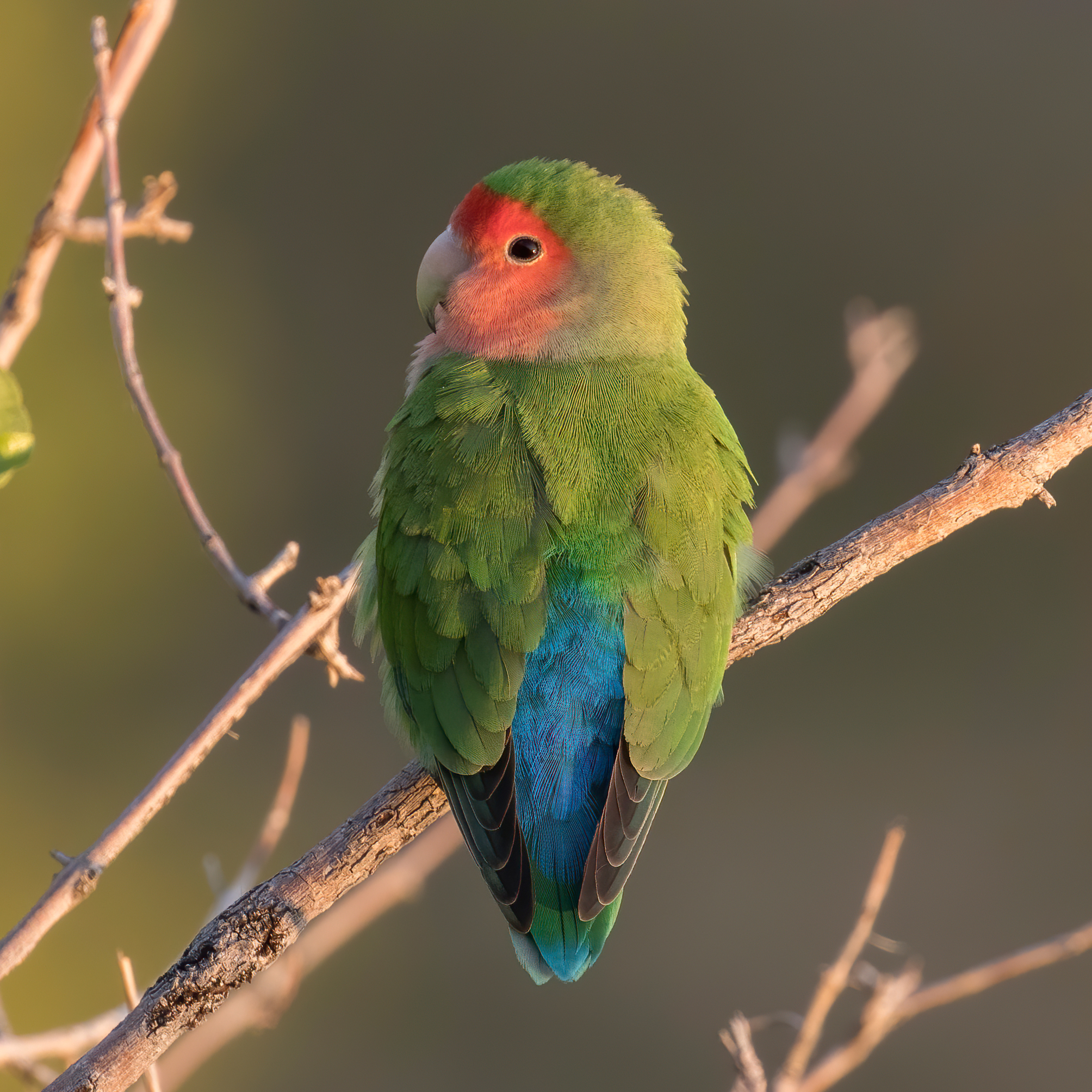
Photo: Wikimedia Commons
Origin
Namibia
Lifespan
10–15 years
Weight
43–60 g
Height
17–18 cm
Diet
Herbivore — small parrot pellets, fresh vegetables, fruit, seeds. Avoid avocado, onion, chocolate.
Taxonomic Hierarchy
Kingdom
Animalia
Phylum
Chordata
Class
Aves
Order
Psittaciformes
Family
Psittaculidae
Genus
Agapornis
The Story
The most commonly kept lovebird species and one of the most popular small parrots globally. Native to the arid scrublands of Namibia. Best known for their intense pair bonding — mated pairs spend much of their time preening each other and sitting pressed together. Their boldness relative to size is remarkable. A feral population has established in Phoenix, Arizona where the warm, arid climate replicates their native habitat.
Also Known As
Quick Facts
Discover which pets match your lifestyle
Physical Profile
Source: wikimedia
Wild type: bright emerald green with peach-pink face and throat, blue rump, short green tail. Extensive colour mutations include lutino (yellow), American cinnamon, pied, white-faced, and many more.
Grooming
Low
Shedding
Low
Coat Colors
Recognized By
Source: wikimedia
Temperament & Personality
Bold, active, and surprisingly assertive for tiny birds. Hand-raised individuals bond intensely with their owner. Pairs content with each other but may be less interactive with humans. Their voice is a sharp, repetitive chirp that can be persistent.
Living Profile
Care & Wellness
Professional Care Protocol
- •Minimum cage 60 × 45 × 60 cm. Daily out-of-cage time. Pairs generally more content but may bond exclusively to each other. Many toys and foraging items.
Vaccination Schedule
Vaccination Schedule
Health Overview
Feather cysts in primary wing feathers — heritable condition requiring surgical removal. Psittacosis. Yeast infections. Egg binding in females.
Common Conditions
Fun Facts
A feral Peach-Faced Lovebird population has thrived in Phoenix, Arizona since the 1980s — the hot, arid Arizona climate closely matches their native Namibian habitat.
Female lovebirds of this species carry nesting material by tucking it under the feathers on their rump — a unique behaviour not seen in other parrot species.