
Budgerigar
The Budgerigar is the world's most popular pet bird — kept in tens of millions of homes globally.
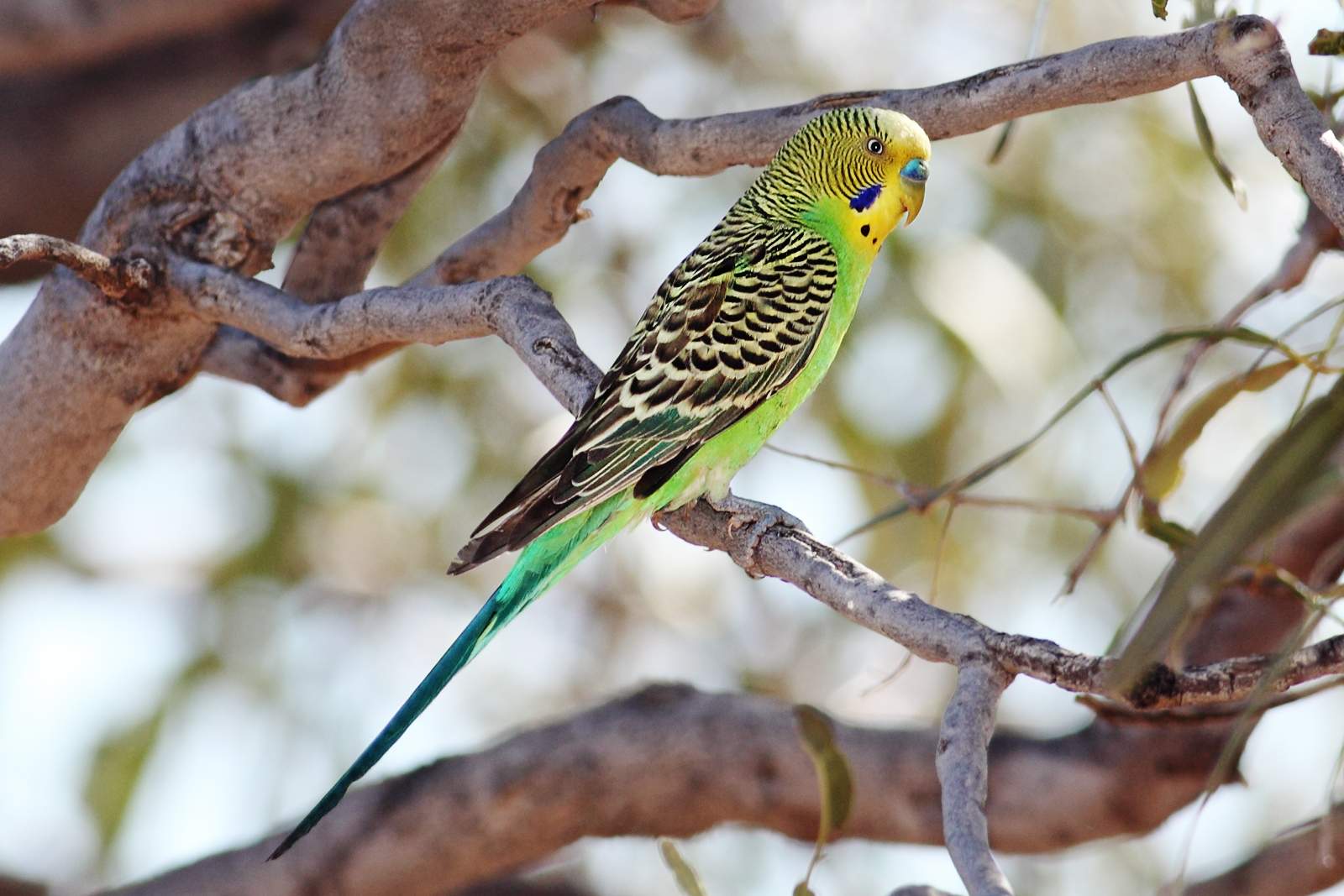
Photo: Wikimedia Commons
Origin
Australia
Lifespan
5–15 years
Weight
30–40 g
Height
18–20 cm
Diet
Herbivore — seeds (millet, canary seed), pellets, fresh vegetables, occasional fruit. Avoid avocado, chocolate, onion, caffeine.
Taxonomic Hierarchy
Kingdom
Animalia
Phylum
Chordata
Class
Aves
Order
Psittaciformes
Family
Psittaculidae
Genus
Melopsittacus
The Story
The Budgerigar is the world's most popular pet bird — kept in tens of millions of homes globally. Native to Australia's open scrublands, budgies are highly social flock birds that communicate constantly and form intense bonds with owners or companion birds. Their ability to learn human speech — some individuals master hundreds of words — combined with their small size and manageable noise level has made them the introductory pet bird for countless families worldwide.
Also Known As
Quick Facts
Discover which pets match your lifestyle
Physical Profile
Source: wikimedia
The wild budgerigar is bright green with yellow head and black barring on the wings and back. Captive breeding has produced an extraordinary range of colour mutations — blue, yellow, white, violet, grey, lutino, albino, and countless combinations. The cere (fleshy area above the beak) indicates sex: blue in adult males, brown in breeding females.
Grooming
Low
Shedding
Low
Coat Colors
Recognized By
Source: wikimedia
Temperament & Personality
Sociable, curious, and interactive. Tame budgies actively seek attention. Males in particular can learn extensive vocabularies. They are energetic and need daily out-of-cage time in a safe, bird-proofed space.
Living Profile
Care & Wellness
Professional Care Protocol
- •Minimum cage 60 × 40 × 40 cm. Multiple perches of varying diameter and texture essential. Fresh water and food daily. At least 2 hours out-of-cage time daily. Keeping pairs prevents loneliness. Fresh vegetables daily. Avoid mirrors as sole companions — causes obsessive behaviour.
Vaccination Schedule
Vaccination Schedule
Health Overview
Prone to thyroid hyperplasia (goitre) from iodine-deficient seed diets, psittacosis, avian gastric yeast (megabacteria), tumours (lipomas, testicular), and chronic egg laying in females. Annual avian vet checks strongly recommended.
Common Conditions
Fun Facts
Puck, a budgie owned by Camille Jordan of California, was recorded knowing 1,728 words by Guinness World Records in 1995 — the largest verified vocabulary of any bird.
Wild budgerigars form flocks of tens of thousands that move across Australia following rainfall and seed availability — their flock movements can be seen from aircraft.
Budgies can see ultraviolet light — their plumage has UV-reflective patterns invisible to humans that are used in mate selection.