

Xoloitzcuintli
The Xoloitzcuintli (pronounced "show-lo-eats-QUEENT-lee") is one of the world's oldest and rarest dog breeds, with an unbroken history in Mexico stretching back over 3,000 years.
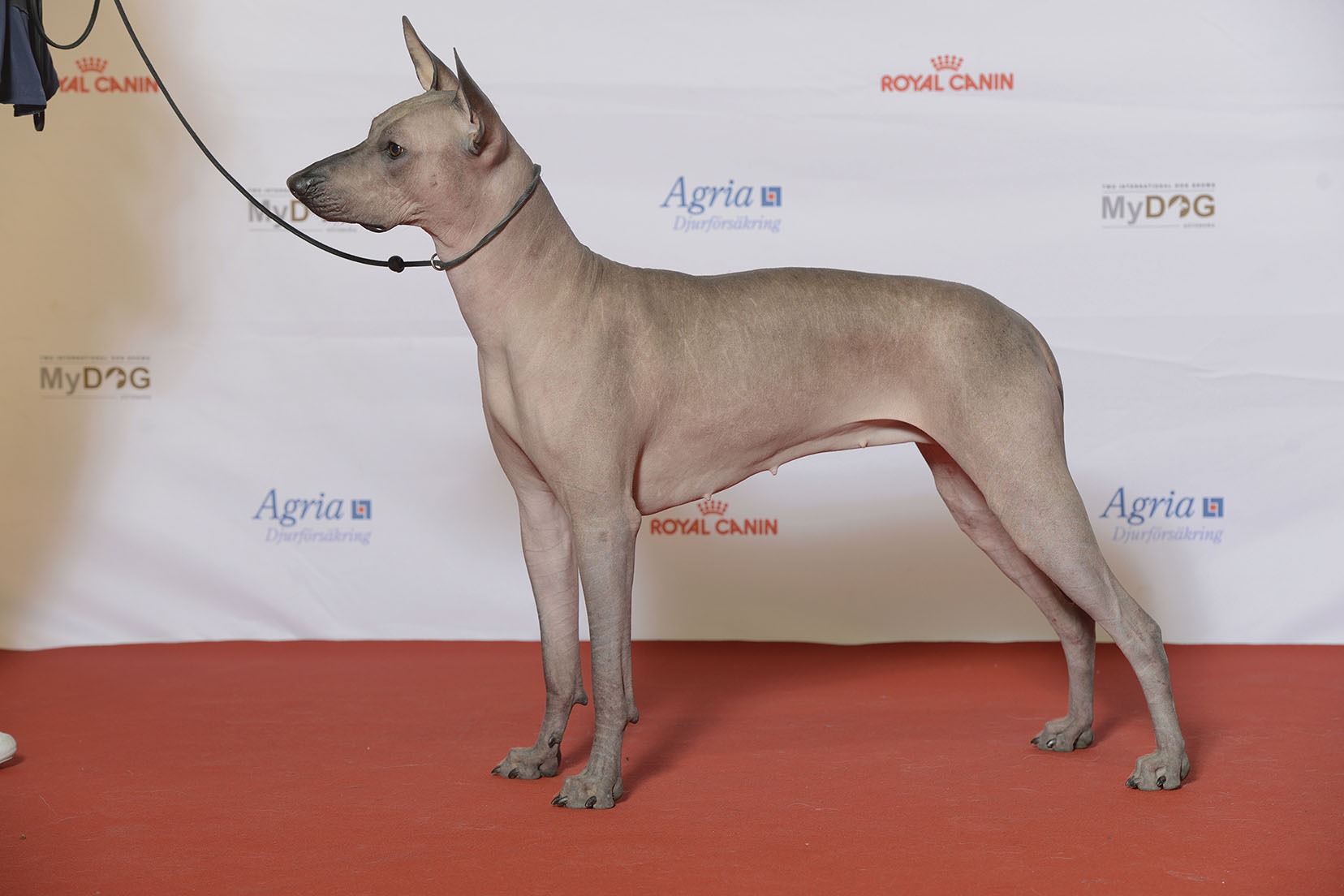
Photo: Wikimedia Commons
Origin
Mexico
Lifespan
13–18 years
Weight
4–25 kg (9–55 lbs — three sizes)
Height
25–57 cm (10–23 in)
Exercise
30 to 45 min/day
Diet
Omnivore — breed-appropriate kibble; skin protection with sunscreen required for hairless individuals
Taxonomic Hierarchy
Kingdom
Animalia
Phylum
Chordata
Class
Mammalia
Order
Carnivora
Family
Canidae
Genus
Canis
The Story
The Xoloitzcuintli (pronounced "show-lo-eats-QUEENT-lee") is one of the world's oldest and rarest dog breeds, with an unbroken history in Mexico stretching back over 3,000 years. Named after the Aztec deity Xolotl (god of lightning and death) and the Aztec word for dog (itzcuintli), the Xolo was sacred to the Aztecs, used in religious ceremonies, and believed to guide the dead through the underworld. Clay figurines of hairless dogs identical to the Xolo have been found in Aztec, Maya, and Colima burial sites dating to 100 CE. The Xolo is the national dog of Mexico and one of the few breeds that is both ancient and hairless.
Also Known As
Quick Facts
Discover which pets match your lifestyle
Physical Profile
Source: wikimedia
The Xolo comes in three sizes (toy, miniature, and standard) and two varieties (hairless and coated). The hairless variety — the most famous — has completely bare, smooth, warm skin that feels like a hot water bottle to the touch. Skin ranges from dark grey to black, liver, or bronze. The coated variety has a short, flat, close-lying coat. The head is wedge-shaped with large, upright ears and an intelligent, alert expression. The hairless body temperature feels warm to the touch — around 38–39°C — which was believed to have medicinal properties.
Grooming
Low
Shedding
None
Brushing
1x-Weekly
Bathing
Every-1-2-Weeks
Coat Colors
Recognized By
Source: wikimedia
Temperament & Personality
Xolos are calm, alert, and loyal. They bond closely to their family and are typically reserved with strangers. They are not boisterous or hyperactive — they are thoughtful, sensitive dogs that reflect their ancient companion heritage. They can be alert and vocal watchdogs. Despite centuries of close association with humans, they retain an independence and dignity that distinguishes them from more domestically selected breeds.
Personality Scores
Adaptability
4/5Attention Need
4/5Friendliness
4/5Playfulness
4/5Protectiveness
3/5Living Profile
Ideal Space
House-Small-Garden
Daily Exercise
30 to 45 min/day
Ideal Weather
15°C to 35°C
Cognitive Benchmarks
Adaptability
40%
Attention
40%
Playfulness
40%
Communication Style
Stress Signals
clinginess, wariness of strangers, hiding, trembling, skin irritation increase
Care & Wellness
Professional Care Protocol
- •Moderate daily exercise. The hairless variety needs sun protection in intense sunlight (SPF 30+ canine sunscreen) and moisturising to prevent dry skin in cold or dry climates. They should sleep indoors and may benefit from a coat in cold weather. The coated variety needs only weekly brushing. Despite the hairless appearance, they still produce dander — allergy sufferers should spend time with individuals before committing.
Nutrition Notes
Hairless variety has fewer teeth (hairlessness and missing teeth genetically linked). Soft food may be needed. Skin care is partly dietary — omega-3/6, vitamin E. Coated variety has full dentition. Three sizes: toy, miniature, standard.
Vaccination Schedule
Vaccination Schedule
Senior Care
Very few genetic health issues — 3,000+ year history of natural selection. Dental issues in hairless variety. Skin care lifelong (sunscreen, moisturiser, acne treatment). Coated variety is very low-maintenance. Mexico's national dog. Aztec sacred dog. Pronounced "show-low-eats-QUEENT-lee." 13-18 years.
Wellbeing Activities
Nutrition & Sustenance
Daily Calories (Adult)
800 kcal
Daily Calories (Young)
500 kcal
Recommended Foods
Foods to Avoid
Health Overview
One of the healthiest breeds due to ancient natural selection. Skin care is the primary concern for the hairless variety — sun protection and moisturising prevents sunburn and dry skin. Dental abnormalities (missing teeth, irregular dentition) are common, particularly in the hairless variety, due to linkage between the hairless gene and dental development. Patellar luxation occurs.
Common Conditions
Price Estimates
Pricing Guide
Average estimates as of 2025
Excellent for Indian climate (warm-weather breed). Three sizes. Hairless variety needs skin care. India: very rare but climate-appropriate.
Purchase Price
$1,500 to $4,000
Adoption Fee
$100 to $500
Data from 2025
Fun Facts
The Xolo was so sacred to the Aztecs that it was frequently sacrificed and buried alongside its owner to guide the human soul through the nine levels of the underworld to reach Mictlan (the land of the dead).
Frida Kahlo kept several Xolos at her famous Blue House in Mexico City — they appear in multiple paintings and photographs. Diego Rivera also kept Xolos.
The hairless gene in Xolos is incompletely dominant — breeding two hairless Xolos produces 25% coated offspring and occasionally lethal homozygous effects, meaning coated Xolos are genetically important to the breed's health.
The Xolo's warm, hairless skin led to folk belief that the dog could cure arthritis, rheumatism, and insomnia by sleeping in bed with the afflicted person — generating body warmth comparable to a heated blanket.


