

Schipperke
The Schipperke is a small, intensely black Belgian dog — the name means "little captain" in Flemish, referencing the breed's role as a barge dog on Belgium's canal networks.
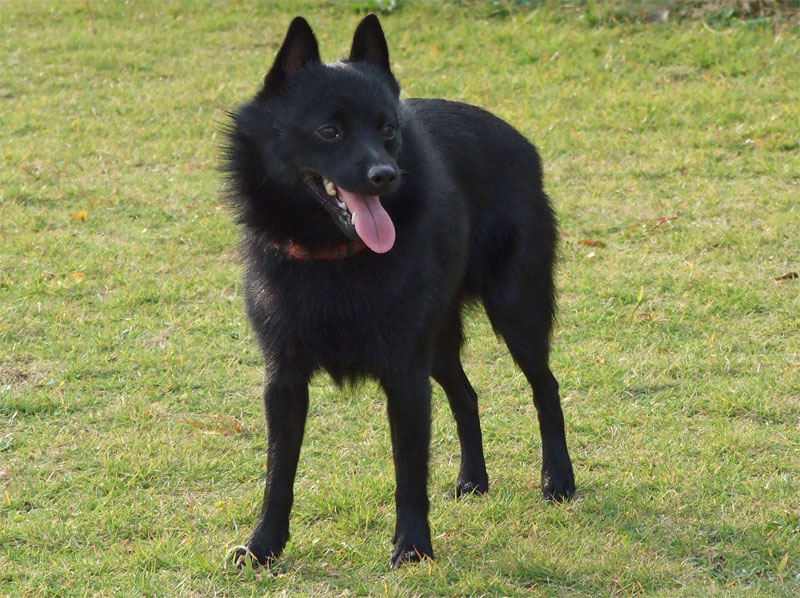
Photo: Wikimedia Commons
Origin
Belgium
Lifespan
13–15 years
Weight
3–9 kg (7–20 lbs)
Height
25–33 cm (10–13 in)
Exercise
30 to 45 min/day
Diet
Omnivore — quality small-breed kibble
Taxonomic Hierarchy
Kingdom
Animalia
Phylum
Chordata
Class
Mammalia
Order
Carnivora
Family
Canidae
Genus
Canis
The Story
The Schipperke is a small, intensely black Belgian dog — the name means "little captain" in Flemish, referencing the breed's role as a barge dog on Belgium's canal networks. They served as ratters and watchdogs on canal barges throughout Belgium and were also kept as companions in Belgian households. Their solid black colouring is unique among European working dogs of this size. They are fox-faced, intensely curious, and possessed of enormous self-confidence for their size — a miniature wolf in black. Queen Marie-Henriette of Belgium kept Schipperkes and sparked a fashion for them in the Belgian aristocracy.
Also Known As
Quick Facts
Discover which pets match your lifestyle
Physical Profile
Source: wikimedia
The Schipperke is a small, square, thickset dog with a distinctive fox-like head, small triangular erect ears, and a characteristic ruff of longer hair around the neck creating a mane-like effect. The coat is black, short on the face and legs, medium-length on the body, and longer around the neck. The tail is typically naturally bobbed or absent in many individuals. The overall impression is of a compact, intense, watchful little dog.
Grooming
Moderate
Shedding
Moderate
Brushing
2-3x-Weekly
Bathing
Every-6-8-Weeks
Coat Colors
Recognized By
Source: wikimedia
Temperament & Personality
Schipperkes are intensely curious and mischievous — they investigate everything, challenge everything, and generally behave as if rules were suggestions written by people of inferior intelligence. They are bold, self-confident, and alert, making excellent watchdogs. Their curiosity can get them into trouble — they are escape artists and persistent investigators. They bond closely with their family.
Personality Scores
Adaptability
5/5Attention Need
3/5Friendliness
3/5Playfulness
5/5Protectiveness
4/5Living Profile
Ideal Space
Apartment
Daily Exercise
30 to 45 min/day
Ideal Weather
-5°C to 25°C
Cognitive Benchmarks
Adaptability
50%
Attention
30%
Playfulness
50%
Communication Style
Stress Signals
excessive barking, escape attempts, destructive behaviour, guarding, nipping
Care & Wellness
Professional Care Protocol
- •Daily vigorous exercise of 45–60 minutes. The double coat requires brushing 2–3 times weekly and sheds moderately with a heavier seasonal blow. Dental care is important. Secure fencing is essential — their curiosity drives them to explore and escape.
Nutrition Notes
MPS IIIB (mucopolysaccharidosis type IIIB) — fatal storage disease, DNA test available. Generally robust. Moderate calorie needs. Dental disease in some lines.
Vaccination Schedule
Vaccination Schedule
Senior Care
MPS IIIB — DNA test mandatory for breeding. Legg-Calve-Perthes. Hypothyroidism. Epilepsy. Cataracts. "Little black devil" — mischievous, fearless personality in a tiny package. Belgian barge dog. Always black. 12-16 years.
Wellbeing Activities
Nutrition & Sustenance
Daily Calories (Adult)
500 kcal
Daily Calories (Young)
350 kcal
Recommended Foods
Foods to Avoid
Health Overview
Mucopolysaccharidosis Type IIIB (MPS IIIB) is a fatal neurological storage disease unique to Schipperkes with a DNA test available. Progressive retinal atrophy occurs. Hypothyroidism is elevated. Legg-Calvé-Perthes disease affects some individuals.
Common Conditions
Price Estimates
Pricing Guide
Average estimates as of 2025
Always solid black. Tailless (naturally or docked). India: rare. "Little Captain" of the Belgian canal boats.
Purchase Price
$800 to $2,000
Adoption Fee
$100 to $400
Data from 2025
Fun Facts
The first breed club specifically organised to promote a single dog breed was the Schipperke Club of Belgium, founded in 1888 — making it technically the first modern single-breed dog club.
A Schipperke named Styx was owned by scientist Marie Curie — reportedly a devoted companion during her laboratory work.
The Schipperke's naturally occurring bobtail is caused by a spontaneous mutation that has been present in the breed since before formal records began — making it one of the few breeds with a naturally occurring taillessness.


