

Standard Poodle
Consistently ranked as the second most intelligent dog breed in the world (after the Border Collie), the Standard Poodle is a paradox — widely perceived as a pampered aristocrat thanks to its elaborate show clips, but fundamentally a highly athletic, versatile working dog with exceptional intelligence and trainability.
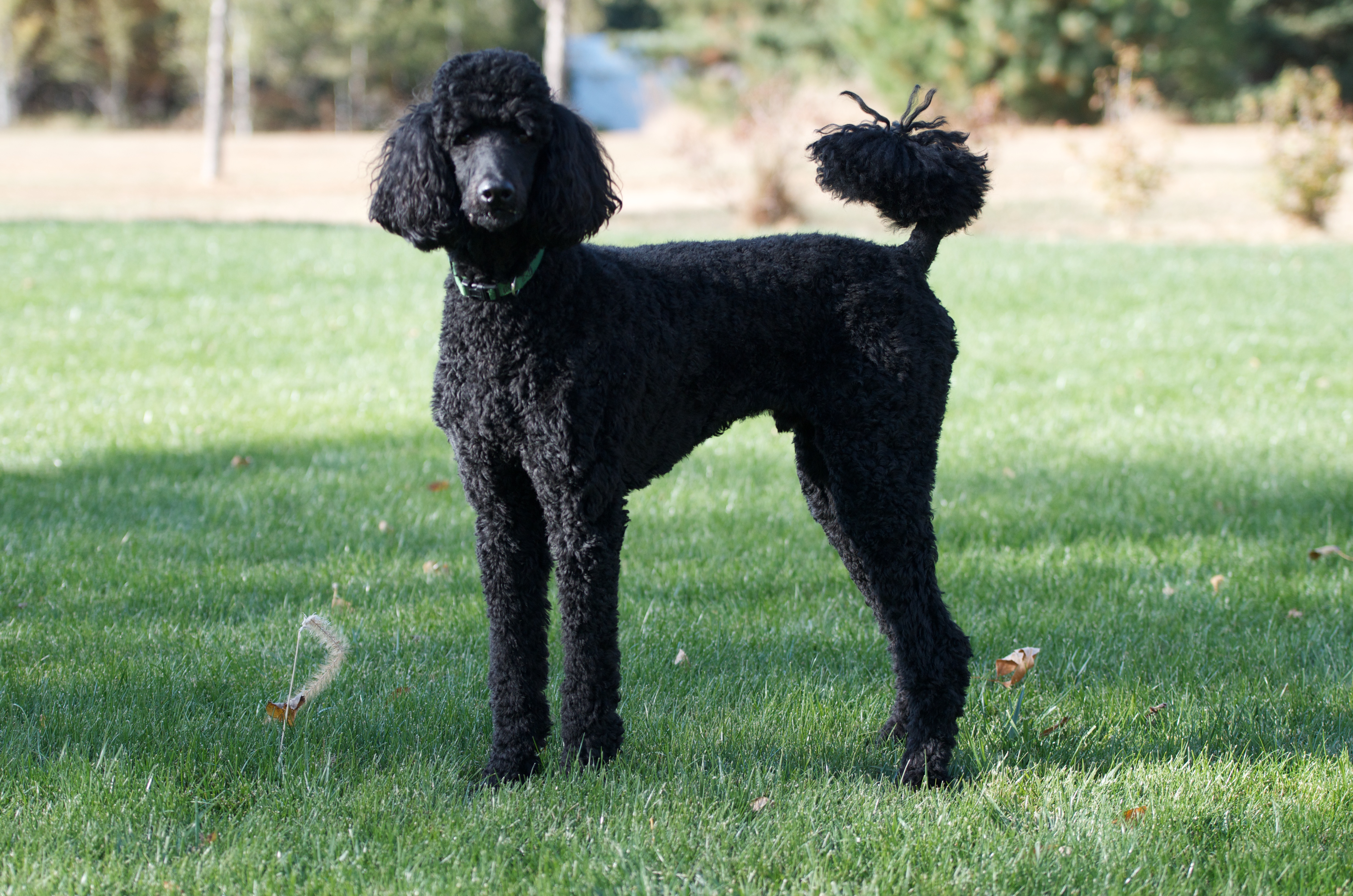
Photo: Wikimedia Commons
Origin
France
Lifespan
12–15 years
Weight
18–32 kg (40–70 lbs)
Height
46–60 cm (18–24 in)
Diet
Omnivore — high-quality kibble appropriate for large active breeds
Taxonomic Hierarchy
Kingdom
Animalia
Phylum
Chordata
Class
Mammalia
Order
Carnivora
Family
Canidae
Genus
Canis
The Story
Consistently ranked as the second most intelligent dog breed in the world (after the Border Collie), the Standard Poodle is a paradox — widely perceived as a pampered aristocrat thanks to its elaborate show clips, but fundamentally a highly athletic, versatile working dog with exceptional intelligence and trainability. Despite its association with France, the breed originated in Germany as a water retriever ("Pudel" meaning "to splash in water"), and the elaborate clip developed not for aesthetics but function — leaving fur over joints and organs to protect against cold water while removing excess coat that would weigh the dog down. Today's Poodle excels in obedience, agility, tracking, herding, and even truffle hunting, while being one of the most beloved family companions in the world.
Also Known As
Quick Facts
Discover which pets match your lifestyle
Physical Profile
Source: wikimedia
The Standard Poodle is an elegant, squarely built dog with long, straight legs and a long neck. Their most defining feature is their curly, dense, non-shedding coat that grows continuously and requires regular professional grooming. The face has a long, straight muzzle, dark oval eyes, and wide, close-hanging ears. Poodles come in a remarkable variety of solid colours, with black, white, apricot, and cream being most common in pets. The traditional lion clip seen in shows is not required — most pet owners opt for a practical puppy or teddy bear clip that keeps the coat manageable.
Grooming
Very High
Shedding
None
Coat Colors
Recognized By
Source: wikimedia
Temperament & Personality
Standard Poodles are among the most personable, sensitive, and emotionally intelligent dogs. They read their owners' moods with remarkable accuracy and are deeply attuned to human emotion. They are playful and fun-loving without being hyperactive, dignified without being aloof, and affectionate without being clingy. Their intelligence means they learn quickly — both the things you want them to learn and the things you don't. They are not a breed that tolerates boredom; mental stimulation through training, puzzle toys, and enrichment activities is as important as physical exercise. They tend to be good with children and other animals.
Living Profile
Care & Wellness
Professional Care Protocol
- •The Poodle's continuously growing, non-shedding coat is its most demanding maintenance requirement. Without regular grooming every 4–6 weeks, the coat mats severely. Daily brushing between professional grooms prevents matting. The distinctive Poodle trim, including the topknot and pom-poms, can be simplified for pet owners who prefer a more practical cut. Their ears hang close to the head and should be checked and cleaned weekly, particularly after swimming. Standard Poodles need 1–2 hours of vigorous exercise daily and excel at swimming, retrieving, and dog sports.
Vaccination Schedule
Vaccination Schedule
Health Overview
Standard Poodles are generally healthy and long-lived. Bloat (GDV) is the most serious breed-specific concern; prophylactic gastropexy is worth discussing. Hip dysplasia and Addison's disease (hypoadrenocorticism) occur at elevated rates. Progressive retinal atrophy and von Willebrand's disease (a bleeding disorder) are heritable concerns that responsible breeders screen for. Sebaceous adenitis, a skin condition causing hair loss and scaling, is more common in Poodles than most breeds.
Common Conditions
Fun Facts
Poodles have been the preferred truffle-hunting dog in France for centuries — their gentle mouths and exceptional nose make them ideal for finding and retrieving the delicate fungi without crushing them.
Stanley Coren's landmark study on dog intelligence ranked the Standard Poodle second overall, noting they can learn a new command in fewer than 5 repetitions and comply with first commands 95% of the time.
The elaborate Poodle show clip was not decorative in origin — each pom-pom and patch of fur was placed precisely to protect joints and vital organs from icy water while the dog retrieved waterfowl.
Poodles were popular circus dogs throughout the 18th and 19th centuries, their intelligence making them ideal performers capable of learning complex tricks.
Despite being the national dog of France, the Standard Poodle was bred in Germany — the French name "Caniche" means "duck dog," reflecting the breed's water-retrieving heritage.


