

Mudi
The Mudi is one of Hungary's three native herding breeds (alongside the Puli and Komondor) and possibly the least well-known of the three internationally.
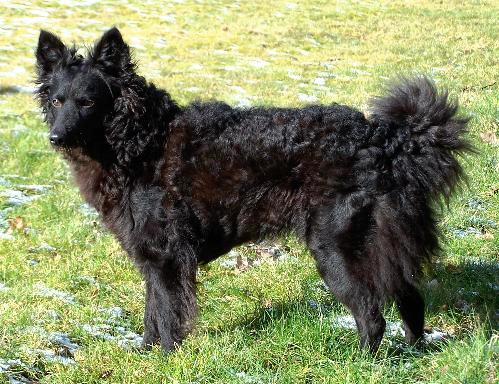
Photo: Wikimedia Commons
Origin
Hungary
Lifespan
12–14 years
Weight
8–13 kg (18–29 lbs)
Height
38–47 cm (15–18.5 in)
Exercise
40 to 60 min/day
Diet
Omnivore — active small-medium breed kibble
Taxonomic Hierarchy
Kingdom
Animalia
Phylum
Chordata
Class
Mammalia
Order
Carnivora
Family
Canidae
Genus
Canis
The Story
The Mudi is one of Hungary's three native herding breeds (alongside the Puli and Komondor) and possibly the least well-known of the three internationally. A natural breed that developed without formal selective breeding from the patchwork of spitz and herding dogs on the Hungarian plains, the Mudi was officially documented as a breed in the 1930s. They are extraordinary all-purpose working dogs — herding, guarding, hunting vermin, serving as search and rescue dogs, and competing in agility and obedience. Their intelligence is exceptional and their versatility remarkable. Numbers remain very low internationally.
Also Known As
Quick Facts
Discover which pets match your lifestyle
Physical Profile
Source: wikimedia
The Mudi has a distinctive wavy or curly coat of medium length — a unique texture among herding breeds. The coat can be almost any colour including a striking blue merle. The head is narrow and wedge-shaped with upright, mobile ears. The body is athletic and well-proportioned. The tail may be naturally bobbed or long. The overall impression is of a lively, capable working dog of unusual appearance.
Grooming
Moderate
Shedding
Moderate
Brushing
1-2x-Weekly
Bathing
Every-6-8-Weeks
Coat Colors
Recognized By
Source: wikimedia
Temperament & Personality
Mudis are highly intelligent, energetic, and deeply loyal. Their intelligence combined with their energy and problem-solving instinct requires owners who can channel these qualities constructively. They are trainable to a remarkable level — competing successfully in agility, obedience, and herding despite their tiny international numbers. They bond deeply with their primary handler.
Personality Scores
Adaptability
3/5Attention Need
4/5Friendliness
3/5Playfulness
5/5Protectiveness
3/5Living Profile
Ideal Space
House-Large-Garden
Daily Exercise
40 to 60 min/day
Ideal Weather
-10°C to 25°C
Cognitive Benchmarks
Adaptability
30%
Attention
40%
Playfulness
50%
Communication Style
Stress Signals
excessive barking, herding behaviour, pacing, destructive behaviour
Care & Wellness
Professional Care Protocol
- •Daily vigorous exercise of 1–1.5 hours. The wavy coat requires brushing 2–3 times weekly. Professional grooming is not typically needed — the coat is self-maintaining to a degree. Early training and socialisation.
Nutrition Notes
Very healthy breed. High energy — calorie-dense food when working. Few dietary restrictions. Joint supplements for active dogs.
Vaccination Schedule
Vaccination Schedule
Senior Care
Hip dysplasia (low rates). Epilepsy in rare cases. Cataracts. One of the rarest herding breeds — fewer than 3,000 worldwide. Hungarian. Wavy/curly coat (unlike Puli's cords). Merle colour accepted. AKC recognized 2022. 12-14 years.
Wellbeing Activities
Nutrition & Sustenance
Daily Calories (Adult)
900 kcal
Daily Calories (Young)
600 kcal
Recommended Foods
Foods to Avoid
Health Overview
Generally an extremely healthy breed due to natural development without intensive artificial selection. Hip dysplasia is rare. Epilepsy has been documented in some lines. One of the healthiest recognised herding breeds.
Common Conditions
Price Estimates
Pricing Guide
Average estimates as of 2025
Fewer than 3,000 worldwide. AKC recognized 2022. Merle accepted. India: unavailable.
Purchase Price
$1,500 to $3,500
Adoption Fee
$100 to $500
Data from 2025
Fun Facts
The Mudi is so rare internationally that fewer than 100 individuals exist outside of Hungary and Finland — making it one of the rarest FCI-recognised breeds in the world.
The Mudi's coat texture — wavy to loosely curled — is unique among herding breeds. No other herding breed has this specific coat type.
During World War II, the Mudi population was nearly destroyed — the breed was rebuilt from surviving individuals in the Hungarian countryside who had escaped the destruction of organised kennel populations.


