

Jack Russell Terrier
The Jack Russell Terrier is one of the most energetic, tenacious, and characterful small dogs ever developed — a working terrier created in the 19th century by Reverend John Russell of Devon to flush foxes from their dens during hunts.
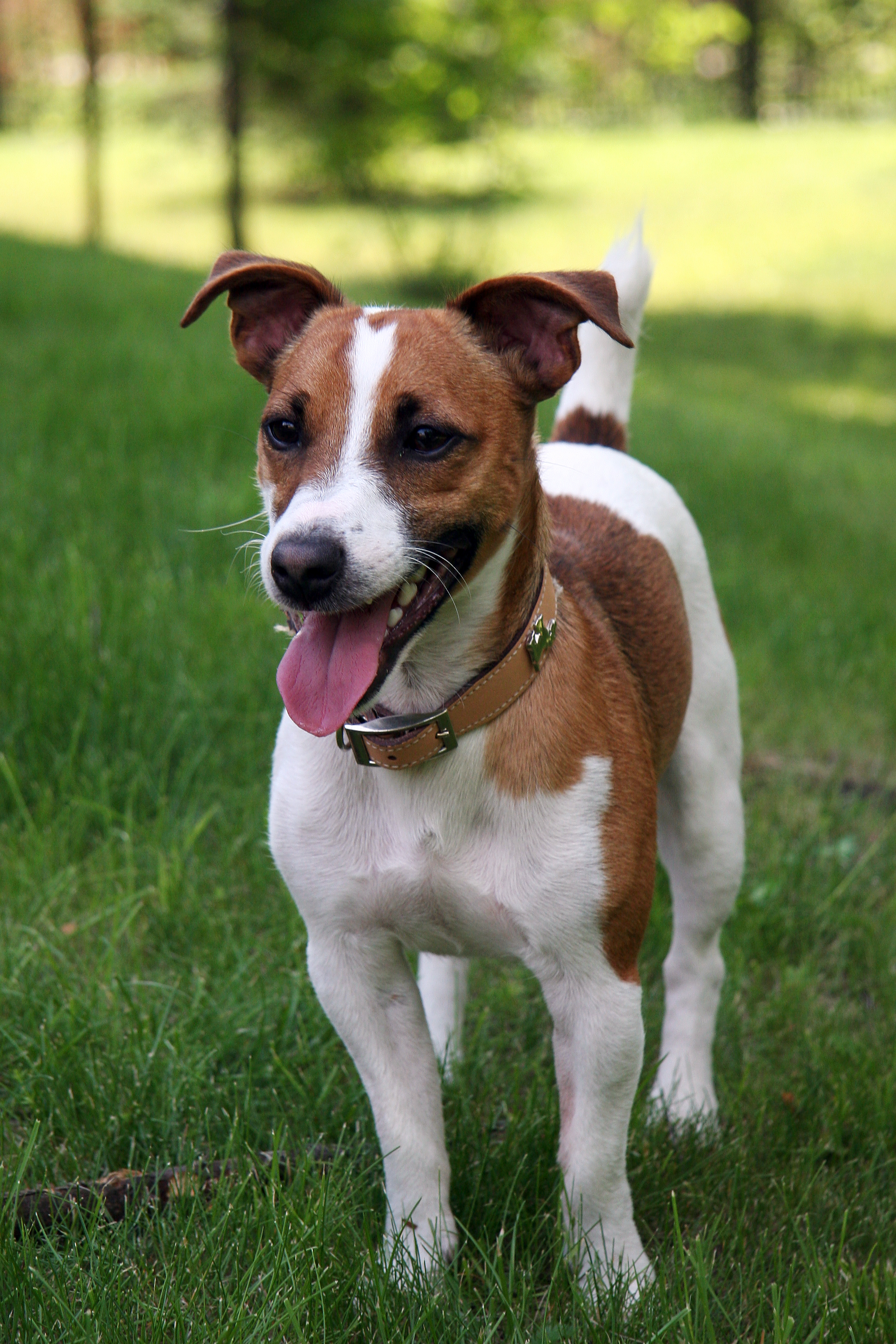
Photo: Wikimedia Commons
Origin
United Kingdom
Lifespan
13–16 years
Weight
5–8 kg (11–17 lbs)
Height
25–38 cm (10–15 in)
Exercise
40 to 60 min/day
Diet
Omnivore — active breed formula; maintain lean athletic build; they will eat more than they need if allowed
Taxonomic Hierarchy
Kingdom
Animalia
Phylum
Chordata
Class
Mammalia
Order
Carnivora
Family
Canidae
Genus
Canis
The Story
The Jack Russell Terrier is one of the most energetic, tenacious, and characterful small dogs ever developed — a working terrier created in the 19th century by Reverend John Russell of Devon to flush foxes from their dens during hunts. Despite weighing under 8 kg, the Jack Russell possesses the courage, drive, and stamina of a dog three times its size. They are the quintessential "big dog in a small body" — athletic, fearless, and absolutely uninterested in being told what to do. They are the dog of choice for trick trainers and agility competitors who want a small, explosive athlete.
Also Known As
Quick Facts
Discover which pets match your lifestyle
Physical Profile
Source: wikimedia
The Jack Russell comes in two coat types — smooth (short and dense), rough (longer and coarser), and broken (a mix between the two). The body is predominantly white (at least 51% white required) with black, tan, or both coloured markings on the head and/or body. The face is alert and intelligent. The body is compact and well-muscled — built for speed and agility in rough terrain.
Grooming
Low
Shedding
Moderate
Brushing
1-2x-Weekly
Bathing
Every-6-8-Weeks
Coat Colors
Recognized By
Source: wikimedia
Temperament & Personality
Jack Russells are virtually inexhaustible — they can outpace and outrun owners in both physical energy and mental tenacity. Their intelligence is extremely high but their trainability is moderate because they genuinely evaluate whether each request makes sense to them and may decline if they disagree. Their prey drive is exceptional — they should not be trusted with small animals. They are bold, curious, and entertaining, making them beloved by the right owners.
Personality Scores
Adaptability
4/5Attention Need
4/5Friendliness
4/5Playfulness
5/5Protectiveness
3/5Living Profile
Ideal Space
House-Small-Garden
Daily Exercise
40 to 60 min/day
Ideal Weather
5°C to 30°C
Cognitive Benchmarks
Adaptability
40%
Attention
40%
Playfulness
50%
Communication Style
Stress Signals
excessive barking, destructive digging, nipping, spinning, escape attempts
Care & Wellness
Professional Care Protocol
- •Jack Russells need 1.5–2 hours of vigorous exercise daily plus mental stimulation — without these, they will find their own entertainment (usually destructive). All outdoor exercise should be in a securely fenced area — they will follow a scent or prey for miles without concern for where they end up. The coat needs minimal maintenance; rough coats need hand-stripping twice yearly.
Nutrition Notes
Extremely high energy for size — calorie-dense food for active dogs. Lens luxation risk may be worsened by inflammation — anti-inflammatory diet helps. Generally robust with few dietary restrictions. Moderate food drive.
Vaccination Schedule
Vaccination Schedule
Senior Care
Lens luxation — breed-defining eye emergency. DNA test (ADAMTS17 gene) available. If lens displaces forward, emergency surgery within 48 hours or eye is lost. Legg-Calve-Perthes disease. Deafness in predominantly white dogs. Patellar luxation. Remarkably long-lived (13-16 years, some 18+).
Wellbeing Activities
Nutrition & Sustenance
Daily Calories (Adult)
600 kcal
Daily Calories (Young)
400 kcal
Recommended Foods
Foods to Avoid
Health Overview
Generally a very robust, long-lived breed. Patellar luxation and Legg-Calvé-Perthes disease occur. Lens luxation (dislocation of the eye lens) is a significant concern — can cause glaucoma and blindness. A DNA test is available for primary lens luxation (PLL). Deafness occurs in white-headed individuals.
Common Conditions
Price Estimates
Pricing Guide
Average estimates as of 2025
JRT vs Parson Russell vs Russell Terrier — three related but distinct breeds. JRT is the most common. High surrender rate due to energy levels. India: moderately available, affordable.
Purchase Price
$600 to $1,500
Adoption Fee
$50 to $350
Data from 2025
Fun Facts
Reverend John Russell bred his terriers specifically to be long-legged enough to run alongside the foxhounds during a hunt yet small enough to bolt a fox from its den underground.
Frasier's dog Eddie in the American sitcom Frasier was played by a Jack Russell Terrier named Moose — who received more fan mail than any of the human cast members.
Jack Russells hold multiple world records for agility — their speed, athleticism, and trainability in the right hands makes them dominant in small-dog agility competition.


