

Irish Wolfhound
The Irish Wolfhound is the tallest of all dog breeds by AKC standards and one of the oldest breeds in Europe, with records of large Irish hounds in Roman literature from 391 CE.
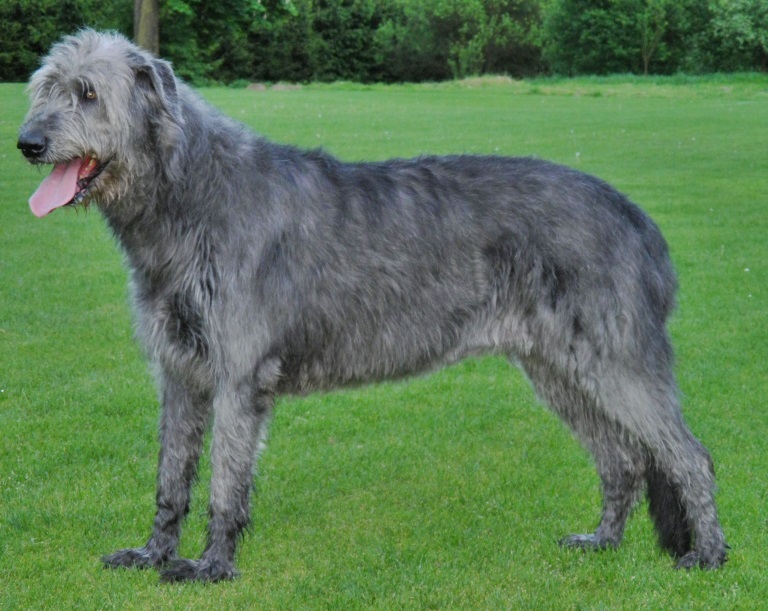
Photo: Wikimedia Commons
Origin
Ireland
Lifespan
6–8 years
Weight
48–70 kg (105–155 lbs)
Height
71–86 cm (28–34 in)
Exercise
30 to 45 min/day
Diet
Omnivore — giant breed specific formula; multiple small meals essential; elevated calcium-phosphorus ratio important during growth
Taxonomic Hierarchy
Kingdom
Animalia
Phylum
Chordata
Class
Mammalia
Order
Carnivora
Family
Canidae
Genus
Canis
The Story
The Irish Wolfhound is the tallest of all dog breeds by AKC standards and one of the oldest breeds in Europe, with records of large Irish hounds in Roman literature from 391 CE. Bred to hunt wolves and Irish elk — an enormous extinct deer — the Wolfhound nearly went extinct when its quarry disappeared. Captain George Graham of Scotland revived the breed in the 19th century using surviving Irish hounds crossed with Deerhounds, Borzoi, and Great Danes. The result is a dog of immense physical scale combined with a remarkably gentle, calm temperament — one of nature's most beautiful contradictions.
Also Known As
Quick Facts
Discover which pets match your lifestyle
Physical Profile
Source: wikimedia
The Irish Wolfhound is a rough-coated sighthound of enormous size — the minimum height standard (71 cm for females) exceeds the maximum for many large breeds. The rough, wiry, tousled coat comes in grey, brindle, red, black, white, or fawn. The body is muscular and athletic, the head long and narrow. Despite their size, they have a graceful, effortless gait.
Grooming
Moderate
Shedding
Moderate
Brushing
2-3x-Weekly
Bathing
Every-6-8-Weeks
Coat Colors
Recognized By
Source: wikimedia
Temperament & Personality
Irish Wolfhounds are among the gentlest of all breeds — calm, thoughtful, and patient. They are not typically guard dogs despite their intimidating size; they are more likely to greet strangers with calm curiosity than aggression. They are devoted to their family and good with children, though their size requires care around very small children. Their sighthound nature means they have a strong prey drive and should not be trusted off-lead in unsecured areas.
Personality Scores
Adaptability
2/5Attention Need
3/5Friendliness
5/5Playfulness
3/5Protectiveness
2/5Living Profile
Ideal Space
House-Large-Garden
Daily Exercise
30 to 45 min/day
Ideal Weather
-5°C to 25°C
Cognitive Benchmarks
Adaptability
20%
Attention
30%
Playfulness
30%
Communication Style
Stress Signals
excessive leaning, withdrawal, appetite loss, pacing, gentle whining
Care & Wellness
Professional Care Protocol
- •Moderate daily exercise of 40–60 minutes suits most adult Wolfhounds. During growth (up to 18–24 months), exercise should be limited — their massive skeleton is vulnerable to damage during the growth phase. Giant-breed specific nutrition is critical during growth. The rough coat needs brushing weekly and tidying by hand-stripping or trimming every few months.
Nutrition Notes
Giant breed puppy formula critical — controlled growth rate prevents devastating bone disorders. Bloat risk extremely high — feed 3 meals, gastropexy recommended. Osteosarcoma risk — anti-inflammatory diet may help. Food costs ₹10,000-15,000/month India.
Vaccination Schedule
Vaccination Schedule
Senior Care
Tragically short lifespan (6-8 years, among shortest of any breed). DCM (dilated cardiomyopathy) — echocardiogram annually from age 2. Osteosarcoma. Bloat. Liver shunt. Pneumonia. The tallest dog breed (minimum 81 cm). "Gentle when stroked, fierce when provoked." Heart screening is the single most important health investment.
Wellbeing Activities
Nutrition & Sustenance
Daily Calories (Adult)
2500 kcal
Daily Calories (Young)
2200 kcal
Recommended Foods
Foods to Avoid
Health Overview
Irish Wolfhounds have the shortest lifespan of any breed (6–8 years) primarily due to their enormous size and elevated cancer and cardiac rates. Dilated cardiomyopathy (DCM) and osteosarcoma are the leading causes of death. Portosystemic shunt occurs. Bloat/GDV is a significant risk. Hip and elbow dysplasia occur.
Common Conditions
Price Estimates
Pricing Guide
Average estimates as of 2025
One of the most expensive breeds — rare, large litters needed to maintain breed, high breeder costs. India: essentially unavailable domestically, imported only. Not suited to Indian climate. Food + vet costs among highest of any breed.
Purchase Price
$1,500 to $4,000
Adoption Fee
$100 to $500
Data from 2025
Fun Facts
The Irish Wolfhound is the tallest dog breed in the world — a large male can stand eye to eye with a grown adult human when on hind legs.
The breed's motto is "gentle when stroked, fierce when provoked" — coined to capture the paradox of an enormous, fearsome hunter with one of the most gentle temperaments in the dog world.
Irish Wolfhounds were given as royal gifts throughout history — Henry VIII received them from Irish chieftains, and they were presented to the Shah of Persia.
The "Wolfhound" name is literal — the breed was used to control wolf populations in Ireland and was so effective that, together with deforestation, they contributed to the extinction of the Irish wolf by the 17th century.


