

English Bulldog
The English Bulldog has undergone one of the most dramatic transformations in canine history.
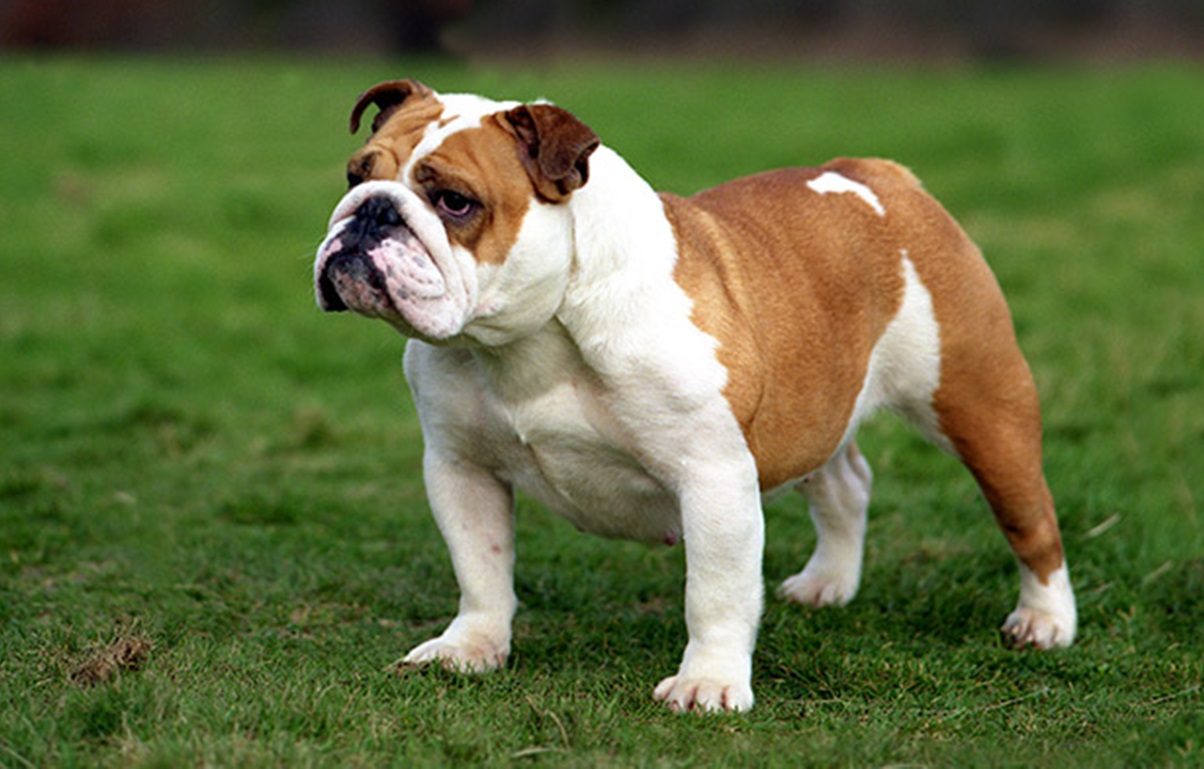
Photo: Wikimedia Commons
Origin
United Kingdom
Lifespan
8–10 years
Weight
18–25 kg (40–55 lbs)
Height
31–40 cm (12–16 in)
Exercise
20 to 40 min/day
Diet
Omnivore — measured portions of quality kibble; weight management is critical
Taxonomic Hierarchy
Kingdom
Animalia
Phylum
Chordata
Class
Mammalia
Order
Carnivora
Family
Canidae
Genus
Canis
The Story
The English Bulldog has undergone one of the most dramatic transformations in canine history. The ancestors of today's Bulldogs were agile, athletic dogs bred for the brutal sport of bull-baiting — gripping bulls by the nose and hanging on despite being tossed through the air. When bull-baiting was banned in 1835, the breed might have disappeared entirely, but was rescued by fanciers who deliberately bred out aggression and athleticism while emphasising the stocky, wrinkled appearance. The result is a dog whose physical appearance has moved so far from its working origins that it now represents one of the most debated conformational extremes in purebred dogs. Modern Bulldogs are gentle, affectionate, and profoundly laid-back — the national symbol of Britain and a beloved companion worldwide, though their health challenges are significant.
Also Known As
Quick Facts
Discover which pets match your lifestyle
Physical Profile
Source: wikimedia
The English Bulldog is compact and low-slung with a massive short-faced head, wide shoulders, and a characteristic "sourmug" — deeply wrinkled face, pushed-in nose, and lower jaw that protrudes beyond the upper. The body is wide and rounded with a roach back, very short legs, and a characteristic rolling gait. The loose, wrinkled skin at the head and throat forms a heavy dewlap. The tail is either straight or screwed (corkscrew). The coat is short, fine, and smooth.
Grooming
Low
Shedding
Moderate
Brushing
2-3x-Weekly
Bathing
Every-4-6-Weeks
Coat Colors
Recognized By
Source: wikimedia
Temperament & Personality
Despite their tough, warrior appearance, Bulldogs are among the most gentle, affectionate, and low-key breeds. They are devoted to their families, particularly good with children, and remarkably patient. They are stubborn — an endearing quality in a pet, if occasionally frustrating — and tend to do things on their own terms. They are not highly energetic dogs and are perfectly content with leisurely walks and long naps. They are sociable with other dogs and animals and rarely aggressive. Their comical facial expressions and snoring are endearing features to most owners.
Personality Scores
Adaptability
4/5Attention Need
4/5Friendliness
4/5Playfulness
3/5Protectiveness
2/5Living Profile
Ideal Space
Apartment
Daily Exercise
20 to 40 min/day
Ideal Weather
10°C to 25°C
Cognitive Benchmarks
Adaptability
40%
Attention
40%
Playfulness
30%
Communication Style
Stress Signals
excessive panting, overheating, drooling increase, hiding, appetite loss
Care & Wellness
Professional Care Protocol
- •Daily cleaning of all facial wrinkles with a damp cloth is essential to prevent bacterial infections in the skin folds. The tail pocket (the indentation where the tail meets the body) also needs daily cleaning. Exercise must be moderate and conducted in cool temperatures — heat is dangerous for Bulldogs due to their severely compromised airway. Morning and evening walks in cool weather are ideal; no exercise during hot weather. Weight management is crucial as excess weight dramatically worsens breathing difficulties. Despite their relatively low-maintenance coat, they do shed moderately.
Nutrition Notes
Obesity is the primary dietary concern — strict calorie control. Skin fold infections require omega-rich diet. Flatulence very common; avoid high-gas foods (soy, beans). Dental overcrowding means soft food may be needed in some individuals.
Vaccination Schedule
Vaccination Schedule
Senior Care
Average lifespan only 8–10 years. BOAS surgery ideally before age 4. Cherry eye, entropion, and dry eye worsen with age. Joint disease (shoulders and hips) — ramps, not stairs. Skin fold cleaning becomes daily task. Cannot tolerate anaesthesia well — inform vets.
Wellbeing Activities
Nutrition & Sustenance
Daily Calories (Adult)
1000 kcal
Daily Calories (Young)
800 kcal
Recommended Foods
Foods to Avoid
Health Overview
Bulldogs have one of the poorest health profiles of any breed due to their extreme conformation. Breathing difficulties (BOAS) affect the majority; many benefit from corrective surgery. Their compact frame makes natural birth nearly impossible — almost all Bulldog litters are delivered by caesarean. Skin fold infections require diligent management. Cherry eye (prolapse of the nictitating membrane gland) is common. Intervertebral disc disease and hip dysplasia occur. Their lifespan of 8–10 years is shorter than most comparable-sized breeds.
Common Conditions
Price Estimates
Pricing Guide
Average estimates as of 2025
Like Frenchies, mandatory C-sections drive up breeder costs. Netherlands and Norway considering breed bans due to welfare concerns. Expect vet costs 2-3x average breed.
Purchase Price
$1,500 to $4,000
Adoption Fee
$200 to $600
Data from 2025
Fun Facts
The Bulldog is the national symbol of the United Kingdom and a symbol of British stubbornness and determination — Winston Churchill was compared to the breed so often that Bulldog iconography became associated with his wartime leadership.
Bull-baiting Bulldogs in the 17th century were significantly different from today's dogs — more athletic, taller, and less extreme in facial features. They were used in the brutal sport of grabbing and pinning bulls, which required exceptional tenacity and pain tolerance.
The English Bulldog is the most popular mascot in US college sports — over 40 universities use the Bulldog as their athletic symbol.
A Bulldog named Uga has been the mascot of the University of Georgia's football team since 1956; Uga X is the current descendant of the original.
Bulldogs cannot swim and must never be left unattended near water — their heavy, front-loaded body causes them to sink immediately.


