

Dogo Argentino
The Dogo Argentino is the only dog breed developed in Argentina, created in the 1920s by brothers Antonio and Agustín Nores Martínez with the explicit goal of producing an ideal big-game hunting dog for Argentina's pumas, peccaries, and wild boar — combining the courage and tenacity of the fighting dogs they used as foundation stock with the trainability and gentle family temperament they desired.
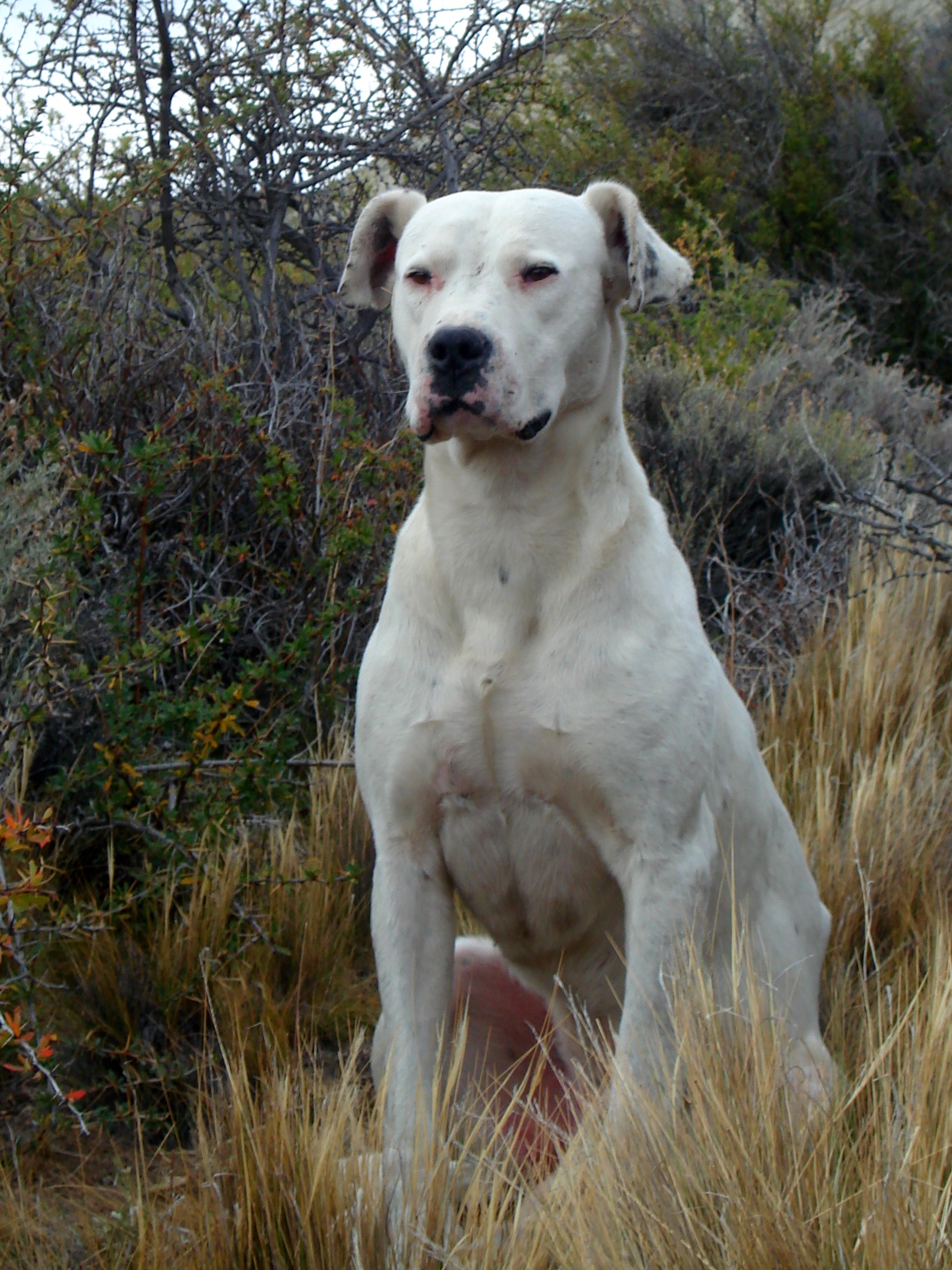
Photo: Wikimedia Commons
Origin
Argentina
Lifespan
9–15 years
Weight
36–54 kg (80–120 lbs)
Height
60–68 cm (24–27 in)
Exercise
40 to 60 min/day
Diet
Omnivore — high-quality large active breed formula
Taxonomic Hierarchy
Kingdom
Animalia
Phylum
Chordata
Class
Mammalia
Order
Carnivora
Family
Canidae
Genus
Canis
The Story
The Dogo Argentino is the only dog breed developed in Argentina, created in the 1920s by brothers Antonio and Agustín Nores Martínez with the explicit goal of producing an ideal big-game hunting dog for Argentina's pumas, peccaries, and wild boar — combining the courage and tenacity of the fighting dogs they used as foundation stock with the trainability and gentle family temperament they desired. The Dogo is one of the few breeds specifically developed from fighting stock to be deliberately non-aggressive toward humans. It is included in India's March 2024 DAHD restricted breed advisory and is banned or restricted in several other countries.
Also Known As
Quick Facts
Discover which pets match your lifestyle
Physical Profile
Source: wikimedia
The Dogo Argentino is a large, athletic, entirely white dog of smooth, muscular build. The pure white coat is short and glossy. The broad, powerful head has a slightly convex skull, strong jaw, and dark or hazel eyes. The overall impression is of power, agility, and alertness — an athlete built for sustained high-intensity work. A small dark patch on the skull (pirate patch) is permitted but not favoured.
Grooming
Low
Shedding
Low
Brushing
1x-Weekly
Bathing
Every-6-8-Weeks
Coat Colors
Recognized By
Source: wikimedia
Temperament & Personality
Well-bred, well-socialised Dogos are loyal, affectionate, and cheerful with their family. They have strong protective instincts and are alert to threats. With people they are typically friendly and confident. With other dogs, particularly of the same sex, they can be highly intolerant — their fighting heritage makes dog-aggression a constant management consideration. They require experienced, consistent owners.
Personality Scores
Adaptability
3/5Attention Need
4/5Friendliness
3/5Playfulness
4/5Protectiveness
5/5Living Profile
Ideal Space
House-Large-Garden
Daily Exercise
40 to 60 min/day
Ideal Weather
5°C to 35°C
Cognitive Benchmarks
Adaptability
30%
Attention
40%
Playfulness
40%
Communication Style
Stress Signals
aggression towards other dogs, guarding, stiffening, pacing
Care & Wellness
Professional Care Protocol
- •Daily vigorous exercise of 1.5–2 hours. The white coat needs sun protection in intense climates — pink skin areas can burn. Short coat requires minimal grooming. Early socialisation and professional training are important. Secure fencing is essential.
Nutrition Notes
Bloat risk. Joint supplements. Deafness (10% — linked to white coat). Anti-inflammatory diet may help with allergies.
Vaccination Schedule
Vaccination Schedule
Senior Care
Deafness (10% — BAER test all puppies). Hip dysplasia. Bloat. Hypothyroidism. Laryngeal paralysis. Created by Dr. Antonio Nores Martinez in 1928 — bred to hunt wild boar and puma in Argentina. All white. Banned in UK, Australia, and many countries. 9-15 years.
Wellbeing Activities
Nutrition & Sustenance
Daily Calories (Adult)
1800 kcal
Daily Calories (Young)
1400 kcal
Recommended Foods
Foods to Avoid
Health Overview
Deafness is associated with the white coat (same pigmentation gene as in Dalmatians and Bull Terriers) — BAER testing essential for all breeding stock. Hip dysplasia occurs. Hypothyroidism is seen. Generally a robust breed when well-bred.
Common Conditions
Price Estimates
Pricing Guide
Average estimates as of 2025
Banned in UK, Australia, many countries. Check local laws. All white. 10% deaf. India: growing popularity, check state BSL.
Purchase Price
$1,000 to $3,000
Adoption Fee
$100 to $500
Data from 2025
Fun Facts
The Dogo Argentino was specifically developed to be the opposite of the fighting dogs used in its creation — the Martinez brothers deliberately selected against dog aggression and human aggression, producing a big-game hunter that is safe and friendly with its family.
Dogos have been trained as police, military, and search and rescue dogs in several South American countries — their athletic capability and trainability make them capable working dogs despite their controversial classification in some countries.
The Dogo Argentino is banned or restricted in the UK, Australia, New Zealand, and several European countries under Breed Specific Legislation — and is specifically listed in India's March 2024 DAHD advisory restricting import and breeding.


