
Doberman Pinscher
The Doberman Pinscher is one of the most recognisable and capable working dogs ever developed.
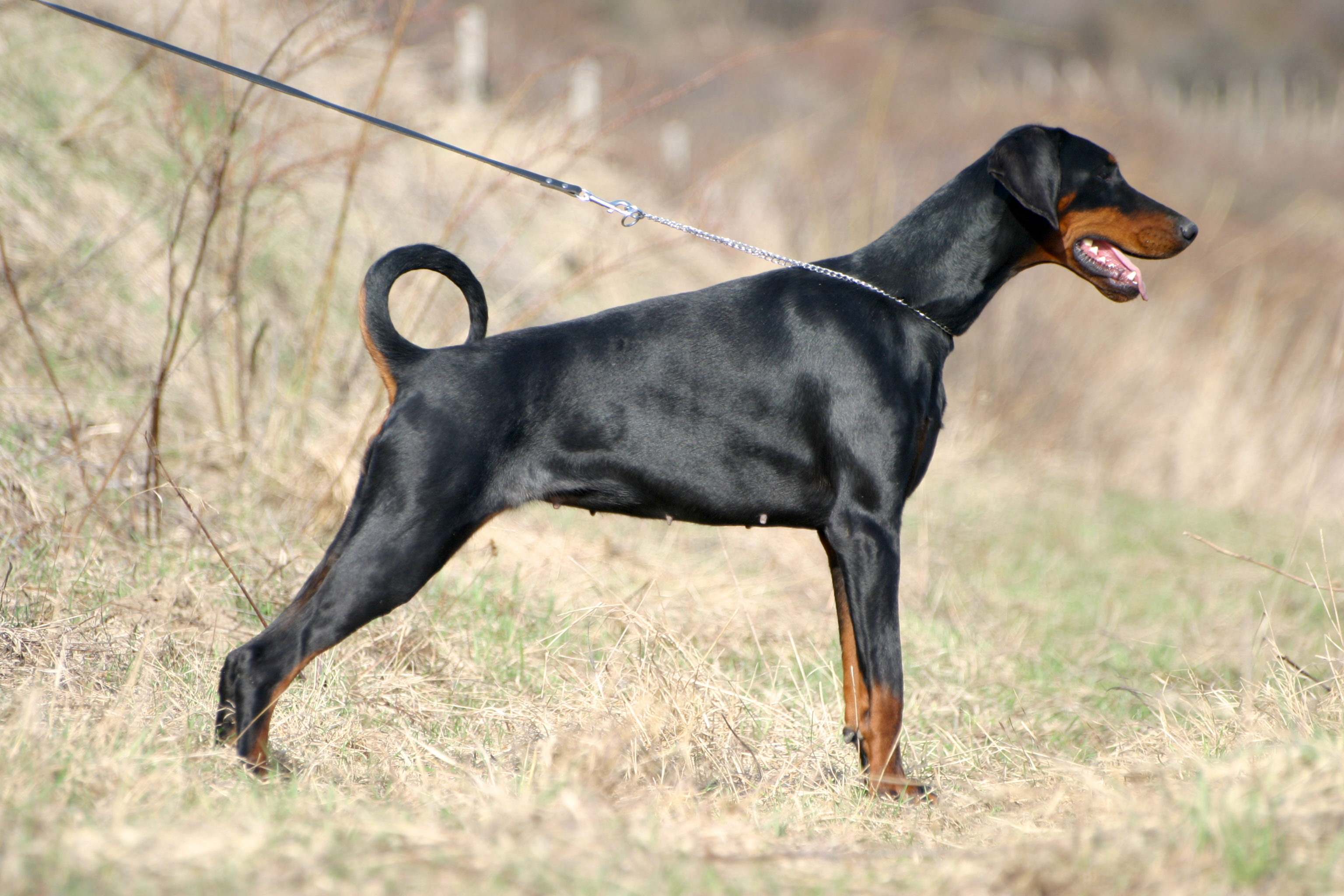
Photo: Wikimedia Commons
Origin
Germany
Lifespan
10–13 years
Weight
27–45 kg (60–100 lbs)
Height
61–72 cm (24–28 in)
Exercise
60 to 120 min/day
Diet
Omnivore — high-protein kibble for large active breeds; joint supplementation often recommended
Taxonomic Hierarchy
Kingdom
Animalia
Phylum
Chordata
Class
Mammalia
Order
Carnivora
Family
Canidae
Genus
Canis
The Story
The Doberman Pinscher is one of the most recognisable and capable working dogs ever developed. Created in the 1890s by German tax collector Louis Dobermann (who also ran the local dog pound and had access to a wide variety of breeding stock), the breed was developed with a single explicit purpose: to be the perfect personal protection dog. Dobermann selected for intelligence, loyalty, endurance, and physical capability — producing a dog that many consider the most athletically complete and mentally capable of all breeds. Modern Dobermans retain all these qualities while being among the most trainable, sensitive, and affectionate of the large working breeds.
Also Known As
Quick Facts
Discover which pets match your lifestyle
Physical Profile
Source: wikimedia
The Doberman presents one of the most athletic and aesthetically striking profiles in the dog world — a medium-large dog of elegant, compact power with a clean silhouette and aristocratic bearing. The body is muscular and athletic without heaviness. The head is long and wedge-shaped, with a powerful jaw and alert, almond-shaped eyes. The short, hard coat lies tight to the body, emphasising the muscular physique. Classic colouration is black with clearly defined rust markings on the muzzle, cheeks, throat, chest, legs, feet, and below the tail.
Grooming
Low
Shedding
Low
Brushing
1x-Weekly
Bathing
Every-6-8-Weeks
Coat Colors
Recognized By
Source: wikimedia
Temperament & Personality
Well-bred, well-socialised Dobermans are among the most loyal, intelligent, and affectionate of the large breeds. They form intensely deep bonds with their family and are known as "velcro dogs" — they want to be wherever their person is. Their intelligence is matched by their emotional sensitivity; they read human body language and moods with remarkable accuracy. They are fearless without being aggressive, alert without being reactive. Their protective instinct is instinctive but should be channelled through training. Without adequate socialisation and training, their intelligence and drive can become problematic.
Personality Scores
Adaptability
3/5Attention Need
5/5Friendliness
3/5Playfulness
4/5Protectiveness
5/5Living Profile
Ideal Space
House-Small-Garden
Daily Exercise
60 to 120 min/day
Ideal Weather
5°C to 30°C
Cognitive Benchmarks
Adaptability
30%
Attention
50%
Playfulness
40%
Communication Style
Stress Signals
velcro behaviour (extreme clinginess), pacing, self-mutilation (flank sucking), aggression when startled, trembling
Care & Wellness
Professional Care Protocol
- •Dobermans need 1.5–2+ hours of vigorous exercise daily. They excel in almost every dog sport — Schutzhund, agility, obedience, nose work, tracking. Mental stimulation is as important as physical exercise. The short coat is essentially maintenance-free — weekly wipe-down and occasional bathing. Dobermans are sensitive to cold; in cold climates they benefit from a coat for outdoor exercise. Professional training is strongly recommended from puppyhood — positive, consistent methods produce the best results. Early and extensive socialisation during the first 16 weeks is critical.
Nutrition Notes
DCM (dilated cardiomyopathy) is the breed's greatest threat — taurine and L-carnitine supplementation may be protective. Avoid grain-free diets (linked to DCM in multiple studies). Bloat risk — feed 2-3 meals. Von Willebrand's disease (bleeding disorder) common — test before any surgery.
Vaccination Schedule
Vaccination Schedule
Senior Care
DCM screening (echocardiogram + Holter monitor) ANNUALLY from age 3 — this is non-negotiable. 50%+ of Dobermans develop DCM. Sudden death is common. Cervical vertebral instability (Wobblers) from age 5+. Hypothyroidism common. Von Willebrand's affects surgical risk.
Wellbeing Activities
Nutrition & Sustenance
Daily Calories (Adult)
1800 kcal
Daily Calories (Young)
1200 kcal
Recommended Foods
Foods to Avoid
Health Overview
Dilated cardiomyopathy (DCM) is the most significant health concern in the breed — Dobermans have the highest rate of DCM of any breed, and it is a leading cause of sudden death. Annual Holter monitor testing is recommended for all adult Dobermans. Von Willebrand's disease (Type I vWD), a bleeding disorder, is common and has a DNA test available. Wobbler syndrome (cervical spondylomyelopathy) causes hind limb ataxia. Hip dysplasia occurs at moderate rates.
Common Conditions
Price Estimates
Pricing Guide
Average estimates as of 2025
European lines (tail undocked, ears natural) increasingly preferred. Annual cardiac screening costs (₹5,000-15,000 India, $200-500 USA) should be budgeted as mandatory ongoing expense. Pet insurance highly recommended due to DCM.
Purchase Price
$1,000 to $3,000
Adoption Fee
$100 to $400
Data from 2025
Fun Facts
Louis Dobermann never documented the breeds he used to create his dog, taking the secret to his grave — genetic analysis suggests a mixture of German Pinscher, Rottweiler, Weimaraner, German Shepherd, and possibly Manchester Terrier.
Dobermans were the official dog of the United States Marine Corps in WWII, deployed extensively in the Pacific island campaigns. A monument at the National War Dog Cemetery in Guam commemorates 25 Dobermans killed in the Battle of Guam (1944).
The Doberman was ranked 5th on Stanley Coren's intelligence rankings — capable of learning new commands in 5 repetitions or fewer and obeying first commands 95% of the time.
The breed name is spelled differently in different countries — "Doberman Pinscher" in the US, "Dobermann" (with double n) in most of Europe and the UK, in honour of the founder.