

Curly-Coated Retriever
The Curly-Coated Retriever is the oldest of the retriever breeds — developed in England in the 18th century and exhibited at the first dog shows in the 1860s.
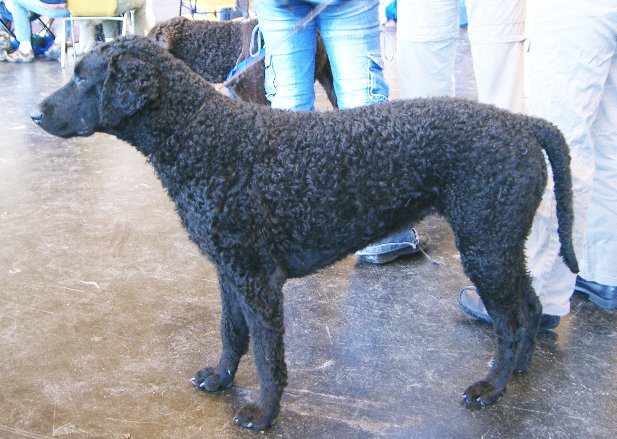
Photo: Wikimedia Commons
Origin
United Kingdom
Lifespan
10–12 years
Weight
23–41 kg (50–90 lbs)
Height
58–69 cm (23–27 in)
Exercise
40 to 60 min/day
Diet
Omnivore — high-quality large breed food for an active retriever.
Taxonomic Hierarchy
Kingdom
Animalia
Phylum
Chordata
Class
Mammalia
Order
Carnivora
Family
Canidae
Genus
Canis
The Story
The Curly-Coated Retriever is the oldest of the retriever breeds — developed in England in the 18th century and exhibited at the first dog shows in the 1860s. It was developed for retrieving waterfowl from cold, rough water — the distinctive tight, crisp curls (unlike any other retriever breed) provide waterproofing superior to flat or wavy retriever coats. The CCR is the most independent and self-willed of the retrievers — it tends to think for itself rather than looking to the handler for direction, making it more challenging to train than the Golden or Labrador. It is also the tallest of the retrievers.
Also Known As
Quick Facts
Discover which pets match your lifestyle
Physical Profile
Source: wikimedia
A large, elegant, athletic retriever covered from neck to tail in tight, small, crisp curls of liver or black — the face and lower forelegs are smooth. The curls must be small and tight (not loose waves). The overall impression is of a confident, self-possessed, athletic sporting dog unlike any other retriever in coat texture.
Grooming
Low
Shedding
Low
Brushing
1x-Weekly
Bathing
Every-6-8-Weeks
Coat Colors
Recognized By
Source: wikimedia
Temperament & Personality
Confident, independent, and loyal — the CCR is more cat-like in its independence than other retrievers. Excellent with family but less biddable than the Labrador or Golden. Sensitive to harsh training.
Personality Scores
Adaptability
3/5Attention Need
3/5Friendliness
3/5Playfulness
4/5Protectiveness
2/5Living Profile
Ideal Space
House-Small-Garden
Daily Exercise
40 to 60 min/day
Ideal Weather
0°C to 28°C
Cognitive Benchmarks
Adaptability
30%
Attention
30%
Playfulness
40%
Communication Style
Stress Signals
aloofness, destructive behaviour, pacing, excessive energy, avoidance
Care & Wellness
Professional Care Protocol
- •1.5–2 hours vigorous exercise daily including water work. The curly coat is virtually self-maintaining — never brush it (this destroys the curl pattern). Wet the coat, allow to dry naturally. Minimal shedding outside moult season.
Nutrition Notes
GSD (glycogen storage disease) in some lines. Bloat risk. Generally healthy working retriever. Joint supplements for active dogs. Omega-3 for coat health.
Vaccination Schedule
Vaccination Schedule
Senior Care
GSD (glycogen storage disease type IIIa) — DNA test available. Hip dysplasia. PRA. Epilepsy. Bloat. Cancer rates moderate (lower than Flat-Coated). The oldest retriever breed. More independent than other retrievers. 9-14 years.
Wellbeing Activities
Nutrition & Sustenance
Daily Calories (Adult)
1500 kcal
Daily Calories (Young)
1100 kcal
Recommended Foods
Foods to Avoid
Health Overview
Hip and elbow dysplasia. Exercise-induced collapse (EIC). Glycogen storage disease (GSD IV) — unique to the CCR; DNA test available. Progressive retinal atrophy. Bloat (GDV).
Common Conditions
Price Estimates
Pricing Guide
Average estimates as of 2025
One of the rarest retriever breeds. Black and liver only. Tight curls require minimal grooming. India: essentially unavailable.
Purchase Price
$1,000 to $2,500
Adoption Fee
$100 to $400
Data from 2025
Fun Facts
The Curly-Coated Retriever's coat must never be brushed — brushing destroys the tight curl pattern and creates a frizzy, unattractive coat. The correct way to maintain the coat is to wet it thoroughly and allow it to dry naturally, letting the curls reform.
The Curly-Coated Retriever is the oldest of all retriever breeds — it was already an established type when the dog show era began in the 1860s, predating the formal development of the Golden Retriever by 30 years and the Labrador's recognition by 40 years.


