

Briard
The Briard is one of France's oldest herding breeds, with references to similar dogs dating back to medieval times.
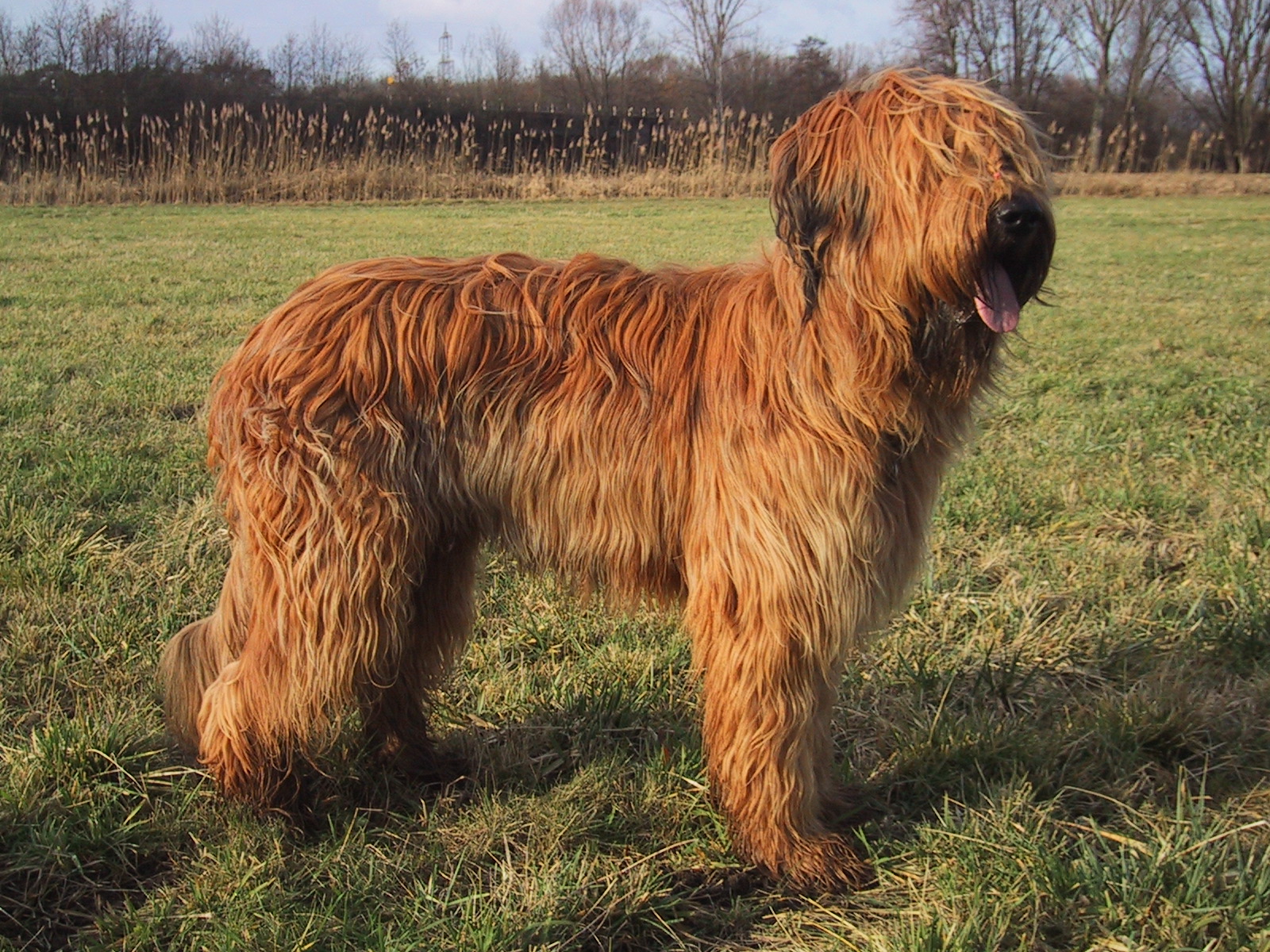
Photo: Wikimedia Commons
Origin
France
Lifespan
10–12 years
Weight
23–34 kg (50–75 lbs)
Height
56–69 cm (22–27 in)
Exercise
40 to 60 min/day
Diet
Omnivore — active large-breed formula
Taxonomic Hierarchy
Kingdom
Animalia
Phylum
Chordata
Class
Mammalia
Order
Carnivora
Family
Canidae
Genus
Canis
The Story
The Briard is one of France's oldest herding breeds, with references to similar dogs dating back to medieval times. Charlemagne, Napoleon, and Thomas Jefferson all reportedly kept Briards. During both World Wars the Briard served France with distinction as a messenger dog, ambulance dog, and sentry — their courage under fire was legendary. Today they remain working farm dogs and devoted family companions, combining the intelligence of a herding breed with an extraordinarily protective, devoted temperament.
Also Known As
Quick Facts
Discover which pets match your lifestyle
Physical Profile
Source: wikimedia
The Briard is a large, muscular herding dog covered in a long, slightly wavy, dry coat that forms a natural part down the centre of the back. The face is framed by a profuse beard and moustache, with eyebrows that partially cover the eyes. A unique breed characteristic is the double dew claws on the hind legs — mandatory in the breed standard.
Grooming
Very High
Shedding
Moderate
Brushing
Daily
Bathing
Every-3-4-Weeks
Coat Colors
Recognized By
Source: wikimedia
Temperament & Personality
Briards are deeply loyal and protective — they bond intensely with their family and retain a strong herding instinct including a tendency to circle and gather family members. Their intelligence and trainability make them excellent working and sport dogs. They can be reserved with strangers and are protective, making early socialisation essential.
Personality Scores
Adaptability
3/5Attention Need
4/5Friendliness
3/5Playfulness
4/5Protectiveness
4/5Living Profile
Ideal Space
House-Large-Garden
Daily Exercise
40 to 60 min/day
Ideal Weather
-5°C to 25°C
Cognitive Benchmarks
Adaptability
30%
Attention
40%
Playfulness
40%
Communication Style
Stress Signals
protectiveness increase, barking, herding, destructive behaviour, aloofness
Care & Wellness
Professional Care Protocol
- •Briards need 1–1.5 hours of vigorous daily exercise. The long coat requires thorough brushing every other day to prevent matting — it mats easily if neglected. Professional grooming every 8–10 weeks. Early socialisation and positive training essential.
Nutrition Notes
Bloat risk. Joint supplements essential. Stationary Night Blindness (CSNB) — DNA test. Omega-3 for coat.
Vaccination Schedule
Vaccination Schedule
Senior Care
CSNB (congenital stationary night blindness) — DNA test available. Hip dysplasia. Bloat. PRA. Hypothyroidism. Double dewclaws on rear feet (breed standard — do not remove). French herding/guard dog. Napoleon and Thomas Jefferson owned Briards. 10-12 years.
Wellbeing Activities
Nutrition & Sustenance
Daily Calories (Adult)
1600 kcal
Daily Calories (Young)
1200 kcal
Recommended Foods
Foods to Avoid
Health Overview
Hip dysplasia is a significant concern. Stationary night blindness (congenital stationary night blindness, CSNB) is a genetic eye condition found in Briards. Progressive retinal atrophy and hypothyroidism also occur.
Common Conditions
Price Estimates
Pricing Guide
Average estimates as of 2025
Rare breed. France's iconic herding dog. Long coat requires extensive maintenance. India: essentially unavailable.
Purchase Price
$1,500 to $3,000
Adoption Fee
$100 to $500
Data from 2025
Fun Facts
Thomas Jefferson imported Briards from France after his time as US Minister to France — he described them as the most intelligent and capable farm dogs he had encountered.
Briards served in both World Wars, carrying ammunition and messages through artillery fire and locating wounded soldiers on the battlefield.
The Briard's unique double dew claws on the hind feet are considered a breed hallmark and are required by the breed standard — puppies without them are not considered purebred.


