

Boston Terrier
The Boston Terrier is one of the few dog breeds genuinely "made in America" — developed in Boston in the 1870s by crossing an English Bulldog with a white English Terrier (now extinct), creating a compact, tuxedo-marked gentleman of a dog.
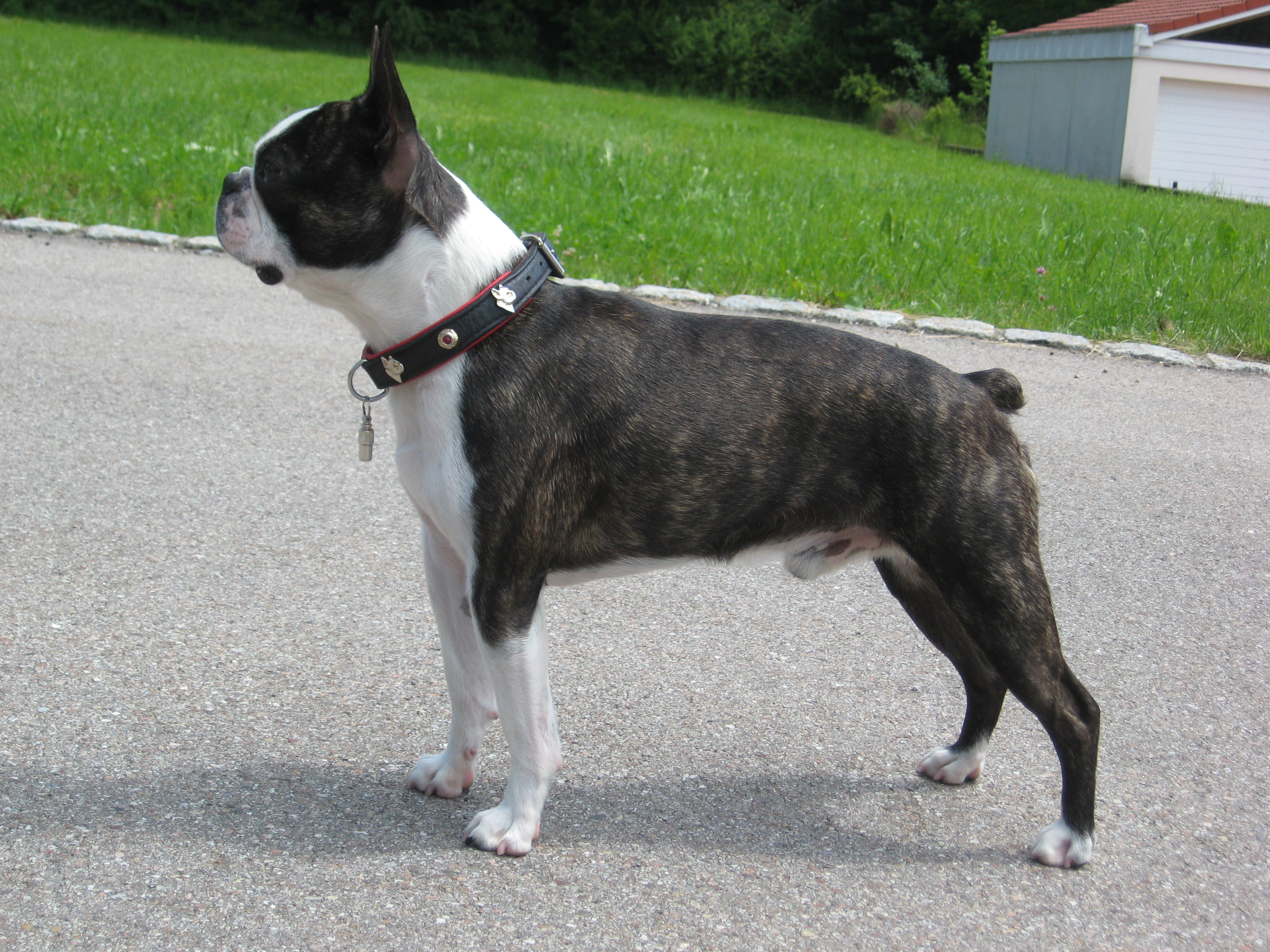
Photo: Wikimedia Commons
Origin
United States
Lifespan
11–13 years
Weight
4.5–11 kg (10–25 lbs)
Height
38–43 cm (15–17 in)
Exercise
30 to 45 min/day
Diet
Omnivore — small-breed kibble; avoid exercise before/after meals due to bloat susceptibility
Taxonomic Hierarchy
Kingdom
Animalia
Phylum
Chordata
Class
Mammalia
Order
Carnivora
Family
Canidae
Genus
Canis
The Story
The Boston Terrier is one of the few dog breeds genuinely "made in America" — developed in Boston in the 1870s by crossing an English Bulldog with a white English Terrier (now extinct), creating a compact, tuxedo-marked gentleman of a dog. The breed was recognised by the AKC in 1893 and quickly became America's most popular breed in the early 20th century. Their distinctive black-and-white "tuxedo" markings, compact size, and bright, friendly personality have earned them the nickname "American Gentleman." They remain among the most popular small breed dogs in the United States.
Also Known As
Quick Facts
Discover which pets match your lifestyle
Physical Profile
Source: wikimedia
The Boston Terrier is compact and well-muscled with a square head, short muzzle, and large, round, dark eyes that are set wide apart and have a kind, intelligent expression. The tuxedo markings — white muzzle, blaze, chest, and feet against black or brindle — are a defining breed characteristic. The coat is smooth, short, and fine. The tail is naturally short, either straight or screwed.
Grooming
Low
Shedding
Low
Brushing
1x-Weekly
Bathing
Every-4-6-Weeks
Coat Colors
Recognized By
Source: wikimedia
Temperament & Personality
Boston Terriers are genuinely friendly, enthusiastic, and people-oriented. They are often clownish and entertaining, with a bright intelligence that makes them quick learners in training. They are adaptable to apartment or house living and are less extreme brachycephalically than Bulldogs or Pugs, meaning their breathing difficulties are typically less severe. They form strong bonds with their family and are generally good with children and other animals.
Personality Scores
Adaptability
5/5Attention Need
4/5Friendliness
5/5Playfulness
4/5Protectiveness
2/5Living Profile
Ideal Space
Apartment
Daily Exercise
30 to 45 min/day
Ideal Weather
8°C to 25°C
Cognitive Benchmarks
Adaptability
50%
Attention
40%
Playfulness
40%
Communication Style
Stress Signals
excessive panting, reverse sneezing, hiding, clinginess, appetite loss
Care & Wellness
Professional Care Protocol
- •Moderate daily exercise suits most Bostons — 30–45 minutes. Avoid vigorous exercise in heat due to brachycephalic anatomy. The smooth coat needs minimal grooming — weekly wipe-down. Face wrinkles should be cleaned weekly. Eye care is important given their prominent eyes. Teeth need regular brushing.
Nutrition Notes
Brachycephalic — use slow-feeder bowls. Flatulence very common; limited-ingredient diets help. Obesity risk moderate. Sensitive stomachs in many individuals. Small-breed formula recommended.
Vaccination Schedule
Vaccination Schedule
Senior Care
Brachycephalic issues worsen with age. Cataracts are near-universal by age 10 — annual CERF eye exams. Cherry eye common. Luxating patella in some lines. Deafness in predominantly white Bostons. Hemivertebrae (spinal) — avoid jumping. One of the better brachycephalic breeds for breathing but still monitor.
Wellbeing Activities
Nutrition & Sustenance
Daily Calories (Adult)
700 kcal
Daily Calories (Young)
500 kcal
Recommended Foods
Foods to Avoid
Health Overview
Brachycephalic Obstructive Airway Syndrome (BOAS) affects the breed but typically less severely than Bulldogs. Hereditary cataracts are a significant concern — the Boston Terrier has one of the highest rates of juvenile cataracts of any breed. Patellar luxation and deafness (in dogs with excessive white) also occur. Hemivertebrae can affect the spine in some individuals.
Common Conditions
Price Estimates
Pricing Guide
Average estimates as of 2025
Known as the "American Gentleman" — tuxedo markings are the breed standard. Seal (dark brown appearing black) and brindle most common. Red, blue, and merle are non-standard and carry health risks.
Purchase Price
$800 to $2,500
Adoption Fee
$100 to $400
Data from 2025
Fun Facts
The Boston Terrier is the official state dog of Massachusetts — the only US state dog named after its home state.
Rhett the Boston Terrier is the official mascot of Boston University.
The breed nearly died out in the 1890s due to inbreeding; dedicated breed club action saved it.


