

Basenji
The Basenji is one of the most ancient and unusual of all dog breeds — a primitive hunting dog from central Africa that is genetically close to the earliest domestic dogs and displays behavioural traits that are unique in the domestic dog world.
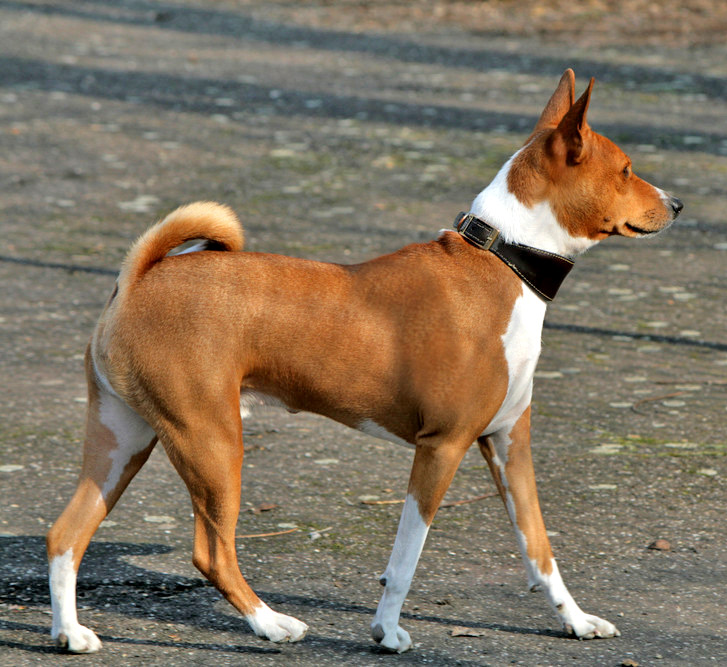
Photo: Wikimedia Commons
Origin
Democratic Republic of Congo
Lifespan
13–14 years
Weight
9–11 kg (20–24 lbs)
Height
40–43 cm (16–17 in)
Exercise
40 to 60 min/day
Diet
Omnivore — high-quality kibble; unique metabolism — monitor weight carefully
Taxonomic Hierarchy
Kingdom
Animalia
Phylum
Chordata
Class
Mammalia
Order
Carnivora
Family
Canidae
Genus
Canis
The Story
The Basenji is one of the most ancient and unusual of all dog breeds — a primitive hunting dog from central Africa that is genetically close to the earliest domestic dogs and displays behavioural traits that are unique in the domestic dog world. They do not bark — instead they produce a unique yodel-like sound called a "barroo" — and they groom themselves fastidiously like cats. Females come into season only once a year (not twice, as in most breeds), reflecting their wild ancestor's reproductive pattern. They have been hunting companions for the peoples of the Congo for thousands of years and appear on ancient Egyptian artifacts.
Also Known As
Quick Facts
Discover which pets match your lifestyle
Physical Profile
Source: wikimedia
The Basenji is a small, elegant, athletic sighthound with a wrinkled forehead that gives them a permanently quizzical expression. The coat is short, fine, and very close-lying. The tightly curled tail sits over one hip. Their almond-shaped eyes are dark and their large bat-like ears are always erect. The breed moves with a smooth, floating gait that has been compared to a trotting horse.
Grooming
Low
Shedding
Low
Brushing
1x-Weekly
Bathing
Every-8-12-Weeks
Coat Colors
Recognized By
Source: wikimedia
Temperament & Personality
Basenjis are intelligent, curious, and deeply independent — they have not been bred for generations to seek human approval and have no particular interest in conforming to expectations. They are affectionate with their family in a cat-like way — on their own terms and schedule. Their prey drive is extremely high and they are not trustworthy around small animals. Training requires creativity, patience, and strong food motivation as they find repetitive exercises pointless.
Personality Scores
Adaptability
4/5Attention Need
2/5Friendliness
3/5Playfulness
4/5Protectiveness
3/5Living Profile
Ideal Space
House-Small-Garden
Daily Exercise
40 to 60 min/day
Ideal Weather
10°C to 35°C
Cognitive Benchmarks
Adaptability
40%
Attention
20%
Playfulness
40%
Communication Style
Stress Signals
destructive behaviour, escape attempts, aloofness, resource guarding, yodelling increase
Care & Wellness
Professional Care Protocol
- •Basenjis need 1+ hours of vigorous daily exercise in a securely fenced area — they are escape artists and their prey drive will carry them away at high speed. The short coat requires minimal grooming. Basenjis are extremely clean and self-grooming. They are cat-like in many ways including jumping to high places and an interest in climbing.
Nutrition Notes
Fanconi syndrome is the breed's defining health threat — progressive kidney disorder. Monthly urine glucose testing from age 3 is MANDATORY. Protein levels may need adjustment if diagnosed. Small-breed formula. Generally lean build.
Vaccination Schedule
Vaccination Schedule
Senior Care
Fanconi syndrome — DNA test available (linked markers). Monthly urine glucose strip test from age 3 is standard of care. PRA (Basenji-specific form). Hypothyroidism. IPSID (immunoproliferative small intestinal disease). The "barkless dog" — doesn't bark but yodels, screams, and choruses. One of the oldest breeds (Congo origin). Grooms itself like a cat. 13-14 years.
Wellbeing Activities
Nutrition & Sustenance
Daily Calories (Adult)
800 kcal
Daily Calories (Young)
500 kcal
Recommended Foods
Foods to Avoid
Health Overview
Fanconi syndrome is a heritable kidney disease unique to the breed, causing the kidneys to leak essential nutrients. DNA testing is available. Progressive retinal atrophy occurs. Hip dysplasia is relatively uncommon. Hypothyroidism is seen.
Common Conditions
Price Estimates
Pricing Guide
Average estimates as of 2025
The barkless dog — ideal for apartments (noise-wise, not escape-wise). Excellent for Indian climate (African origin). Cat-like independence. India: rare but climate-appropriate.
Purchase Price
$1,000 to $2,500
Adoption Fee
$100 to $400
Data from 2025
Fun Facts
The Basenji is the only dog breed that cannot bark — their larynx has an unusual shape that produces a yodel-like "barroo" instead.
Basenjis are the only domestic dog breed that has only one oestrus cycle per year rather than two — mirroring the reproductive pattern of wild wolves and suggesting minimal selective pressure on this trait during domestication.
DNA studies have repeatedly found the Basenji to be one of the oldest domestic dog breeds — among the "basal" breeds that branched earliest from the wolf-dog common ancestor.
Ancient Egyptian tomb paintings dating to 3600 BCE depict dogs that are essentially identical to modern Basenjis — suggesting the breed has changed little in over 5,500 years.


