
Zebra Finch
The most commonly kept finch species in the world and one of the most studied birds in science — their song learning system has been used as a model for understanding language acquisition and vocal learning neuroscience.
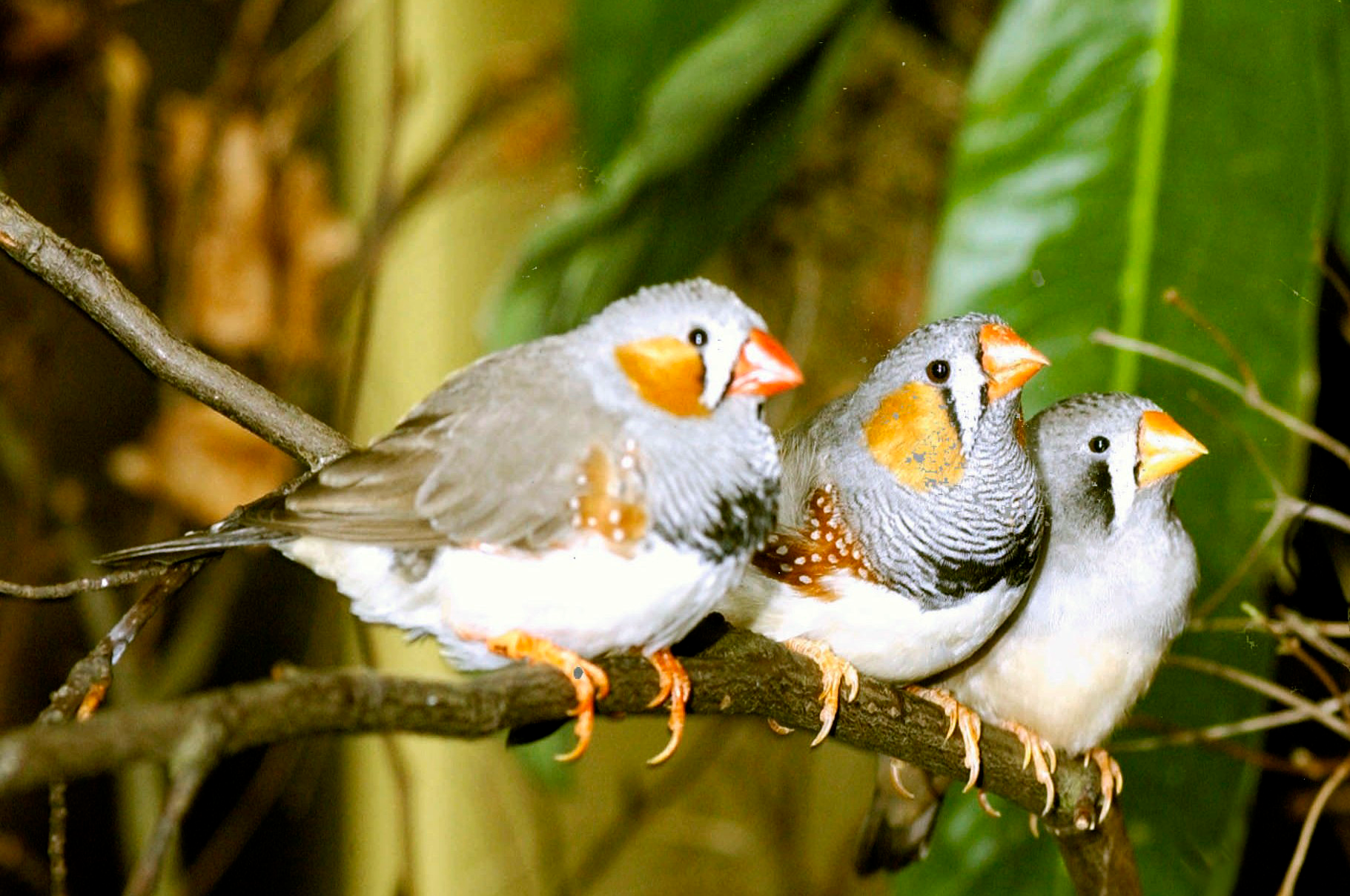
Photo: Wikimedia Commons
Origin
Australia
Lifespan
5–10 years
Weight
10–16 g
Height
10–11 cm
Diet
Herbivore/Granivore — finch seed mix, egg food, fresh greens, sprouted seeds, cuttlebone for calcium.
Taxonomic Hierarchy
Kingdom
Animalia
Phylum
Chordata
Class
Aves
Order
Passeriformes
Family
Estrildidae
Genus
Taeniopygia
The Story
The most commonly kept finch species in the world and one of the most studied birds in science — their song learning system has been used as a model for understanding language acquisition and vocal learning neuroscience. Native to Australia, they are ideal for those who want active, musical, low-maintenance birds that are enjoyable to observe but do not require hands-on interaction. Must be kept in pairs.
Also Known As
Quick Facts
Discover which pets match your lifestyle
Physical Profile
Source: wikimedia
Male: bright orange cheek patches, black breast bar, barred flanks with chestnut and white spots, orange-red beak. Female: plain grey-brown with orange beak. Several colour mutations — fawn, white, pied, penguin.
Grooming
Nil
Shedding
Low
Coat Colors
Recognized By
Source: wikimedia
Temperament & Personality
Observation birds — not hand-tame, do not seek human contact. Value lies in watching their constant activity, musical calling, and pair dynamics. Always kept in pairs at minimum.
Living Profile
Care & Wellness
Professional Care Protocol
- •Minimum cage 90 × 45 × 60 cm — finches need horizontal flight space. Must be kept in pairs or small groups. Fresh seed, water, egg food 2–3x weekly, fresh greens. Cuttlebone always available. Bath water several times weekly.
Vaccination Schedule
Vaccination Schedule
Health Overview
Air sac mite. Scaly face mite on beak. Megabacteria (avian gastric yeast). E. coli diarrhoea. Generally robust.
Common Conditions
Fun Facts
The Zebra Finch is the most widely studied bird in neuroscience after the chicken — its song learning system models how the human brain learns language.
Male Zebra Finches have a unique individually distinctive "song signature" allowing identification of individuals by other birds and researchers.
Zebra Finches continue to "practice" their songs during sleep — neural activity during sleep replicates the daytime singing pattern.