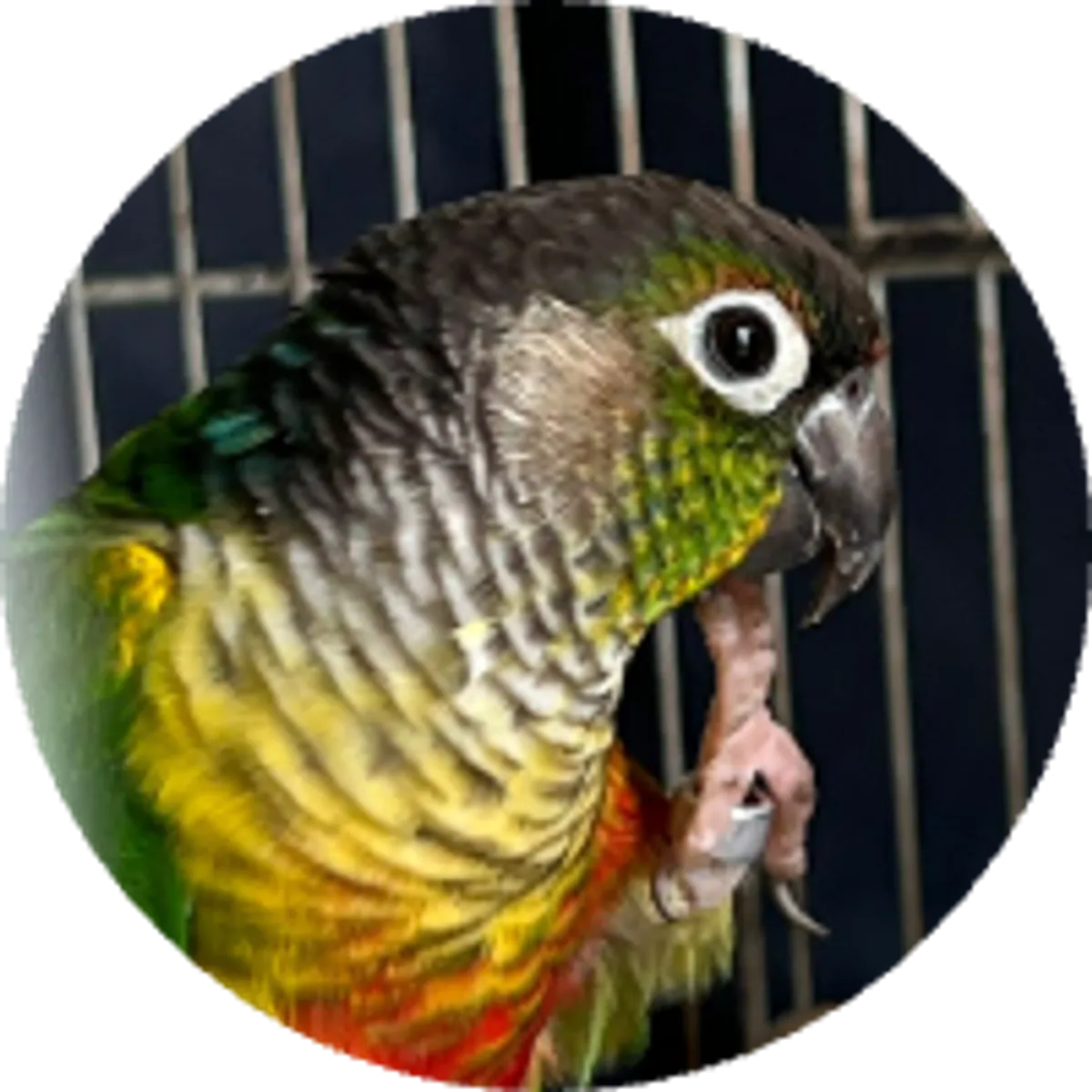

Sun Conure
One of the most visually stunning small parrots — a burst of orange and yellow with green and blue wings.

Photo: Wikimedia Commons
Origin
Brazil
Lifespan
20–30 years
Weight
100–130 g
Height
30 cm
Diet
Herbivore — conure pellets, fresh vegetables, fruit, small amounts of seed. Avoid avocado, chocolate, onion.
Taxonomic Hierarchy
Kingdom
Animalia
Phylum
Chordata
Class
Aves
Order
Psittaciformes
Family
Psittacidae
Genus
Aratinga
The Story
One of the most visually stunning small parrots — a burst of orange and yellow with green and blue wings. Popular for its beauty, playfulness, and affectionate nature. Wild Sun Conures are Endangered, with populations severely diminished by the historical pet trade and habitat loss. Most pet Sun Conures today are captive-bred. Their significant noise limitation — one of the loudest birds relative to its size — is frequently underestimated by new owners.
Also Known As
Quick Facts
Discover which pets match your lifestyle
Physical Profile
Source: wikimedia
Young birds are predominantly green, developing vivid orange-yellow adult colouration over 1–2 years. Adults are brilliant orange-yellow on head, breast, and abdomen, with green wings and blue flight feathers. Bare white periorbital eye ring, orange feet, dark beak.
Grooming
Low
Shedding
Low
Coat Colors
Recognized By
Source: wikimedia
Temperament & Personality
Playful, clownish, and deeply affectionate. Loves to hang upside down from fingers, burrow under clothing, and seek physical contact constantly. Their contact call is a high-pitched scream that can exceed 120 dB — a very significant apartment management challenge.
Living Profile
Care & Wellness
Professional Care Protocol
- •Minimum cage 60 × 60 × 90 cm. 3–4 hours out-of-cage daily. Very active — needs many toys and foraging opportunities. Not suitable for apartments with close neighbours.
Vaccination Schedule
Vaccination Schedule
Health Overview
PDD. Feather plucking. Conure bleeding syndrome (a clotting disorder). Psittacosis. Polyomavirus in young birds.
Common Conditions
Fun Facts
Wild Sun Conures in northeastern Brazil may number fewer than 2,000 individuals — one of the most endangered conure species.
Sun Conures sleep on their backs as a comfort behaviour — alarms owners who mistake it for illness.
The Sun Conure's contact call can exceed 120 dB at close range — comparable to a chainsaw — despite the bird weighing just over 100 grams.