

Swedish Vallhund
The Swedish Vallhund is an ancient Viking cattle dog — a low, long-bodied herding dog that drove cattle by nipping at their heels, similar in function to the Welsh Corgi (the two breeds share remarkable similarities that have led to debate about whether they share a common Viking-era ancestor).
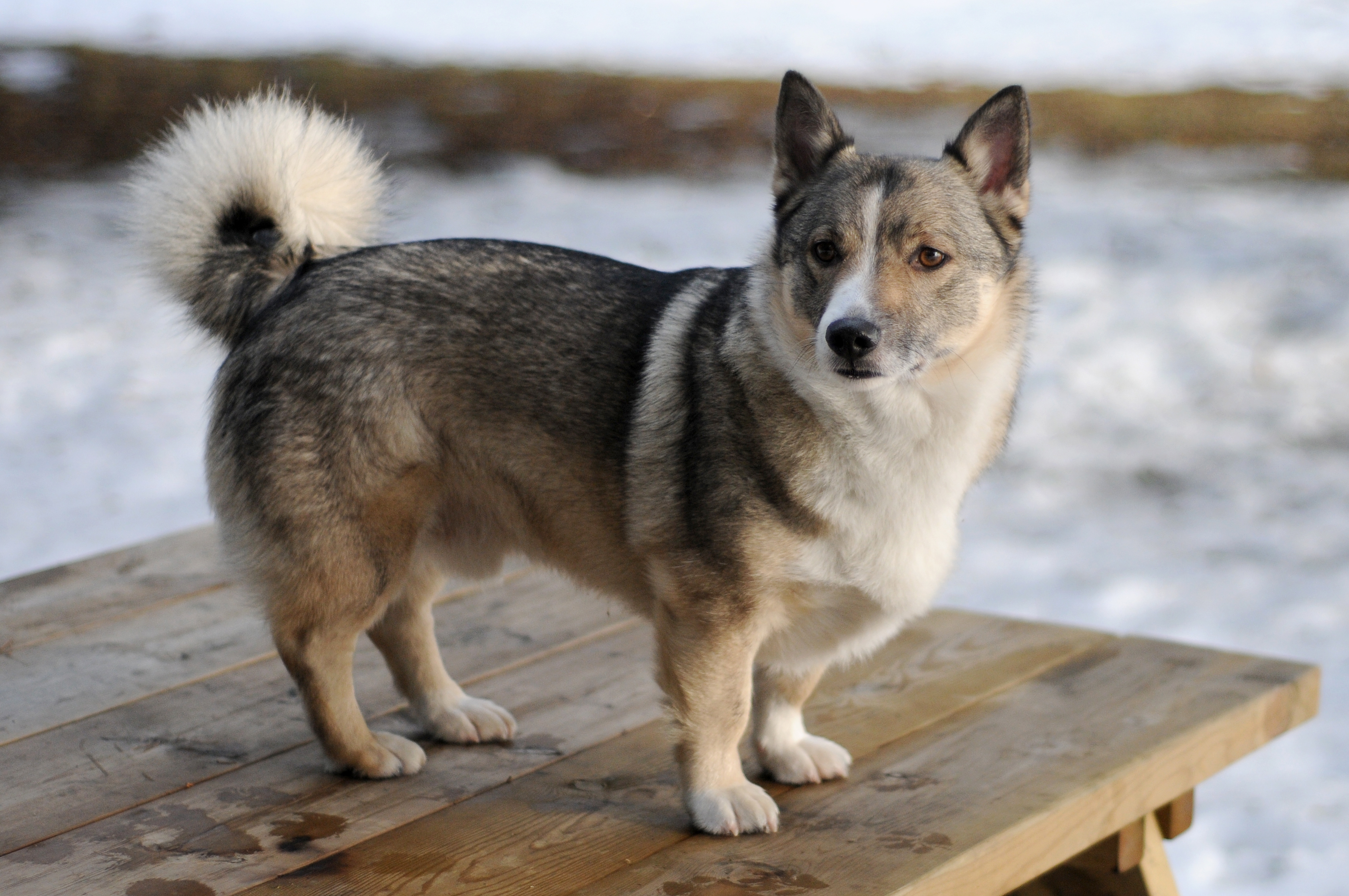
Photo: Wikimedia Commons
Origin
Sweden
Lifespan
12–15 years
Weight
9–14 kg (20–31 lbs)
Height
30–35 cm (12–14 in)
Exercise
30 to 45 min/day
Diet
Omnivore — high-quality small breed food.
Taxonomic Hierarchy
Kingdom
Animalia
Phylum
Chordata
Class
Mammalia
Order
Carnivora
Family
Canidae
Genus
Canis
The Story
The Swedish Vallhund is an ancient Viking cattle dog — a low, long-bodied herding dog that drove cattle by nipping at their heels, similar in function to the Welsh Corgi (the two breeds share remarkable similarities that have led to debate about whether they share a common Viking-era ancestor). The Vallhund nearly went extinct in the 1940s — only a handful remained — and was saved by Swedish breeders Björn von Rosen and Karl Gustaf Zettersten. Its unusual spitz-meets-heeler body plan (low to the ground, long-backed, but with spitz features) is uniquely appealing.
Also Known As
Quick Facts
Discover which pets match your lifestyle
Physical Profile
Source: wikimedia
A low-slung, long-bodied, short-legged dog with typical spitz features — erect ears, wedge-shaped head, and the characteristic tail that can be naturally bobbed, stub, or full-length. The coat is medium-length, harsh, and dense. The "harness" markings — lighter coloured muzzle, chest, shoulder, and leg patches on a grey or brownish body — are distinctive.
Grooming
Low
Shedding
Moderate
Brushing
2-3x-Weekly
Bathing
Every-6-8-Weeks
Coat Colors
Recognized By
Source: wikimedia
Temperament & Personality
Energetic, intelligent, and trainable — the Swedish Vallhund has herding instincts and working drive but in a compact, friendly package. Excellent in agility, obedience, and tracking sports. Alert and vocal. Good with families.
Personality Scores
Adaptability
4/5Attention Need
4/5Friendliness
4/5Playfulness
5/5Protectiveness
3/5Living Profile
Ideal Space
House-Small-Garden
Daily Exercise
30 to 45 min/day
Ideal Weather
-10°C to 22°C
Cognitive Benchmarks
Adaptability
40%
Attention
40%
Playfulness
50%
Communication Style
Stress Signals
herding behaviour, barking, nipping heels, pacing
Care & Wellness
Professional Care Protocol
- •1–1.5 hours vigorous exercise daily. Low grooming. Same spinal care as other short-legged, long-backed breeds — ramp access to furniture, avoid excessive jumping. Thrives in dog sports.
Nutrition Notes
Healthy breed. Retinopathy in some lines. Few dietary restrictions. Weight management important (short legs).
Vaccination Schedule
Vaccination Schedule
Senior Care
Swedish Vallhund retinopathy (SVR) — unique eye disease specific to this breed. Hip dysplasia (low). IVDD possible (short legs). Viking cattle herder — may share ancestry with Welsh Corgi (debated: did Vikings bring to Wales, or Welsh bring to Sweden?). Natural bobtail in some. 12-15 years.
Wellbeing Activities
Nutrition & Sustenance
Daily Calories (Adult)
750 kcal
Daily Calories (Young)
500 kcal
Recommended Foods
Foods to Avoid
Health Overview
Swedish Vallhund Retinopathy — a progressive retinal disease specific to the breed (DNA test available). Hip dysplasia. Same IVDD risk as other long-backed, short-legged breeds.
Common Conditions
Price Estimates
Pricing Guide
Average estimates as of 2025
"Viking Corgi" — shared ancestry debated. SVR eye testing important. India: not suited to climate.
Purchase Price
$1,500 to $3,000
Adoption Fee
$100 to $500
Data from 2025
Fun Facts
The Swedish Vallhund and Welsh Corgi look remarkably similar — both are low-slung, short-legged cattle herders. The most popular theory is that Viking raiders brought their Vallhunds to Wales (or vice versa) around 800–900 CE, and the breeds share a common ancestor from this historical exchange.
The Swedish Vallhund was saved from extinction in the 1940s by Björn von Rosen, who found only a handful of pure individuals remaining in remote Swedish farmsteads and began a systematic breeding programme. The entire modern Vallhund population descends from this small group.


