

Saarloos Wolfdog
The Saarloos Wolfdog is the other FCI-recognised wolf hybrid — developed by Dutch breeder Leendert Saarloos in the 1930s by crossing German Shepherds with European Grey Wolves, with the goal of producing a more natural, hardier working dog.
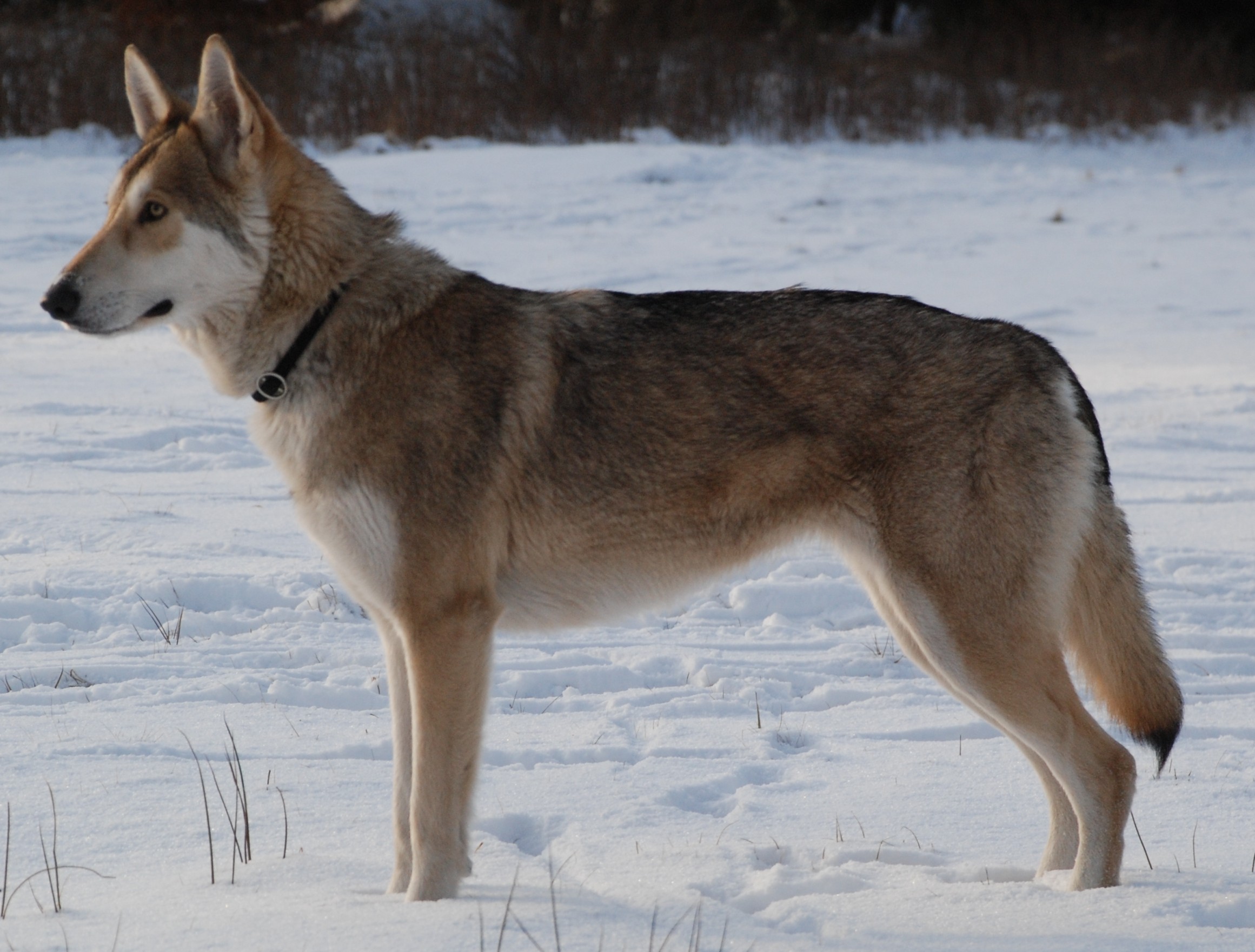
Photo: Wikimedia Commons
Origin
Netherlands
Lifespan
10–12 years
Weight
36–45 kg (79–99 lbs)
Height
60–75 cm (24–30 in)
Exercise
40 to 60 min/day
Diet
Omnivore — high-protein diet appropriate for a large working dog.
Taxonomic Hierarchy
Kingdom
Animalia
Phylum
Chordata
Class
Mammalia
Order
Carnivora
Family
Canidae
Genus
Canis
The Story
The Saarloos Wolfdog is the other FCI-recognised wolf hybrid — developed by Dutch breeder Leendert Saarloos in the 1930s by crossing German Shepherds with European Grey Wolves, with the goal of producing a more natural, hardier working dog. The Saarloos has a fundamentally different character from the Czechoslovakian Wolfdog — where the CSV was developed for military work and controllability, the Saarloos was never intended for obedience work. It is characteristically cautious, never aggressive (flight rather than fight), and deeply sensitive. It is used in the Netherlands as a guide dog for the blind — one of the most unusual guide dog breeds in the world.
Also Known As
Quick Facts
Discover which pets match your lifestyle
Physical Profile
Source: wikimedia
A large, wolf-like dog of powerful but elegant build — lighter and taller than the Czechoslovakian Wolfdog, with very long legs and a slender build. The wolf-grey coat with lighter facial shadings and the large, amber, oblique eyes give it an unmistakably wolf-like appearance.
Grooming
Moderate
Shedding
High
Brushing
2-3x-Weekly
Bathing
Every-6-8-Weeks
Coat Colors
Recognized By
Source: wikimedia
Temperament & Personality
Cautious, sensitive, and deeply pack-loyal — the Saarloos is never aggressive but is also not biddable. It is flight-oriented rather than fight-oriented. Deeply bonded to its chosen human. Not trainable by conventional methods — it requires a relationship-based approach.
Personality Scores
Adaptability
1/5Attention Need
3/5Friendliness
2/5Playfulness
2/5Protectiveness
3/5Living Profile
Ideal Space
Rural-Farm
Daily Exercise
40 to 60 min/day
Ideal Weather
-10°C to 22°C
Cognitive Benchmarks
Adaptability
10%
Attention
30%
Playfulness
20%
Communication Style
Stress Signals
extreme flight response, hiding, shyness, avoidance of all strangers, howling
Care & Wellness
Professional Care Protocol
- •2+ hours exercise daily in natural environments. Experienced owners only. Large space. Cannot be trained with pressure — all training must be relationship and reward based.
Nutrition Notes
GSD × European Wolf (1930s Netherlands). More wolf-like in temperament than CSV. Very shy, flight-prone. Hip dysplasia from GSD. High-quality protein.
Vaccination Schedule
Vaccination Schedule
Senior Care
Hip dysplasia (GSD). Spondylosis. Pituitary dwarfism. Degenerative myelopathy. EXTREMELY shy — more wolf-like than CSV. Created by Leendert Saarloos (1930s Netherlands) to create a "better" GSD — ended up too wolf-like for working. FCI recognized 1981. NOT a pet breed. 10-12 years.
Wellbeing Activities
Nutrition & Sustenance
Daily Calories (Adult)
1400 kcal
Daily Calories (Young)
1000 kcal
Recommended Foods
Foods to Avoid
Health Overview
Degenerative myelopathy — significantly elevated in the breed. Hip dysplasia. Spondylosis deformans. The wolf heritage provides some genetic diversity benefits but degenerative myelopathy is a serious concern.
Common Conditions
Price Estimates
Pricing Guide
Average estimates as of 2025
More wolf-like than CSV. EXTREMELY shy. NOT a pet. Creator admitted the project failed for working purposes. India: unavailable.
Purchase Price
$1,500 to $4,000
Adoption Fee
$100 to $500
Data from 2025
Fun Facts
Despite being a wolf hybrid, the Saarloos Wolfdog is used as a guide dog for blind individuals in the Netherlands — a unique use of the breed that demonstrates its gentle, cautious nature and strong human bonding capacity when properly developed.
Leendert Saarloos never intended his wolfdog to become a guide dog — he bred it as a natural, hardy working dog. The guide dog use was pioneered after his death by enthusiasts who recognised the breed's gentle sensitivity.


