

Norwegian Elkhound
The Norwegian Elkhound is one of the most ancient of all dog breeds, with remains identified at Viking Age archaeological sites and possible evidence from Neolithic settlements.
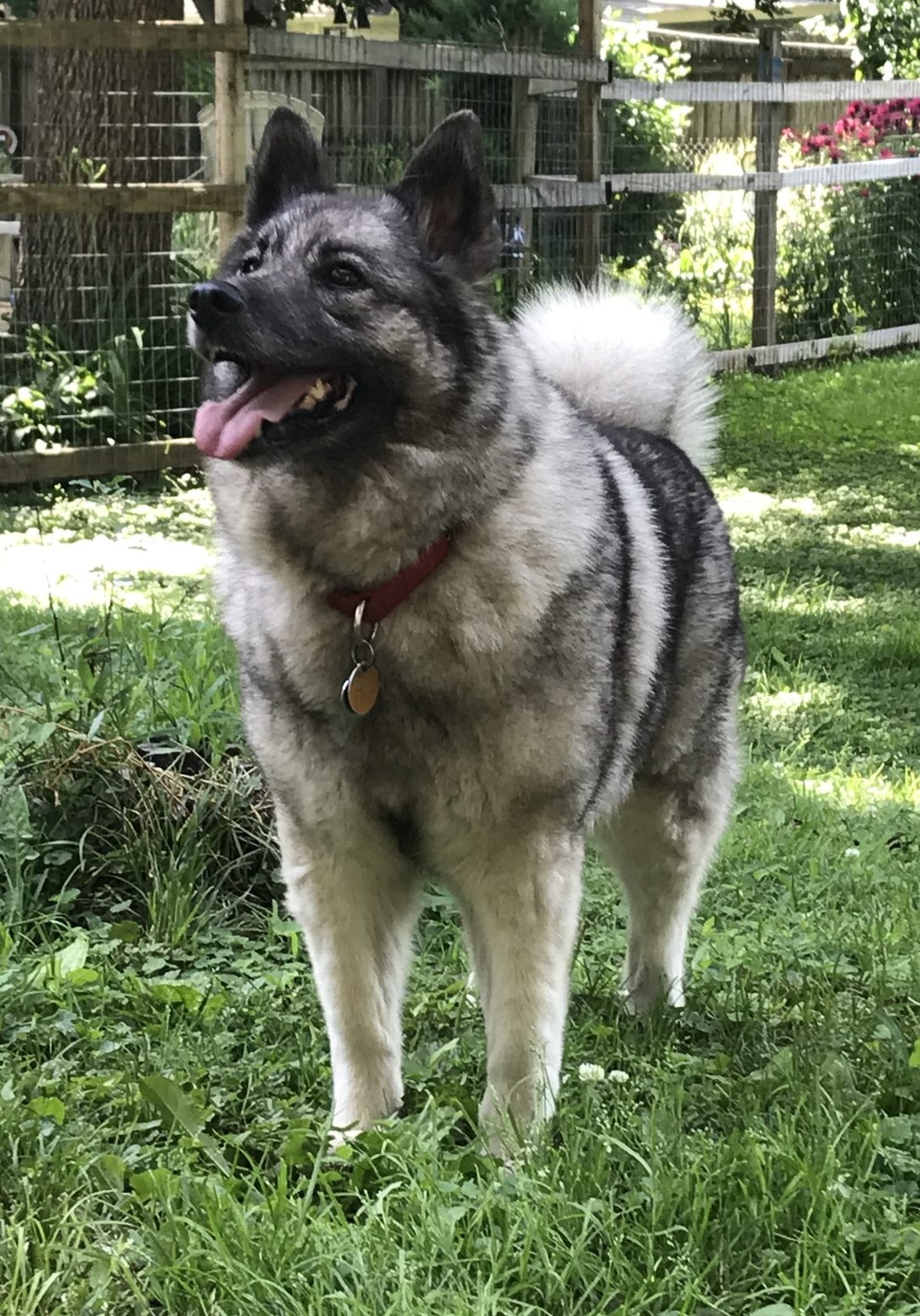
Photo: Wikimedia Commons
Origin
Norway
Lifespan
12–15 years
Weight
18–27 kg (40–60 lbs)
Height
49–52 cm (19–21 in)
Exercise
40 to 60 min/day
Diet
Omnivore — active medium breed kibble; efficient metabolism — do not overfeed
Taxonomic Hierarchy
Kingdom
Animalia
Phylum
Chordata
Class
Mammalia
Order
Carnivora
Family
Canidae
Genus
Canis
The Story
The Norwegian Elkhound is one of the most ancient of all dog breeds, with remains identified at Viking Age archaeological sites and possible evidence from Neolithic settlements. Developed in the rugged Norwegian wilderness to hunt elk (moose) by scenting and baying the quarry at a distance while the hunter approached, the Elkhound combines a hound's nose and voice with a spitz's build and independence. It is Norway's national dog and was bred in conditions of extreme cold and rugged terrain for thousands of years, producing a remarkably hardy, adaptable, and long-lived breed.
Also Known As
Quick Facts
Discover which pets match your lifestyle
Physical Profile
Source: wikimedia
The Norwegian Elkhound is a compact, sturdy medium-sized spitz with a distinctive grey coat of black-tipped hairs giving a salt-and-pepper effect. The tail curls tightly over the back. The head is broad with small, upright ears. The coat is thick and weather-resistant. The expression is alert, keen, and bold.
Grooming
Moderate
Shedding
Very High
Brushing
2-3x-Weekly
Bathing
Every-6-8-Weeks
Coat Colors
Recognized By
Source: wikimedia
Temperament & Personality
Norwegian Elkhounds are bold, friendly, and independent — a combination that makes them engaging companions but challenging training subjects. They were bred to make independent hunting decisions without human direction and retain this autonomy. They are loyal and affectionate with their family and typically good with children. Their hunting voice — a deep, carrying bay — is used freely and carries considerable distance.
Personality Scores
Adaptability
3/5Attention Need
3/5Friendliness
4/5Playfulness
4/5Protectiveness
4/5Living Profile
Ideal Space
House-Small-Garden
Daily Exercise
40 to 60 min/day
Ideal Weather
-20°C to 22°C
Cognitive Benchmarks
Adaptability
30%
Attention
30%
Playfulness
40%
Communication Style
Stress Signals
excessive barking, guarding behaviour, pacing, restlessness, stubbornness
Care & Wellness
Professional Care Protocol
- •Daily vigorous exercise of 1–1.5 hours. The dense double coat sheds massively twice yearly — daily brushing during these periods. They have efficient metabolisms and are prone to obesity — strict portion control. Their independent nature requires patient, positive training from puppyhood.
Nutrition Notes
Obesity-prone — strict portion control. Fanconi syndrome (kidney disorder) in some lines — affects nutrient absorption. Moderate calorie needs. Fish-based diets suit Nordic breeds.
Vaccination Schedule
Vaccination Schedule
Senior Care
Fanconi syndrome — kidney tubule disorder, can cause electrolyte imbalances. Hip dysplasia. PRA. Hypothyroidism. Sebaceous cysts. Norway's national dog. One of the oldest breeds — Viking era. Bred to track moose. 12-15 years.
Wellbeing Activities
Nutrition & Sustenance
Daily Calories (Adult)
1200 kcal
Daily Calories (Young)
800 kcal
Recommended Foods
Foods to Avoid
Health Overview
Fanconi syndrome (a kidney tubule disorder) occurs at elevated rates. Progressive retinal atrophy is seen. Hip dysplasia is occasionally seen. Hypothyroidism occurs. Generally a robust, healthy, long-lived breed.
Common Conditions
Price Estimates
Pricing Guide
Average estimates as of 2025
Silver-grey with black tips only. Not suited to Indian climate. India: very rare.
Purchase Price
$800 to $2,000
Adoption Fee
$100 to $400
Data from 2025
Fun Facts
Norwegian Elkhound remains have been found in Viking grave mounds dating to 500–800 CE, and possible Elkhound-type remains have been found at Neolithic sites in Norway — making the breed one of the most ancient continuously documented breeds.
The Norwegian Elkhound is one of Norway's three national dogs — alongside the Norwegian Buhund and the Norwegian Lundehund — and is considered a cultural heritage animal.
Elkhounds hunt by finding a moose's trail (using scent), following it, then barking rapidly to bay the moose in place — their bark is designed to carry over enormous distances through dense Norwegian forest.


