

Maltese
The Maltese is among the most ancient of all toy breeds, with unbroken records of its existence stretching back nearly 3,000 years to ancient Greece, Rome, and Malta.
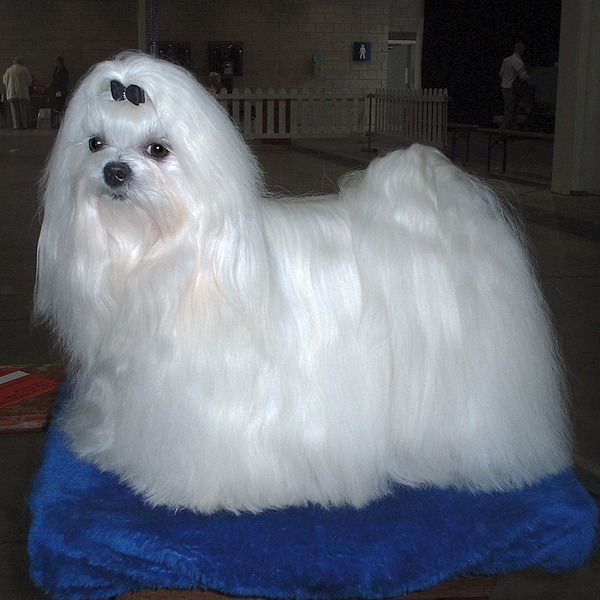
Photo: Wikimedia Commons
Origin
Malta
Lifespan
12–15 years
Weight
1.4–3.6 kg (3–8 lbs)
Height
20–25 cm (8–10 in)
Exercise
20 to 30 min/day
Diet
Omnivore — small-breed kibble; very small caloric requirements; frequent small meals prevent hypoglycaemia in puppies
Taxonomic Hierarchy
Kingdom
Animalia
Phylum
Chordata
Class
Mammalia
Order
Carnivora
Family
Canidae
Genus
Canis
The Story
The Maltese is among the most ancient of all toy breeds, with unbroken records of its existence stretching back nearly 3,000 years to ancient Greece, Rome, and Malta. Aristotle mentioned the breed; Romans carried Maltese dogs in their sleeves as fashion accessories and living hot water bottles; Crusader knights brought them back from the Mediterranean. Throughout recorded history the Maltese has been a companion and status symbol for the wealthy and aristocratic. Its pure white, non-shedding coat, tiny size, and affectionate personality have ensured its survival and popularity across millennia.
Also Known As
Quick Facts
Discover which pets match your lifestyle
Physical Profile
Source: wikimedia
The Maltese is a tiny, elegant dog covered from head to tail in a long, silky, pure white coat that hangs flat on either side of the body, sometimes touching the ground. There is no undercoat, which is why they shed minimally and are often tolerated by allergy sufferers. The face has large, dark, round eyes with black rims, a black nose, and a short muzzle. The tail lies over the back in a plume.
Grooming
Very High
Shedding
None
Brushing
Daily
Bathing
Every-1-2-Weeks
Coat Colors
Recognized By
Source: wikimedia
Temperament & Personality
Maltese are lively, playful, and fearlessly confident despite their tiny size. They are intensely devoted to their owners and can develop separation anxiety if left alone regularly. Their alert nature makes them vocal watchdogs. Despite their delicate appearance, they enjoy interactive play and short walks. They can be prone to resource guarding and may be snappy with strangers if not properly socialised.
Personality Scores
Adaptability
5/5Attention Need
5/5Friendliness
4/5Playfulness
4/5Protectiveness
2/5Living Profile
Ideal Space
Apartment
Daily Exercise
20 to 30 min/day
Ideal Weather
10°C to 28°C
Cognitive Benchmarks
Adaptability
50%
Attention
50%
Playfulness
40%
Communication Style
Stress Signals
excessive barking, trembling, hiding, separation anxiety, appetite loss
Care & Wellness
Professional Care Protocol
- •The long white coat requires daily brushing to prevent matting and professional grooming every 4–6 weeks. Tear staining (brown marks below the eyes) is common and managed with regular face washing and keeping the area dry. Teeth need daily brushing — dental disease is a significant concern. They should be handled gently; their small size makes them vulnerable to injury from rough handling or falls.
Nutrition Notes
Hypoglycaemia risk in puppies and tiny adults — frequent small meals. Tear staining is partly dietary (food colourings, beet pulp can worsen it). Dental disease major concern — dental-specific food recommended. Portosystemic shunt (liver) affects nutrient metabolism.
Vaccination Schedule
Vaccination Schedule
Senior Care
Dental disease is near-universal by age 7 — annual dental cleanings, daily brushing non-negotiable. Collapsing trachea (use harness). Luxating patella may require surgery. Portosystemic liver shunt — blood test at purchase. White Shaker Syndrome (tremors) manageable with medication.
Wellbeing Activities
Nutrition & Sustenance
Daily Calories (Adult)
400 kcal
Daily Calories (Young)
300 kcal
Recommended Foods
Foods to Avoid
Health Overview
Hypoglycaemia is a risk in very small or young Maltese — frequent small meals and monitoring for weakness and trembling. Patellar luxation is common. Portosystemic shunt (liver shunt) occurs. Dental overcrowding is nearly universal. Progressive retinal atrophy occurs at elevated rates.
Common Conditions
Price Estimates
Pricing Guide
Average estimates as of 2025
High grooming costs (daily brushing, professional grooming monthly). Teacup Maltese (under 1.5 kg) exist but have severe health issues — Superr Pets does not endorse. Show-quality coats require immense maintenance.
Purchase Price
$1,000 to $3,000
Adoption Fee
$100 to $400
Data from 2025
Fun Facts
Aristotle referred to the Maltese as "perfectly proportioned" — among the earliest written references to a specific dog breed, from around 350 BCE.
Queen Elizabeth I, Mary Queen of Scots, and Josephine Bonaparte all kept Maltese dogs — the breed has been associated with female royalty across multiple centuries and cultures.
A Maltese named Trouble inherited $12 million USD from hotel heiress Leona Helmsley in 2007 — later reduced to $2 million by a judge. The dog required a $100,000 per year maintenance budget.


