

Lakeland Terrier
The Lakeland Terrier is one of the oldest working terrier breeds in England, developed in the Lake District to hunt fox and protect sheep from predators in the fells.
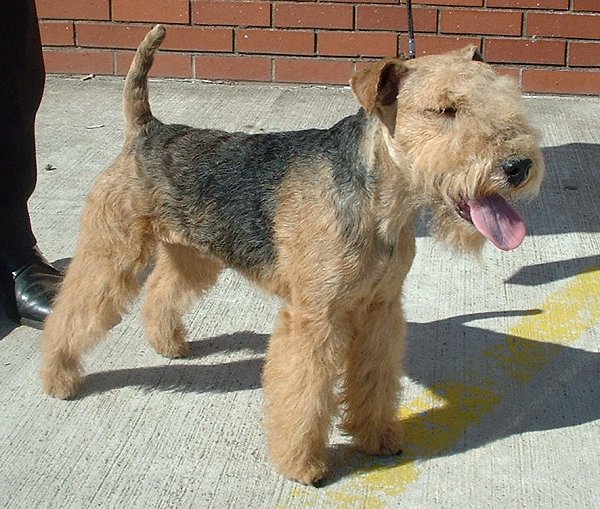
Photo: Wikimedia Commons
Origin
United Kingdom
Lifespan
12–15 years
Weight
7–8 kg (15–17 lbs)
Height
33–38 cm (13–15 in)
Exercise
30 to 45 min/day
Diet
Omnivore — quality small-breed kibble
Taxonomic Hierarchy
Kingdom
Animalia
Phylum
Chordata
Class
Mammalia
Order
Carnivora
Family
Canidae
Genus
Canis
The Story
The Lakeland Terrier is one of the oldest working terrier breeds in England, developed in the Lake District to hunt fox and protect sheep from predators in the fells. Unlike most other terrier breeds which pursued quarry into dens, the Lakeland was specifically bred to follow foxes deep into the rocky fells — sometimes miles underground through narrow rocky passages — and either bolt or dispatch the fox. Their narrow chest (no wider than a man's hands clasped together) was deliberately maintained to allow them to squeeze into the tightest rock clefts. Despite their small stature, Lakelands are among the boldest of terrier breeds.
Also Known As
Quick Facts
Discover which pets match your lifestyle
Physical Profile
Source: wikimedia
The Lakeland Terrier is a small, workmanlike terrier of narrow, rectangular build — the narrow chest is a breed-specific functional feature. The coat is dense, hard, and wiry with a softer undercoat. The characteristic furnishings on the muzzle — beard and eyebrows — create an expressive, alert face. Colour variety is wide. The tail is traditionally docked but natural tails are increasingly seen.
Grooming
High
Shedding
Low
Brushing
3-4x-Weekly
Bathing
Every-4-6-Weeks
Coat Colors
Recognized By
Source: wikimedia
Temperament & Personality
Lakelands are confident, spirited, and bold — they have the working terrier's fearless approach to everything. They are friendly and adaptable with their family, though typically dog-selective given their fighting heritage. Their intelligence and independence means training is a negotiation rather than a command. They are alert watchdogs. Their prey drive is significant.
Personality Scores
Adaptability
4/5Attention Need
3/5Friendliness
4/5Playfulness
4/5Protectiveness
3/5Living Profile
Ideal Space
Apartment
Daily Exercise
30 to 45 min/day
Ideal Weather
0°C to 25°C
Cognitive Benchmarks
Adaptability
40%
Attention
30%
Playfulness
40%
Communication Style
Stress Signals
barking, digging, stubbornness, nipping
Care & Wellness
Professional Care Protocol
- •Daily vigorous exercise of 45–60 minutes. The wiry coat requires hand-stripping twice yearly and brushing 2–3 times weekly. Early socialisation is important. Secure fencing is essential.
Nutrition Notes
Generally healthy terrier with few dietary restrictions. Legg-Calve-Perthes in some lines. Moderate calorie needs. Lens luxation — DNA test available.
Vaccination Schedule
Vaccination Schedule
Senior Care
Legg-Calve-Perthes. PLL (primary lens luxation) — DNA test available. Cataracts. Von Willebrand's disease in some lines. Lake District fell terrier — bred to follow foxes into rocky dens. Hand-stripping required. 12-15 years.
Wellbeing Activities
Nutrition & Sustenance
Daily Calories (Adult)
650 kcal
Daily Calories (Young)
450 kcal
Recommended Foods
Foods to Avoid
Health Overview
Generally a very healthy, robust, long-lived breed with minimal hereditary conditions. Legg-Calvé-Perthes disease occurs occasionally. Eye conditions including lens luxation are seen. One of the healthier terrier breeds overall.
Common Conditions
Price Estimates
Pricing Guide
Average estimates as of 2025
Rare breed. Hand-stripping required for proper coat. India: unavailable.
Purchase Price
$1,000 to $2,500
Adoption Fee
$100 to $400
Data from 2025
Fun Facts
The Lakeland Terrier has won Best in Show at Westminster (1976) and Crufts (1963, 1967) — remarkable for a breed that remains relatively rare outside working terrier circles.
The breed standard requires the chest to fit between a man's clasped hands — a functional specification unique in the dog world, reflecting the breed's need to squeeze through rock clefts.
Lakeland Terriers have been known to pursue quarry underground for several days without giving up — hunters sometimes had to excavate considerable distances to retrieve their dog and the fox.


