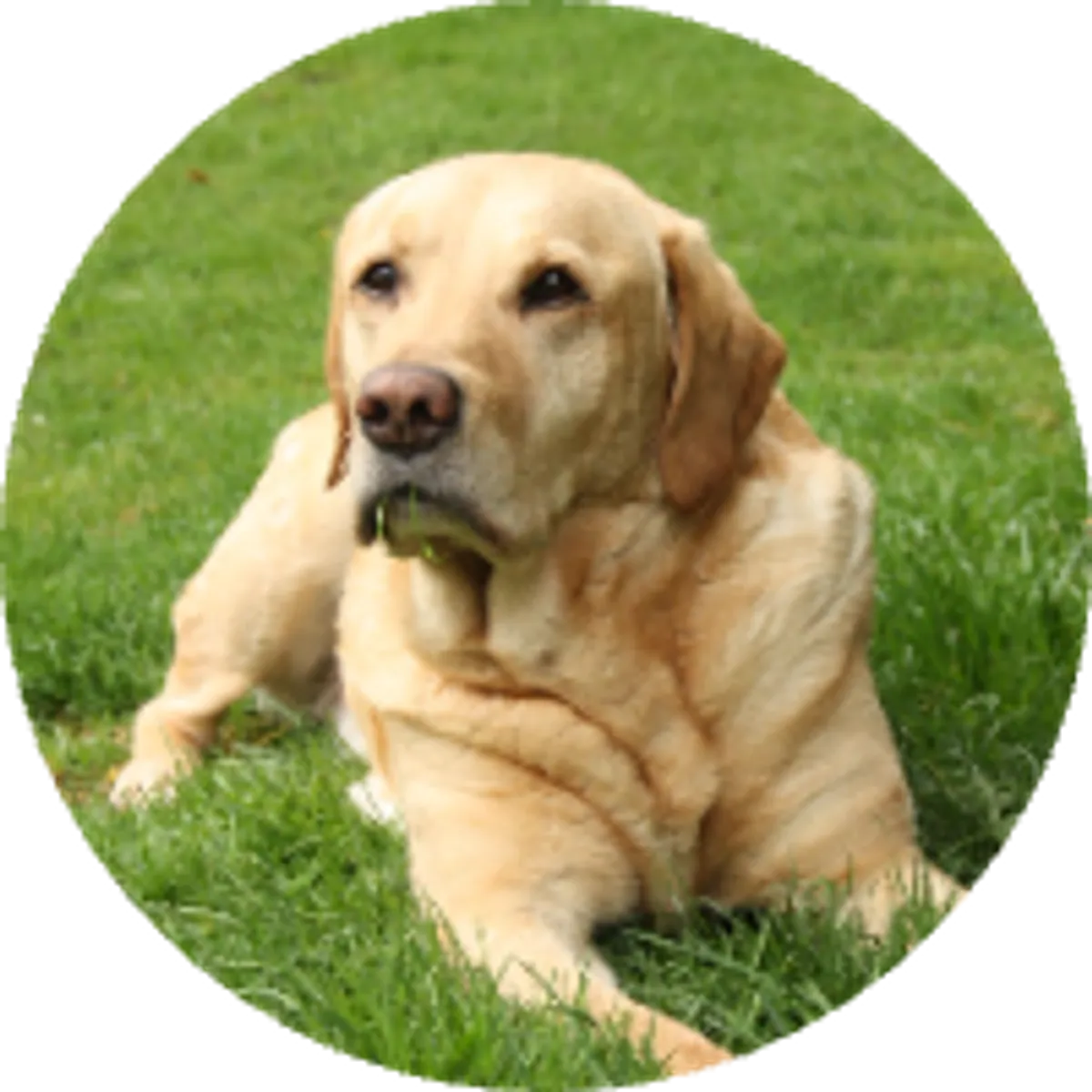

Labrador Retriever
The Labrador Retriever has held the title of most popular dog breed in the United States for over three decades and consistently ranks among the world's most beloved breeds.

Photo: Wikimedia Commons
Origin
United Kingdom
Lifespan
10–12 years
Weight
25–36 kg (55–80 lbs)
Height
55–62 cm (21.5–24.5 in)
Exercise
60 to 120 min/day
Diet
Omnivore — commercial dry kibble formulated for large breeds
Taxonomic Hierarchy
Kingdom
Animalia
Phylum
Chordata
Class
Mammalia
Order
Carnivora
Family
Canidae
Genus
Canis
The Story
The Labrador Retriever has held the title of most popular dog breed in the United States for over three decades and consistently ranks among the world's most beloved breeds. Originally bred in Newfoundland as a fisherman's working dog, the Lab was refined in England into the versatile, family-friendly companion we know today. Labradors excel in virtually every role they are given — service and guide dogs, search and rescue, drug and explosive detection, therapy dogs, competitive sports, and above all, devoted family pets. Their combination of intelligence, biddability, and affectionate temperament makes them one of the most trainable breeds in the world.
Also Known As
Quick Facts
Discover which pets match your lifestyle
Physical Profile
Source: wikimedia
The Labrador is a strongly built, medium-to-large dog with a clean-cut head, broad skull, and a powerful, otter-like tail that is characteristic of the breed. Their coat is short, dense, and weather-resistant with a soft, water-resistant undercoat — a direct adaptation from their days retrieving waterfowl from icy Newfoundland waters. The three recognised colours are yellow (ranging from pale cream to fox red), black, and chocolate (ranging from medium to dark brown). Labs have kind, expressive eyes in brown or hazel, a wide muzzle with a strong jaw, and a robust, muscular build without heaviness.
Grooming
Low
Shedding
High
Brushing
2-3x-Weekly
Bathing
Every-6-8-Weeks
Coat Colors
Recognized By
Source: wikimedia
Temperament & Personality
Few breeds match the Labrador's all-round good nature. They are famously outgoing, rarely meeting a stranger they don't immediately treat as a best friend. Labs are highly social animals that thrive on human company and become unhappy when left alone for extended periods. Their intelligence is matched by their eagerness to please, making them exceptionally easy to train. They have a notably long puppy phase — many Labs remain boisterous and playful well into their third year — but their innate desire to cooperate means even their youthful exuberance is manageable. Their legendary "soft mouth" instinct, bred for retrieving game undamaged, also makes them gentle with children.
Personality Scores
Adaptability
4/5Attention Need
4/5Friendliness
5/5Playfulness
5/5Protectiveness
2/5Living Profile
Ideal Space
House-Small-Garden
Daily Exercise
60 to 120 min/day
Ideal Weather
5°C to 30°C
Cognitive Benchmarks
Adaptability
40%
Attention
40%
Playfulness
50%
Communication Style
Stress Signals
excessive panting, pacing, destructive chewing, appetite loss, whale eye, tucked tail
Care & Wellness
Professional Care Protocol
- •Labradors require at least 1–2 hours of vigorous exercise daily. Without adequate physical and mental stimulation they are prone to destructive behaviours and weight gain. Swimming is an ideal exercise — most Labs are natural swimmers and the low-impact nature of water exercise suits their joints. They are heavy shedders, particularly twice a year during seasonal changes; weekly brushing reduces loose hair and a grooming glove used daily during shedding seasons helps considerably. Nails should be trimmed monthly. Ears should be checked weekly for moisture and debris, particularly in dogs that swim regularly, as Labs are prone to ear infections. Teeth should be brushed several times per week. Diet must be carefully managed as Labs are notoriously food-motivated and prone to obesity — a mutation in the POMC gene found in many Labradors impairs their sensation of feeling full.
Nutrition Notes
Extremely food-motivated — prone to obesity. Use measured meals, never free-feed. Joint supplements (glucosamine/chondroitin) from age 2. Omega-3 fatty acids for coat and joint health.
Vaccination Schedule
Vaccination Schedule
Senior Care
Hip and elbow dysplasia onset common from age 7. Monitor weight strictly — senior Labs gain easily. Reduce high-impact exercise; maintain swimming. Annual joint screening. Watch for exercise intolerance (early sign of laryngeal paralysis).
Wellbeing Activities
Nutrition & Sustenance
Daily Calories (Adult)
1600 kcal
Daily Calories (Young)
1200 kcal
Recommended Foods
Foods to Avoid
Health Overview
Generally a robust breed but predisposed to several conditions. Hip and elbow dysplasia are the most significant heritable concerns; responsible breeders screen breeding stock using OFA (Orthopedic Foundation for Animals) or equivalent certifications. Obesity is the number-one preventable health concern for the breed. Exercise-induced collapse (EIC) is a genetic condition causing muscle weakness after intense exercise. Progressive retinal atrophy (PRA) can lead to blindness; DNA testing is available. Labs are also susceptible to ear infections given their floppy ears and love of water.
Common Conditions
Price Estimates
Pricing Guide
Average estimates as of 2025
Show-line puppies (OFA-certified parents) command premium. Chocolate Labs often slightly more expensive than black or yellow. India pricing reflects non-KCI registered to KCI registered range.
Purchase Price
$800 to $2,000
Adoption Fee
$50 to $400
Data from 2025
Fun Facts
The Labrador Retriever's otter-like tail — thick at the base and tapering to the tip — acts as a powerful rudder when swimming.
A genetic study found that many Labradors carry a mutation in the POMC gene that disrupts the signal telling them they are full, which explains their seemingly insatiable appetite.
Labrador Retrievers have served as guide dogs in greater numbers than any other breed worldwide since the first guide dog schools were established in the 1920s.
Despite the name, the Labrador Retriever actually originated in Newfoundland, Canada, and was refined as a breed in England — not in Labrador.
Labs have a double coat that is so water-resistant that water rolls off it rather than soaking in, allowing them to emerge from cold water with minimal heat loss.
The breed holds multiple records in competitive nose work — Labradors have detected COVID-19 in clinical trials with accuracy rates above 90%.