

Hovawart
The Hovawart is a German working and guard dog with a history stretching to the 13th century — the name means "estate guardian" (Hof = estate/farm, Wart = guardian) and the breed was documented in German medieval texts as a valued property guardian.
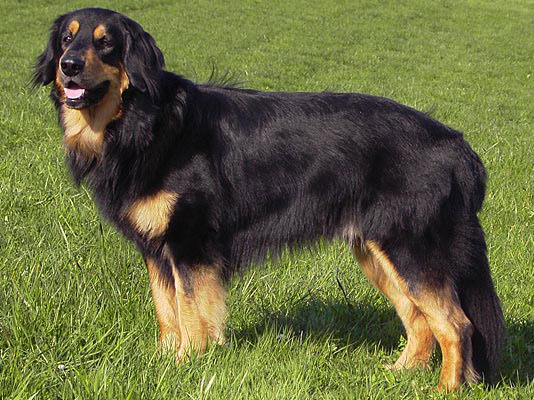
Photo: Wikimedia Commons
Origin
Germany
Lifespan
10–14 years
Weight
25–45 kg (55–99 lbs)
Height
58–70 cm (23–28 in)
Exercise
40 to 60 min/day
Diet
Omnivore — high-quality large breed food appropriate for an active working dog.
Taxonomic Hierarchy
Kingdom
Animalia
Phylum
Chordata
Class
Mammalia
Order
Carnivora
Family
Canidae
Genus
Canis
The Story
The Hovawart is a German working and guard dog with a history stretching to the 13th century — the name means "estate guardian" (Hof = estate/farm, Wart = guardian) and the breed was documented in German medieval texts as a valued property guardian. After near-extinction, the Hovawart was reconstructed in Germany in the early 20th century by breeding farm dogs with similar appearance to the historical type. Today it is a versatile working dog used in search and rescue, tracking, and as a family guardian. It is loyal and devoted but takes time to bond — it is not an immediately demonstrative dog.
Also Known As
Quick Facts
Discover which pets match your lifestyle
Physical Profile
Source: wikimedia
A large, well-balanced dog with a slightly wavy, medium-length coat with feathering on the ears, chest, legs, and tail. Three colours are recognised: black, blonde (golden), and black-and-gold. The head is broad with a slightly domed skull. The tail is well-furred and carried in a gentle curve.
Grooming
Moderate
Shedding
High
Brushing
2-3x-Weekly
Bathing
Every-6-8-Weeks
Coat Colors
Recognized By
Source: wikimedia
Temperament & Personality
Loyal, devoted, and self-confident — the Hovawart takes time to bond but once bonded is deeply dedicated. Intelligent and versatile. Alert and a natural guardian. Not typically demonstrative with new people. Does best with an experienced, dedicated owner.
Personality Scores
Adaptability
3/5Attention Need
4/5Friendliness
4/5Playfulness
4/5Protectiveness
4/5Living Profile
Ideal Space
House-Large-Garden
Daily Exercise
40 to 60 min/day
Ideal Weather
-10°C to 25°C
Cognitive Benchmarks
Adaptability
30%
Attention
40%
Playfulness
40%
Communication Style
Stress Signals
guarding behaviour, barking, stubbornness, pacing
Care & Wellness
Professional Care Protocol
- •1.5–2 hours exercise daily. The medium-length coat requires brushing 2–3 times weekly. Mental stimulation and a working role are important. Search and rescue, tracking, and protection sports all suit the breed.
Nutrition Notes
Generally very healthy breed. Hypothyroidism possible. Joint supplements for active dogs.
Vaccination Schedule
Vaccination Schedule
Senior Care
Hip dysplasia (low rates due to strict German breeding rules). Hypothyroidism. Very few other genetic issues — one of the healthiest large breeds. German estate guardian (name means "guardian of the estate"). Strict German breed club controls quality. 10-14 years — very long-lived for a large breed.
Wellbeing Activities
Nutrition & Sustenance
Daily Calories (Adult)
1600 kcal
Daily Calories (Young)
1200 kcal
Recommended Foods
Foods to Avoid
Health Overview
Hypothyroidism — elevated in Hovawart lines. Hip dysplasia. Generally a healthy working breed.
Common Conditions
Price Estimates
Pricing Guide
Average estimates as of 2025
One of the healthiest large breeds. Strict German breeding standards. India: not suited to hot climate.
Purchase Price
$1,500 to $3,000
Adoption Fee
$100 to $500
Data from 2025
Fun Facts
The Hovawart appears in a 13th-century German manuscript "De Natura Rerum" by Albertus Magnus — the historical estate guardian is described in detail, making it one of the oldest documented German dog breeds.
The breed's reconstruction in the 20th century deliberately used farm dogs rather than existing registered breeds — the goal was to recreate the working estate guardian from its natural genetic base rather than through pedigree selection.


