

Great Dane
The Great Dane is the tallest dog breed in the world, holding the Guinness World Record for the tallest individual dogs repeatedly — Zeus, a Great Dane from Michigan, stood 111.
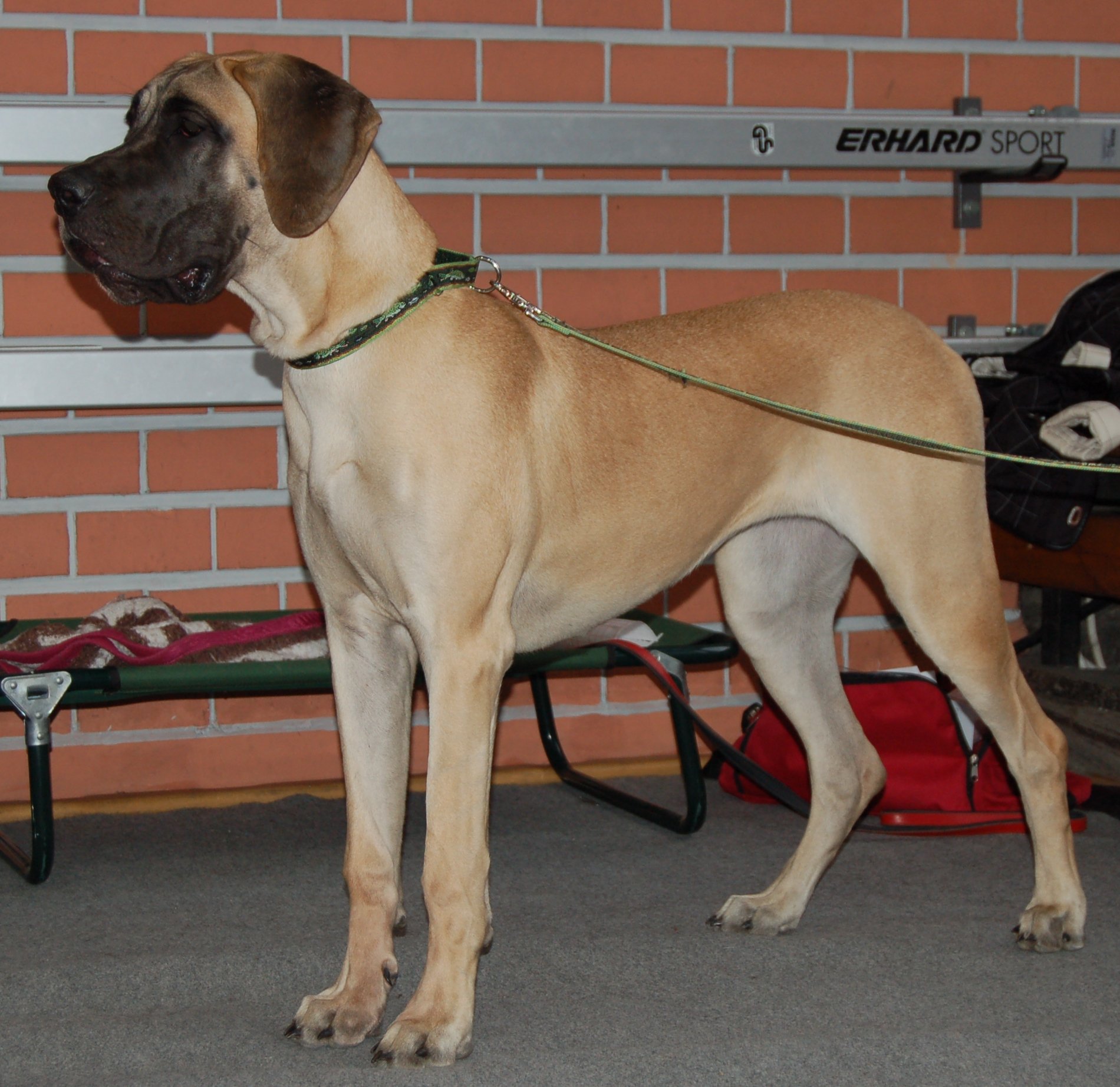
Photo: Wikimedia Commons
Origin
Germany
Lifespan
7–10 years
Weight
50–82 kg (110–180 lbs)
Height
71–86 cm (28–34 in)
Exercise
30 to 60 min/day
Diet
Omnivore — giant-breed specific formulation essential to support controlled skeletal growth; fed multiple small meals to reduce bloat risk
Taxonomic Hierarchy
Kingdom
Animalia
Phylum
Chordata
Class
Mammalia
Order
Carnivora
Family
Canidae
Genus
Canis
The Story
The Great Dane is the tallest dog breed in the world, holding the Guinness World Record for the tallest individual dogs repeatedly — Zeus, a Great Dane from Michigan, stood 111.8 cm (44 inches) at the shoulder. Despite their towering size, Great Danes are renowned for their gentle, affectionate temperament, earning them the nickname "Apollo of Dogs" and "Gentle Giant." Originally bred in Germany (despite the English name) for boar hunting and later as estate guard dogs, the modern Great Dane is a patient, loving companion who seems entirely unaware of their remarkable dimensions.
Also Known As
Quick Facts
Discover which pets match your lifestyle
Physical Profile
Source: wikimedia
The Great Dane is the definition of imposing elegance — combining massive scale with clean, well-proportioned lines. The neck is long and arched, the body muscular and deep-chested, and the gait is that of a ground-covering trot. The head is rectangular, broad, and expressive. Coat is short and dense. The breed comes in striking colour patterns: fawn and brindle (classic), blue (steel grey), black, harlequin (white with irregular black patches), mantle (black and white like a horse blanket), and merle.
Grooming
Low
Shedding
Moderate
Brushing
1x-Weekly
Bathing
Every-6-8-Weeks
Coat Colors
Recognized By
Source: wikimedia
Temperament & Personality
Great Danes are gentle, patient, and deeply affectionate with their family. Their size makes early training and socialisation essential — a poorly trained 80 kg dog is genuinely difficult to manage — but their temperament is fundamentally mild and cooperative. They are patient with children, though their size means accidental knockdowns are a real risk with very small children. They are not high-energy despite their size; moderate daily exercise suits them well. They are sensitive dogs that respond poorly to harsh handling and thrive on being included in family activities.
Personality Scores
Adaptability
3/5Attention Need
4/5Friendliness
5/5Playfulness
4/5Protectiveness
3/5Living Profile
Ideal Space
House-Large-Garden
Daily Exercise
30 to 60 min/day
Ideal Weather
5°C to 28°C
Cognitive Benchmarks
Adaptability
30%
Attention
40%
Playfulness
40%
Communication Style
Stress Signals
leaning heavily on owner, drooling increase, pacing, destructive behaviour, trembling
Care & Wellness
Professional Care Protocol
- •Giant breed specific nutrition is critical during growth (up to 2 years) — regular puppy food promotes too-rapid bone growth, increasing risk of developmental orthopaedic disease. Two to three smaller meals per day rather than one large meal reduces bloat risk. The short coat needs minimal grooming but they shed moderately. Due to their size, early training is essential — a Great Dane that jumps up or pulls on the leash is not manageable. They are not suited to small living spaces though are surprisingly calm indoors.
Nutrition Notes
Bloat (GDV) is the #1 killer — prophylactic gastropexy STRONGLY recommended. Feed 3 meals daily, never one large meal. Do NOT use elevated food bowls. Giant breed puppy formula essential (controlled calcium, moderate protein). Do NOT over-supplement growing puppies.
Vaccination Schedule
Vaccination Schedule
Senior Care
Tragically short lifespan (6–8 years). Bloat risk increases with age. DCM (dilated cardiomyopathy) — echocardiogram annually from age 3. Osteosarcoma common. Wobblers syndrome. Arthritis onset early. Orthopaedic beds essential.
Wellbeing Activities
Nutrition & Sustenance
Daily Calories (Adult)
2500 kcal
Daily Calories (Young)
2000 kcal
Recommended Foods
Foods to Avoid
Health Overview
Great Danes have the shortest lifespan of common breeds (7–10 years), partly due to their elevated rates of dilated cardiomyopathy (DCM) and bloat. DCM causes the heart to enlarge and fail; annual cardiac screening is important. Bloat/GDV is a life-threatening emergency; prophylactic gastropexy is strongly recommended. Hip and elbow dysplasia and bone cancers (osteosarcoma) occur at elevated rates. Wobblers syndrome (cervical vertebral instability) affects some individuals.
Common Conditions
Price Estimates
Pricing Guide
Average estimates as of 2025
Harlequin and merle most expensive colours. Food costs alone ₹8,000-15,000/month India ($200-400/month USA). Total lifetime cost 3-4x most breeds despite shorter lifespan. Gastropexy surgery should be factored into purchase planning (₹20-40K India, $400-1,500 USA).
Purchase Price
$1,000 to $3,000
Adoption Fee
$100 to $400
Data from 2025
Fun Facts
A Great Dane named Zeus holds the current Guinness World Record for tallest dog ever — measuring 111.8 cm (44 in) from floor to shoulder, he was taller than most donkeys.
Scooby-Doo, the animated cartoon character created in 1969, is a Great Dane — his creators specifically chose the breed for its combination of imposing size and cowardly, endearing personality.
Great Danes are not Danish — the breed was developed entirely in Germany. The English name "Great Dane" arose from a 17th-century French naturalist who called the breed "Grand Danois" while travelling Germany, perhaps confused about its origins.
Despite being the world's tallest breed, Great Danes are one of the least active large dogs at home — they are often described as "apartment dogs that happen to be enormous," content to spend most of the day sleeping.


