

French Bulldog
The French Bulldog has surged to become the most registered breed in the United States (as of 2022, displacing the Labrador after 31 years) and the most popular breed in the United Kingdom.
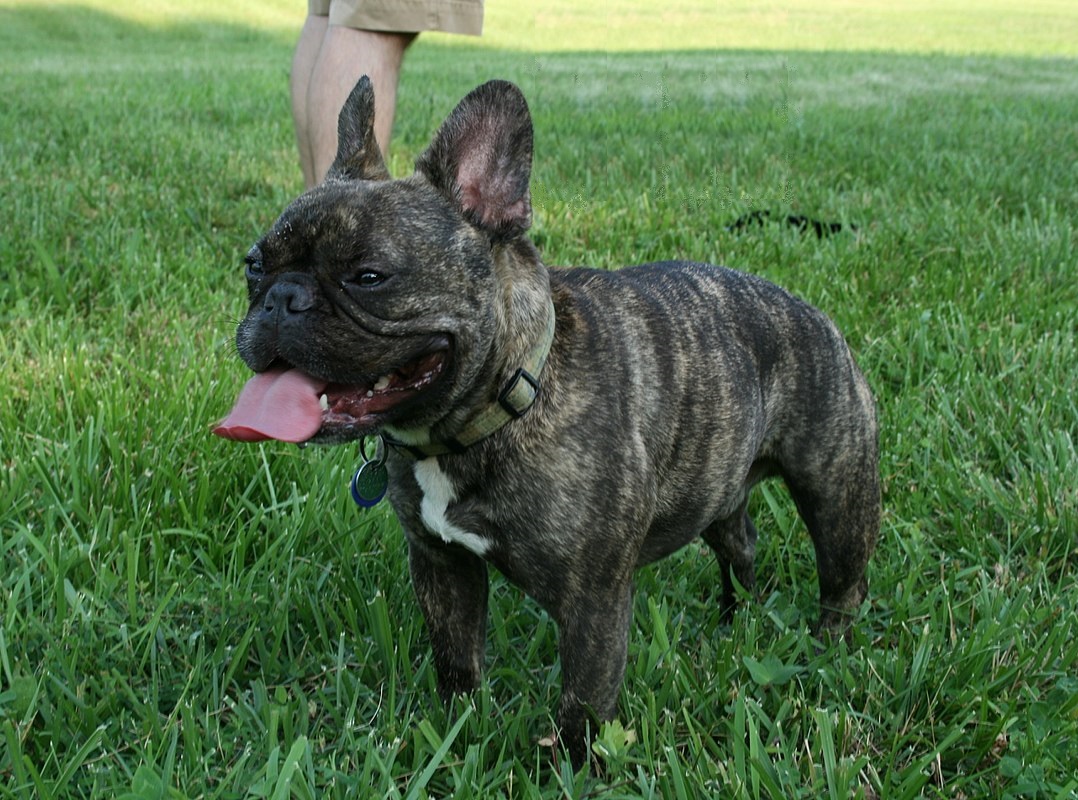
Photo: Wikimedia Commons
Origin
France
Lifespan
10–12 years
Weight
8–14 kg (18–30 lbs)
Height
28–33 cm (11–13 in)
Exercise
20 to 40 min/day
Diet
Omnivore — small-breed kibble, preferably with joint support additives
Taxonomic Hierarchy
Kingdom
Animalia
Phylum
Chordata
Class
Mammalia
Order
Carnivora
Family
Canidae
Genus
Canis
The Story
The French Bulldog has surged to become the most registered breed in the United States (as of 2022, displacing the Labrador after 31 years) and the most popular breed in the United Kingdom. With their bat-like ears, compact muscular body, and expressive flat face, Frenchies are unmistakeable — and their personality is as big as their appeal. Originally developed in the 1800s when English lace workers brought miniaturised English Bulldogs to Nottingham and then to France, where they were crossed with local ratters, the French Bulldog became fashionable in Parisian society before capturing global affection. Their apartment-friendly size, relatively low exercise needs, and remarkable sociability have made them the quintessential urban companion dog.
Also Known As
Quick Facts
Discover which pets match your lifestyle
Physical Profile
Source: wikimedia
The French Bulldog is a compact, muscular dog with a heavy bone structure and a smooth, soft coat. Their most distinctive feature is their large, erect bat ears — set high on a broad, square head with a very short nose, deep stop, and pronounced wrinkles above the nose and around the eyes. The body is short with a broad chest and a characteristic roach back (slightly arched at the loin). The tail is naturally short, either straight or screwed (but never curly). Standard colours include brindle, fawn, white, and combinations thereof. Non-standard colours (blue, lilac, chocolate, merle) exist but are associated with additional health risks.
Grooming
Low
Shedding
Moderate
Brushing
1x-Weekly
Bathing
Every-4-6-Weeks
Coat Colors
Recognized By
Source: wikimedia
Temperament & Personality
French Bulldogs are charming, adaptable companions who thrive on human attention. Unlike more active breeds, they are content with moderate exercise and a lot of couch time — making them ideal for apartment living. They are playful and clownish, with a mischievous streak that endears them to their owners, and are known for their expressive faces and ability to communicate through an almost human range of sounds. Frenchies are generally sociable with other dogs and people, though some males can be dog-selective. They do not do well when left alone for long periods and can develop separation anxiety.
Personality Scores
Adaptability
5/5Attention Need
5/5Friendliness
5/5Playfulness
4/5Protectiveness
2/5Living Profile
Ideal Space
Apartment
Daily Exercise
20 to 40 min/day
Ideal Weather
10°C to 25°C
Cognitive Benchmarks
Adaptability
50%
Attention
50%
Playfulness
40%
Communication Style
Stress Signals
excessive panting, respiratory distress, hiding, appetite loss, clinginess
Care & Wellness
Professional Care Protocol
- •French Bulldogs require daily but moderate exercise — 20–30 minute walks in cool weather are sufficient. They should never be exercised vigorously in heat or humidity due to their brachycephalic (flat-faced) anatomy, which severely limits their ability to thermoregulate. They should never be left in cars or warm environments. The facial wrinkles and skin folds must be cleaned daily with a damp cloth and kept dry to prevent skin fold dermatitis. The short coat needs minimal grooming — a weekly wipe-down with a grooming mitt is sufficient. Ears should be cleaned weekly, and because their tail can sit tightly against the body, the area underneath should be checked and cleaned regularly.
Nutrition Notes
Extreme obesity risk — strict portion control essential. Brachycephalic breeds swallow air while eating; use slow-feeder bowls. Flatulence common; limited-ingredient diets help. Skin fold dermatitis requires diet with omega fatty acids.
Vaccination Schedule
Vaccination Schedule
Senior Care
BOAS (brachycephalic obstructive airway syndrome) worsens with age — consider corrective surgery before age 5 if symptomatic. Spinal issues (IVDD, hemivertebrae) common. Avoid stairs. Keep cool — heat stroke risk is lifelong and increases with age.
Wellbeing Activities
Nutrition & Sustenance
Daily Calories (Adult)
750 kcal
Daily Calories (Young)
600 kcal
Recommended Foods
Foods to Avoid
Health Overview
French Bulldogs are a brachycephalic breed, meaning their flat face creates significant respiratory challenges. Brachycephalic Obstructive Airway Syndrome (BOAS) ranges from mild (occasional snoring) to severe (exercise intolerance, cyanosis, heat stroke risk). Many Frenchies benefit from surgical correction of elongated soft palate and stenotic nares. Intervertebral disc disease (IVDD) is common due to their chondrodystrophic conformation. Hemivertebrae (abnormal wedge-shaped vertebrae) can cause spinal cord compression. Skin fold dermatitis and allergies are common. Due to their conformational anatomy, French Bulldogs almost universally require caesarean section for delivery — natural whelping is very rare.
Common Conditions
Price Estimates
Pricing Guide
Average estimates as of 2025
Most expensive common breed due to mandatory C-section births (80%+ require surgical delivery). Rare colours (blue, lilac, merle) command 2-3x premium but carry higher health risks. India pricing reflects limited breeding stock.
Purchase Price
$2,000 to $5,000
Adoption Fee
$200 to $600
Data from 2025
Fun Facts
The French Bulldog overtook the Labrador Retriever as the most registered breed in the United States in 2022, ending a 31-year reign — the longest in AKC history.
French Bulldogs became fashionable status symbols in early 20th century America; the breed was particularly beloved by wealthy socialites and appeared on the Titanic's passenger list (though did not survive).
Due to their conformation, French Bulldogs cannot swim — their heavy front-weighted, barrel-chested body makes them sinkers, not swimmers. A life jacket is essential near water.
The price of French Bulldogs has been driven up partly by the near-universal need for caesarean sections and artificial insemination, as their narrow hips make natural reproduction extremely difficult.
Despite their French name and French cultural identity, the breed originated in England — a fact that has historically irritated the French.


