

Field Spaniel
The Field Spaniel has one of the most remarkable stories in dog breeding history — a cautionary tale of how show ring fashion can destroy a functional breed.
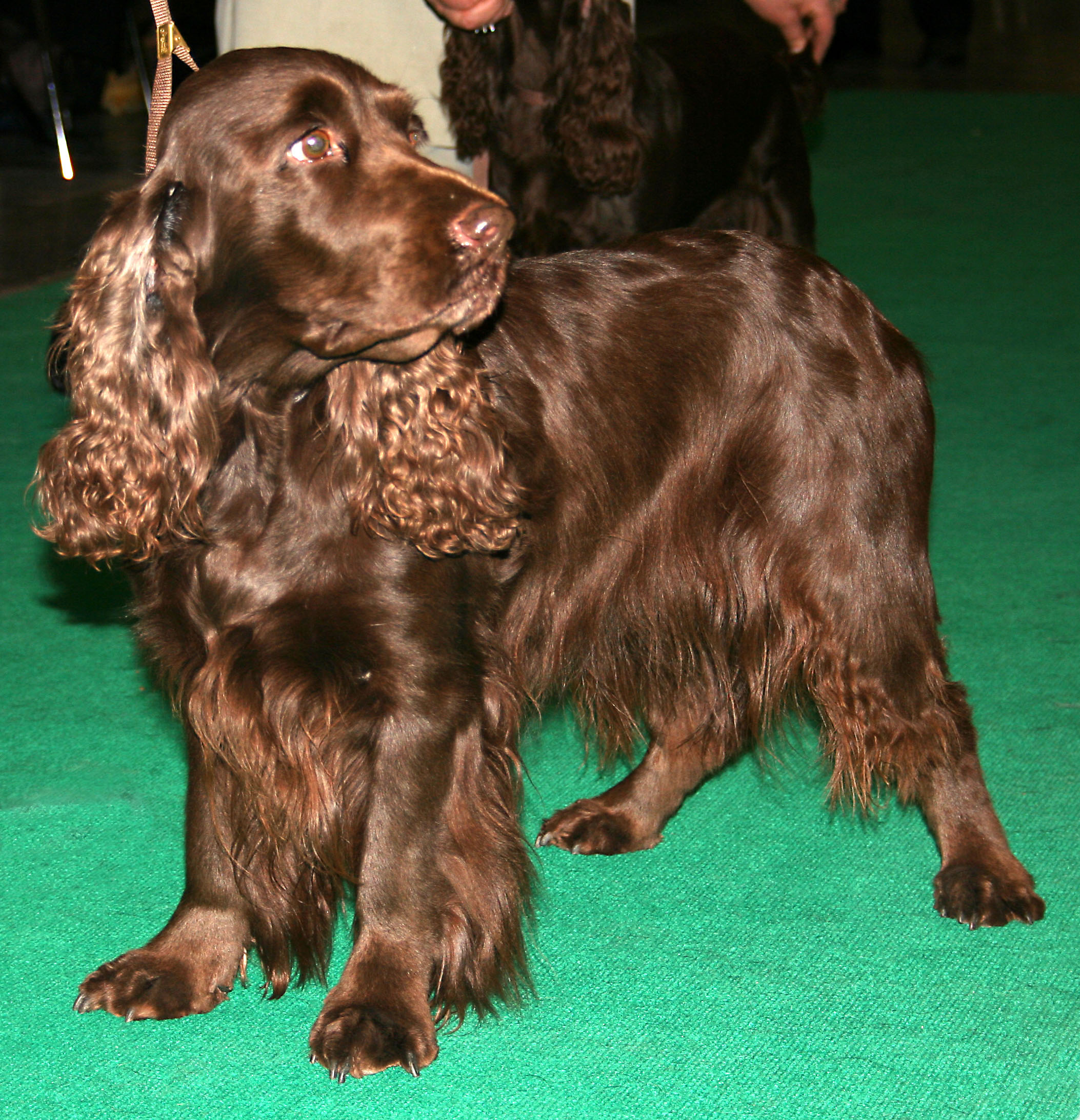
Photo: Wikimedia Commons
Origin
United Kingdom
Lifespan
11–13 years
Weight
16–25 kg (35–55 lbs)
Height
43–46 cm (17–18 in)
Exercise
40 to 60 min/day
Diet
Omnivore — high-quality food for an active spaniel.
Taxonomic Hierarchy
Kingdom
Animalia
Phylum
Chordata
Class
Mammalia
Order
Carnivora
Family
Canidae
Genus
Canis
The Story
The Field Spaniel has one of the most remarkable stories in dog breeding history — a cautionary tale of how show ring fashion can destroy a functional breed. In the late Victorian era, breeders began exaggerating the Field Spaniel's length and lowness to create an extreme "dachshund-like" show dog that could barely move or function. By 1900 the Field Spaniel had become a grotesque caricature of a spaniel — long-bodied, low-legged, and virtually unable to work. The breed was nearly abandoned entirely. A group of dedicated breeders in the early 20th century painstakingly rebuilt it from scratch, crossing back to working Cocker Spaniels and Springer Spaniels to restore function. The modern Field Spaniel is a beautiful, moderate, functional working spaniel — but remains one of the rarest in the world.
Also Known As
Quick Facts
Discover which pets match your lifestyle
Physical Profile
Source: wikimedia
A medium-sized, elegant, moderately built spaniel — solidly liver, black, or roan, with a flat, silky coat and moderate feathering. The head is distinctive — longer and more refined than the Cocker Spaniel. The overall impression is of a noble, purposeful, moderate-sized spaniel.
Grooming
Moderate
Shedding
Moderate
Brushing
2-3x-Weekly
Bathing
Every-4-6-Weeks
Coat Colors
Recognized By
Source: wikimedia
Temperament & Personality
Docile, sensitive, and playful — the Field Spaniel is one of the most gentle and sensitive of the spaniel family. Bonds closely with family. Independent in the field. Excellent with children and other animals.
Personality Scores
Adaptability
3/5Attention Need
4/5Friendliness
4/5Playfulness
4/5Protectiveness
1/5Living Profile
Ideal Space
House-Small-Garden
Daily Exercise
40 to 60 min/day
Ideal Weather
0°C to 28°C
Cognitive Benchmarks
Adaptability
30%
Attention
40%
Playfulness
40%
Communication Style
Stress Signals
sensitivity to harsh tones, withdrawal, clinginess, pacing
Care & Wellness
Professional Care Protocol
- •1.5–2 hours exercise daily. Brushing 2–3 times weekly. Ear cleaning weekly. A breed for people who appreciate rarity and history.
Nutrition Notes
Ear infections common. Hypothyroidism. Generally healthy, moderate-maintenance breed. Omega-3 for coat and skin.
Vaccination Schedule
Vaccination Schedule
Senior Care
Hip dysplasia. Hypothyroidism. PRA. Ear infections lifelong. Ectropion. Nearly went extinct in 20th century — rebuilt from very small gene pool. Docile, sweet temperament. 11-13 years.
Wellbeing Activities
Nutrition & Sustenance
Daily Calories (Adult)
1000 kcal
Daily Calories (Young)
700 kcal
Recommended Foods
Foods to Avoid
Health Overview
Hip dysplasia. Progressive retinal atrophy (PRA). Autoimmune thyroiditis. Epilepsy. The breed's rarity means the gene pool is very small — inbreeding concerns are genuine.
Common Conditions
Price Estimates
Pricing Guide
Average estimates as of 2025
Very rare breed — fewer than 100 registrations/year in most countries. India: unavailable.
Purchase Price
$1,200 to $2,500
Adoption Fee
$100 to $400
Data from 2025
Fun Facts
The Field Spaniel was so grotesquely exaggerated by Victorian show breeders by 1900 that one contemporary judge described the winning Field Spaniel as resembling "a cross between a dachshund, a sea-lion, and a bar of soap" — so low, long, and misshapen had the breed become.
The modern Field Spaniel is essentially a reconstructed breed — it shares almost no ancestry with the Victorian show dogs that bore the same name. The current breed standard specifically prohibits the extreme conformation that destroyed the original.


