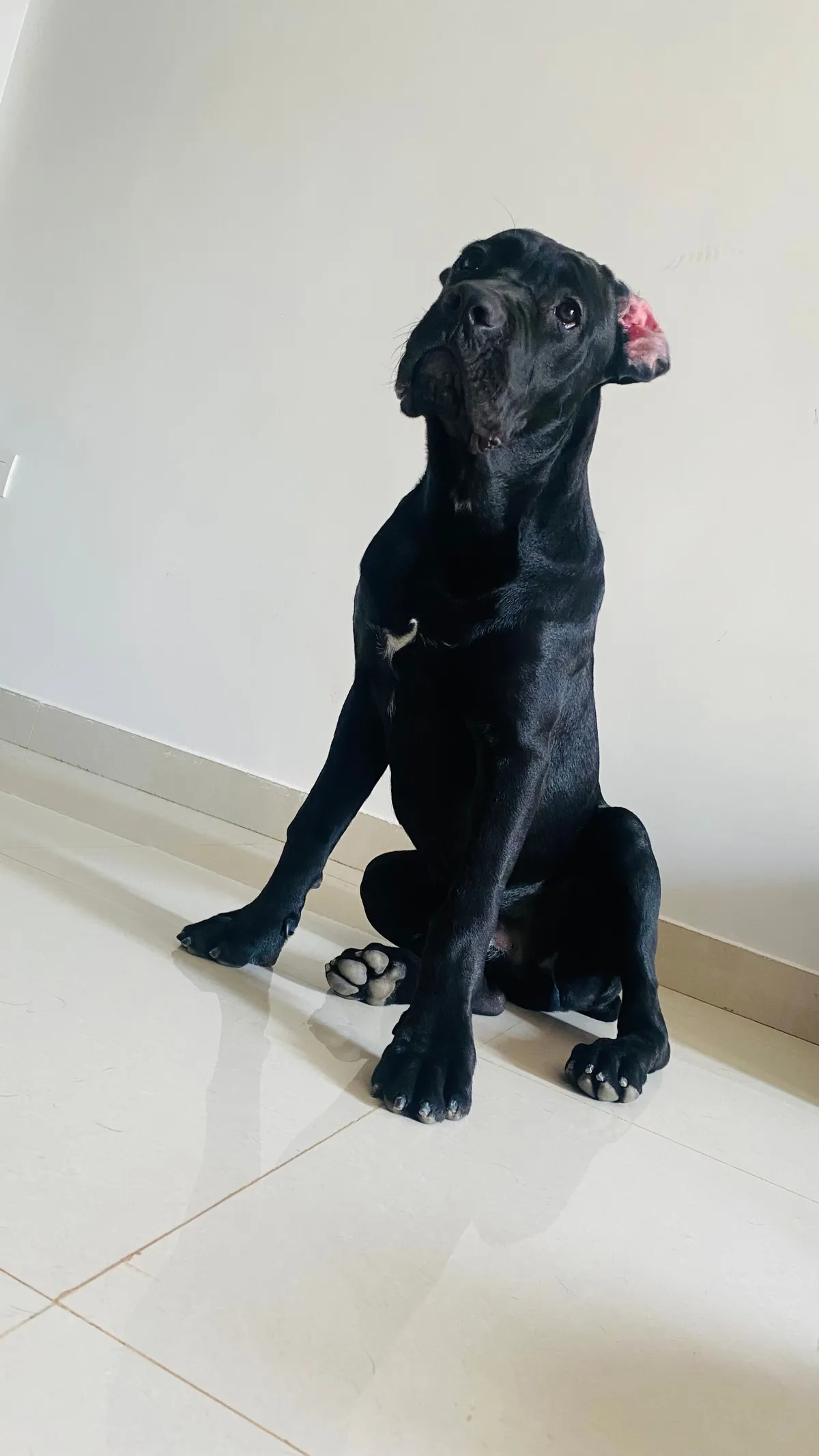

Cane Corso
The Cane Corso is one of two Italian mastiff-type breeds descended from the ancient Roman war dogs (Canis Pugnax) used by Roman legions in battle.

Photo: Wikimedia Commons
Origin
Italy
Lifespan
9–12 years
Weight
40–50 kg (88–110 lbs)
Height
60–70 cm (23.5–27.5 in)
Exercise
40 to 60 min/day
Diet
Omnivore — large breed quality formula; multiple small meals for bloat prevention
Taxonomic Hierarchy
Kingdom
Animalia
Phylum
Chordata
Class
Mammalia
Order
Carnivora
Family
Canidae
Genus
Canis
The Story
The Cane Corso is one of two Italian mastiff-type breeds descended from the ancient Roman war dogs (Canis Pugnax) used by Roman legions in battle. The name derives from the Latin "cohors" (guardian, protector) or possibly from the southern Italian dialect word "corso" (sturdy). Used throughout Italian history as a guardian of property and livestock, a hunter of large game, and an all-purpose farm dog, the Cane Corso nearly went extinct in the mid-20th century and was rediscovered in the late 1970s by Italian breed enthusiasts who found remnant populations in the remote Puglia and Campania regions. It is included in India's DAHD restricted breed advisory.
Also Known As
Quick Facts
Discover which pets match your lifestyle
Physical Profile
Source: wikimedia
The Cane Corso is a large, robust mastiff-type with a distinctive broad, flat skull, heavy brow, and prominent muscle definition in the cheeks and jaws. The coat is short, dense, and shiny — close-lying and requiring minimal maintenance. The large, almond-shaped eyes have an alert, attentive expression. The body is powerful and athletic rather than heavy. The tail was historically docked; natural tails are now the norm in most countries.
Grooming
Low
Shedding
Moderate
Brushing
1x-Weekly
Bathing
Every-6-8-Weeks
Coat Colors
Recognized By
Source: wikimedia
Temperament & Personality
A well-bred Cane Corso is stable, confident, and highly trainable — a serious working dog in the best tradition. They are deeply loyal to their family and reserved — not unfriendly — with strangers. Their protective instinct is genuine and significant. They require an experienced owner who can provide consistent, positive leadership and extensive early socialisation. Without this, their size, strength, and protective drive can become unmanageable.
Personality Scores
Adaptability
3/5Attention Need
4/5Friendliness
3/5Playfulness
3/5Protectiveness
5/5Living Profile
Ideal Space
House-Large-Garden
Daily Exercise
40 to 60 min/day
Ideal Weather
5°C to 30°C
Cognitive Benchmarks
Adaptability
30%
Attention
40%
Playfulness
30%
Communication Style
Stress Signals
guarding, stiffening, drooling increase, aggression when threatened, pacing
Care & Wellness
Professional Care Protocol
- •Moderate daily exercise of 45–60 minutes plus mental work. Short coat requires minimal maintenance but the facial skin folds need regular cleaning. Bloat/GDV risk means multiple small meals and no vigorous exercise post-feeding. Professional training is strongly recommended from puppyhood.
Nutrition Notes
Giant breed puppy formula critical. Bloat risk — gastropexy recommended. Joint supplements from puppyhood. High-quality protein for muscle maintenance.
Vaccination Schedule
Vaccination Schedule
Senior Care
Hip dysplasia. Bloat. Entropion/ectropion. Cherry eye. Epilepsy. DCM. Italian mastiff — bodyguard, not livestock guardian. More athletic than English Mastiff. Surging in popularity globally. BSL-restricted in some areas. 9-12 years.
Wellbeing Activities
Nutrition & Sustenance
Daily Calories (Adult)
2000 kcal
Daily Calories (Young)
1500 kcal
Recommended Foods
Foods to Avoid
Health Overview
Hip and elbow dysplasia are significant. Bloat/GDV is a serious risk. Eyelid abnormalities (ectropion, entropion) are common in the loose-skinned face. Dilated cardiomyopathy occurs. Mange and skin conditions are seen.
Common Conditions
Price Estimates
Pricing Guide
Average estimates as of 2025
Most athletic mastiff breed. Growing rapidly in popularity and price. BSL-restricted in some areas. India: growing demand.
Purchase Price
$1,500 to $3,500
Adoption Fee
$100 to $500
Data from 2025
Fun Facts
The Cane Corso's ancestor — the Roman Canis Pugnax — was described by Roman writers as a combat dog of fearsome capability, used both in legionary warfare and in the Roman arena against bears, lions, and gladiators.
The breed nearly disappeared entirely — in the late 1970s, Italian ethnozoologist Giovanni Ventura found the last remnant populations in isolated rural communities of Puglia and wrote the account that sparked the breed recovery movement.
The Cane Corso is named from the Latin "cohors," meaning guardian — a fitting etymology for a breed that has served as a protector of Italian farms and families for two millennia.