

Boxer
The Boxer is one of the most enduringly popular large breeds in the world, beloved for a combination of qualities that seems almost contradictory — powerful and athletic, yet gentle and patient with children; bold and protective, yet playful and clownish with family.
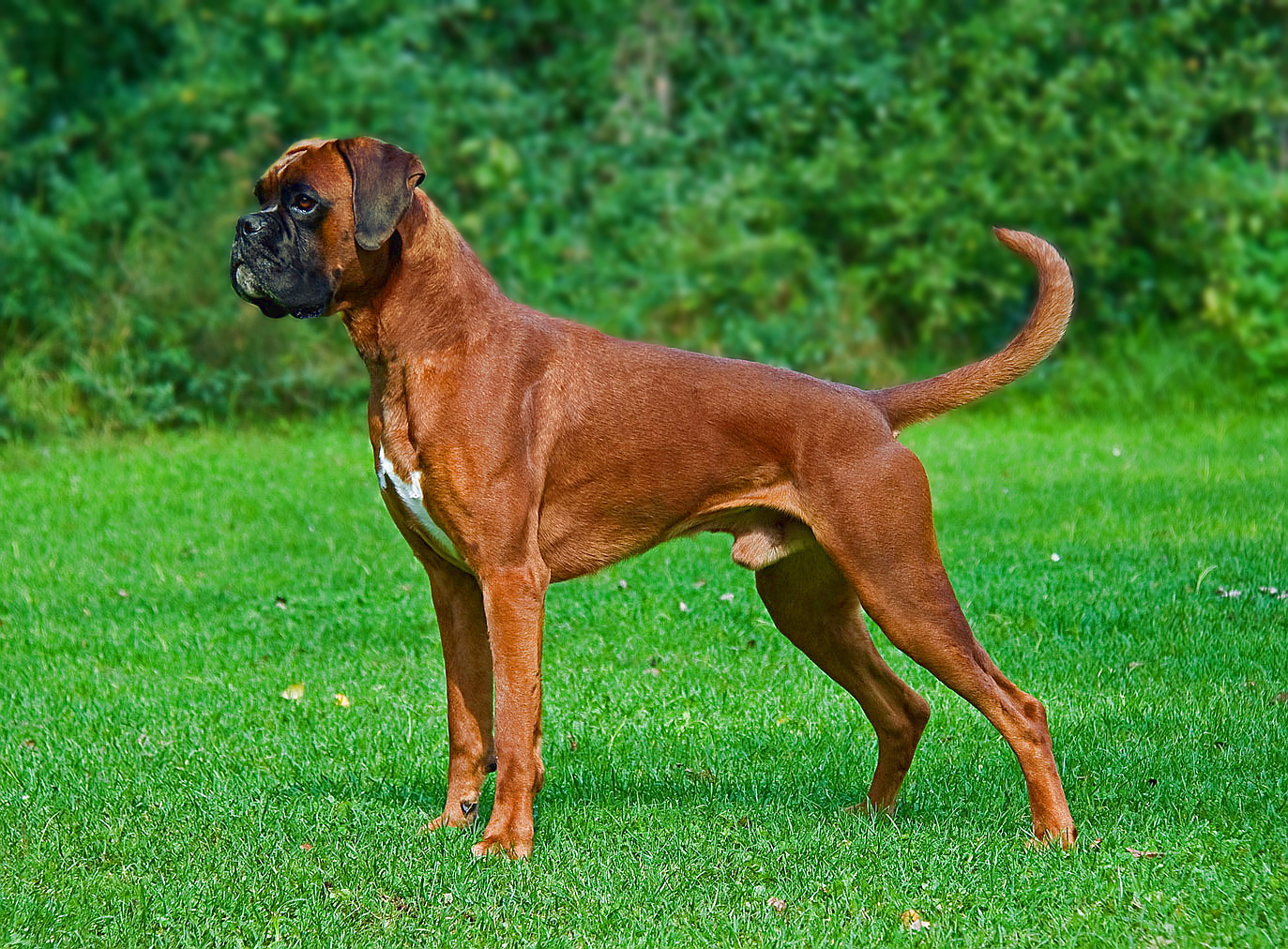
Photo: Wikimedia Commons
Origin
Germany
Lifespan
10–12 years
Weight
25–32 kg (55–70 lbs)
Height
53–63 cm (21–25 in)
Exercise
60 to 90 min/day
Diet
Omnivore — high-quality large-breed kibble; caloric needs are high due to energy level
Taxonomic Hierarchy
Kingdom
Animalia
Phylum
Chordata
Class
Mammalia
Order
Carnivora
Family
Canidae
Genus
Canis
The Story
The Boxer is one of the most enduringly popular large breeds in the world, beloved for a combination of qualities that seems almost contradictory — powerful and athletic, yet gentle and patient with children; bold and protective, yet playful and clownish with family. Developed in Germany in the late 19th century from the now-extinct Bullenbeisser (bull-biter) and English Bulldogs, Boxers were among the first breeds used as police and military dogs in Germany. They get their English name from their distinctive habit of using their front paws in play — pawing at things in a manner reminiscent of a boxing stance.
Also Known As
Quick Facts
Discover which pets match your lifestyle
Physical Profile
Source: wikimedia
The Boxer is a medium-to-large, square-built dog of substantial musculature and elegant, clean lines. The head is broad and blunt with a short, wide muzzle, pronounced underbite, and deep flews (lips). Their expressive face can convey a remarkable range of emotions. The coat is short, smooth, and tight-fitting. Classic colours are fawn (ranging from light yellow to mahogany red) and brindle (fawn with black stripes). White markings are common and attractive. Historically tails were docked and ears cropped; natural ears and tails are now the norm in most countries.
Grooming
Low
Shedding
Moderate
Brushing
1x-Weekly
Bathing
Every-6-8-Weeks
Coat Colors
Recognized By
Source: wikimedia
Temperament & Personality
Boxers are perpetual puppies — enthusiastic, joyful, and boisterous well into their adult years. They love to play, jump, and interact physically with their family. With children, they are patient and gentle. Their guarding instinct makes them naturally protective without being aggressive; they are alert to strangers but rarely reactive without cause. Training requires patience — Boxers are intelligent but have an independent, fun-loving streak that can make sustained focus during obedience sessions a challenge. They respond extremely well to positive, reward-based training but switch off with harsh methods.
Personality Scores
Adaptability
3/5Attention Need
5/5Friendliness
5/5Playfulness
5/5Protectiveness
4/5Living Profile
Ideal Space
House-Small-Garden
Daily Exercise
60 to 90 min/day
Ideal Weather
5°C to 28°C
Cognitive Benchmarks
Adaptability
30%
Attention
50%
Playfulness
50%
Communication Style
Stress Signals
excessive jumping, mouthing, pacing, destructive behaviour, clinginess, zoomies
Care & Wellness
Professional Care Protocol
- •Boxers need significant daily exercise — at least 1.5 hours — to manage their energy. They are brachycephalic (flat-faced) and cannot exercise vigorously in heat; morning and evening activities in warmer months are safer. The short coat needs minimal grooming — weekly wipe-down with a rubber mitt suffices. Like all brachycephalic breeds, they snore, drool, and can develop breathing difficulties. Their face wrinkles should be cleaned weekly. A Boxer left without sufficient exercise and mental stimulation will redecorate your home with characteristic Boxer enthusiasm.
Nutrition Notes
Flatulence very common — avoid soy and high-gas foods. Bloat risk — feed 2-3 smaller meals. Grain-free diets linked to DCM (dilated cardiomyopathy) in some studies — consult vet before going grain-free. Boxers are sensitive to acepromazine (sedative).
Vaccination Schedule
Vaccination Schedule
Senior Care
Cancer rate is the highest of any breed — mast cell tumours, lymphoma, brain tumours. Any lump should be aspirated immediately. ARVC (arrhythmogenic right ventricular cardiomyopathy) — Holter monitor annually from age 3. Degenerative myelopathy possible. Average lifespan only 8–10 years.
Wellbeing Activities
Nutrition & Sustenance
Daily Calories (Adult)
1600 kcal
Daily Calories (Young)
1200 kcal
Recommended Foods
Foods to Avoid
Health Overview
Boxers have an elevated cancer rate — cancer is the leading cause of death in the breed, with lymphoma, mast cell tumours, and brain tumours being most prevalent. Arrhythmogenic Right Ventricular Cardiomyopathy (ARVC), also called "Boxer cardiomyopathy," is a heritable heart condition unique to the breed that can cause sudden death. Annual cardiac screening by a cardiologist is recommended for breeding dogs. BOAS affects Boxers due to their flat face.
Common Conditions
Price Estimates
Pricing Guide
Average estimates as of 2025
White Boxers (20-25% of litters) often sold at discount due to higher deafness rates and non-show eligibility. Ear cropping illegal in UK/Australia but still common in USA/India. Brindle most common colour.
Purchase Price
$800 to $2,500
Adoption Fee
$100 to $400
Data from 2025
Fun Facts
Boxers hold the record for longest tongue on a dog — a Boxer named Brandy had a tongue measuring 43 cm (17 inches), recorded by Guinness World Records.
Boxers were among the first three breeds officially recognised as police dogs in Germany, alongside Rottweilers and German Shepherds, at the turn of the 20th century.
The name "Boxer" is of English origin and refers to the breed's characteristic play behaviour of standing on their hind legs and sparring with their front paws — the German name for the breed is simply "Boxer," suggesting the English name was adopted by German breeders.
White Boxers — born with more than one-third white markings — make up about 25% of all Boxer births but were historically euthanised by breeders who considered them undesirable. Most kennel clubs still do not accept them for show, but they are fully healthy and loved as pets.


