

Himalayan Guinea Pig
The Himalayan Guinea Pig has a striking colour pattern analogous to the Himalayan cat and Himalayan rabbit — a pure white body with darker colouration (called "points") on the nose, ears, and feet.
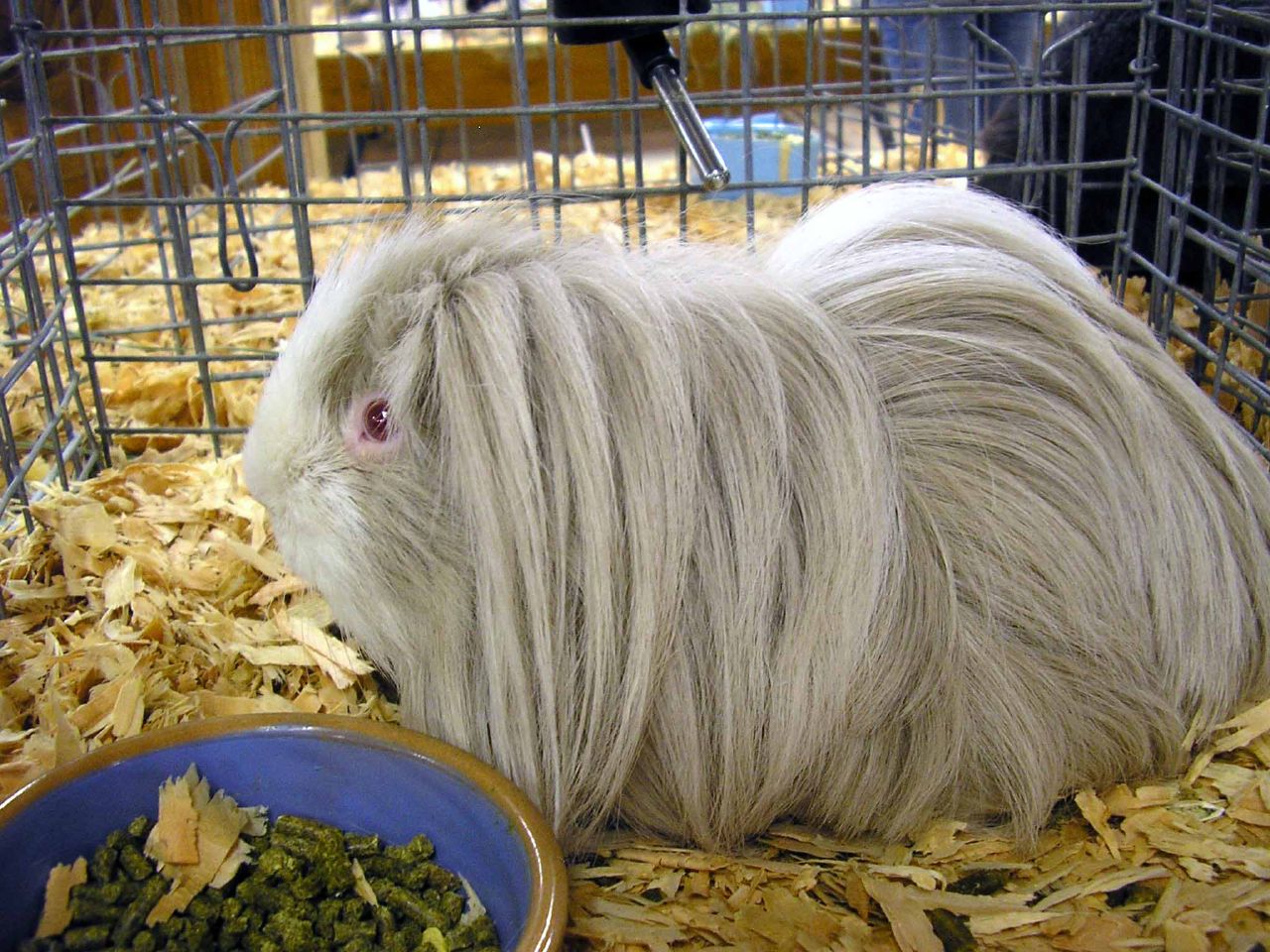
Photo: Wikimedia Commons
Origin
United States
Lifespan
4–8 years
Weight
700–1,200 g
Height
20–30 cm
Diet
Herbivore — unlimited hay, fresh greens, pellets, daily vitamin C.
Taxonomic Hierarchy
Kingdom
Animalia
Phylum
Chordata
Class
Mammalia
Order
Rodentia
Family
Caviidae
Genus
Cavia
The Story
The Himalayan Guinea Pig has a striking colour pattern analogous to the Himalayan cat and Himalayan rabbit — a pure white body with darker colouration (called "points") on the nose, ears, and feet. Like the Himalayan cat, this colour pattern is temperature-sensitive: the enzymes responsible for dark pigment are only active in cooler areas of the body. A Himalayan guinea pig kept in a warm environment will gradually fade its points towards white; one kept in cooler conditions will develop darker, more saturated points. This makes Himalayans the only guinea pig breed whose colouration actively changes with ambient temperature.
Also Known As
Quick Facts
Discover which pets match your lifestyle
Physical Profile
Source: wikimedia
Pure white body with darker smutty points on the nose (the "smut"), ears, and feet. Two varieties: Black Himalayan (black smut and black ears) and Chocolate Himalayan (dark brown/chocolate smut and ears). The contrast between the pure white body and the dark points is the breed's defining visual characteristic. Points should be as uniformly dark as possible and as clearly defined as possible.
Grooming
Low
Shedding
Moderate
Coat Colors
Recognized By
Source: wikimedia
Temperament & Personality
Same gentle, sociable, and friendly temperament as the American Guinea Pig. The Himalayan colourpoint pattern has no effect on personality. They are known as calm, easy-going guinea pigs.
Living Profile
Care & Wellness
Professional Care Protocol
- •Same as American Guinea Pig. Short coat requires only weekly brushing. An important care consideration: the temperature-sensitive colouration means that warm heating pads, heat lamps, or consistently warm environments will cause the points to fade. If maintaining show-quality points is important, the guinea pig should be kept at consistent moderate temperatures (around 18–21°C) and not exposed to sustained heat sources directly applied to the points.
Vaccination Schedule
Vaccination Schedule
Health Overview
Same as American Guinea Pig. The white body colour means Himalayan guinea pigs may be more susceptible to sunburn from direct UV exposure — should be kept away from direct, prolonged sunlight. No other breed-specific health concerns.
Common Conditions
Fun Facts
Himalayan Guinea Pigs are one of the only animals (alongside Himalayan cats, rabbits, and some rat varieties) whose coat colour pattern is actively thermoregulated — warmth at the extremities suppresses the dark pigment enzyme, making them biologically responsive to temperature.
A Himalayan guinea pig's points can shift noticeably in colour over the course of a single season — owners in warm climates frequently observe their Himalayan's nose becoming lighter in summer and darker in winter.
Despite the name, Himalayan guinea pigs have no connection to the Himalayan mountain region — the name refers to the colour pattern, which is also seen in Himalayan rabbits, Siamese and Himalayan cats, all sharing the same temperature-sensitive pigmentation gene.
Also Known As
Related Tags
More Guinea Pigs
View All
Abyssinian Guinea Pig
South America — breed type developed in Europe

Alpaca Guinea Pig
Developed in USA — cross between Peruvian and Texel guinea pigs

American Guinea Pig
Andes Mountains, South America — domesticated 3,000+ years ago

Baldwin Guinea Pig
Spontaneous mutation in a White Crested line in California, USA (1980s)