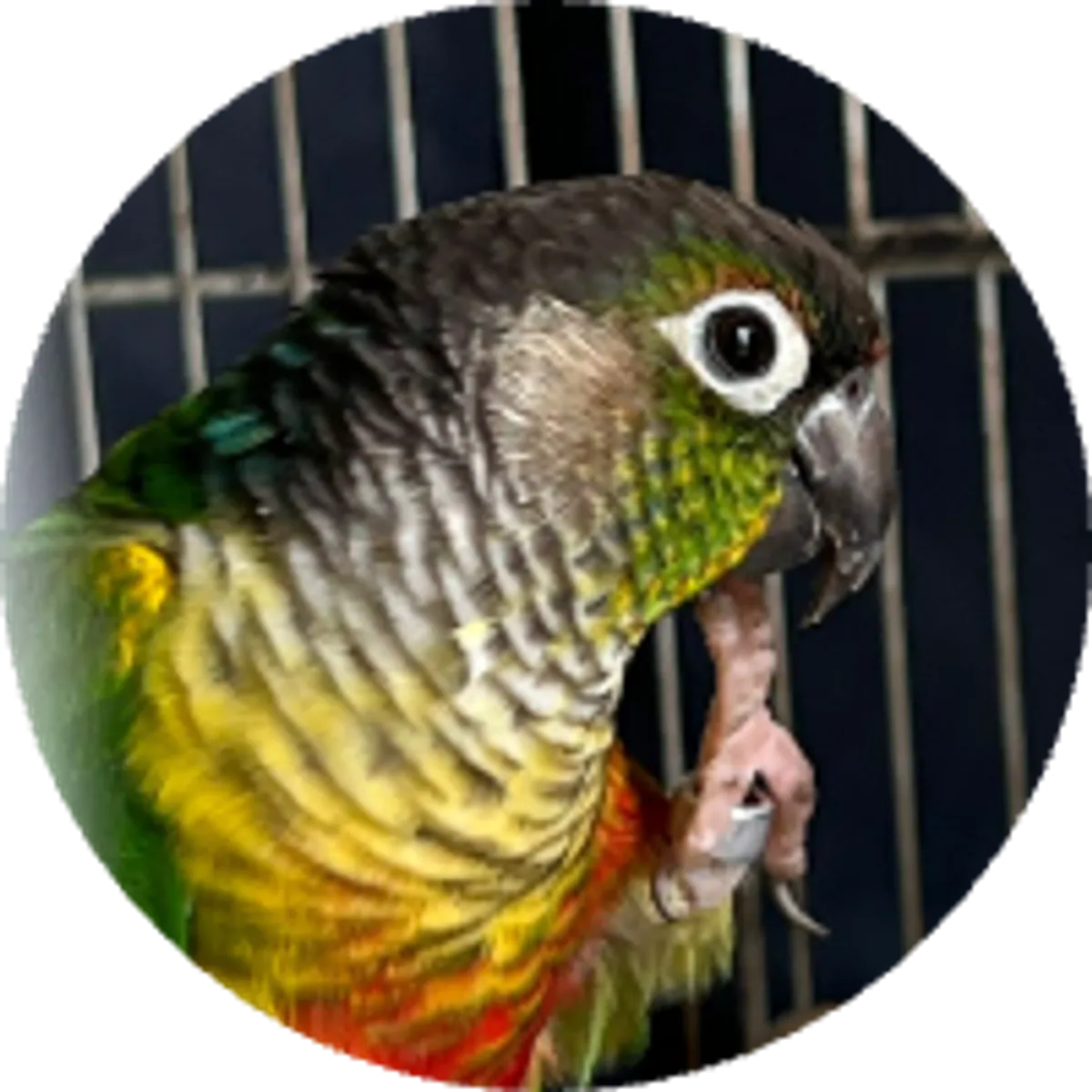

Pacific Parrotlet
The smallest commonly kept parrot — measuring 11–14 cm — but with the personality and attitude of a bird five times its size.

Photo: Wikimedia Commons
Origin
Ecuador
Lifespan
15–20 years
Weight
28–35 g
Height
11–14 cm
Diet
Herbivore — small parrot pellets (pellet-based diet critical — seed-only causes fatty liver), fresh vegetables, fruit, seeds.
Taxonomic Hierarchy
Kingdom
Animalia
Phylum
Chordata
Class
Aves
Order
Psittaciformes
Family
Psittacidae
Genus
Forpus
The Story
The smallest commonly kept parrot — measuring 11–14 cm — but with the personality and attitude of a bird five times its size. Often described as "a macaw personality in a budgerigar-sized body." Their minimal noise and small size makes them ideal for apartment owners who want a challenging, engaging parrot without the noise of larger species.
Also Known As
Quick Facts
Discover which pets match your lifestyle
Physical Profile
Source: wikimedia
Tiny and compact with a short, rounded tail. Males have blue streak behind the eye, blue rump, and blue wing markings against bright green. Females are greener and less marked. Wide range of colour mutations — lutino, blue, American white, and fallow among the most popular.
Grooming
Low
Shedding
Low
Coat Colors
Recognized By
Source: wikimedia
Temperament & Personality
Completely fearless and will confront much larger animals without hesitation. Bond intensely with their owner but can become cage-aggressive if not handled regularly. Must be handled daily to maintain tameness. Never leave with birds larger than themselves.
Living Profile
Care & Wellness
Professional Care Protocol
- •Minimum cage 60 × 45 × 60 cm. 2+ hours daily interaction. Must be handled daily — even a week of reduced handling can change temperament.
Vaccination Schedule
Vaccination Schedule
Health Overview
Fatty liver disease from seed-only diets — very important in this species. Feather cysts in some mutation lines.
Common Conditions
Fun Facts
Pacific Parrotlets have been observed using sticks to scratch areas they cannot reach with their beak — a tool use behaviour rarely documented in birds this small.
Wild Pacific Parrotlets maintain pair bonds year-round unlike most flocking parrot species.